




























In the field of architectural design, the grandest structures are ultimately experienced through their smallest details. While an observer may first notice a building’s soaring columns or expansive glass facades, their physical interaction with the space is mediated by the hardware they touch. A door handle, a cabinet pull, a window fastener, or a pivot hinge is the direct interface between the human hand and the built environment. In contemporary construction, selecting these tactile elements is far from a minor detail. Employing architectural hardware innovation enhancing building design is a standard practice for creating high-performance, intuitive, and luxury properties. By merging mechanical engineering, ergonomic research, and sophisticated aesthetics, modern building hardware solutions elevate everyday touchpoints into memorable interactions.
The Essential Interface Between Human and Space
The hardware of a building represents the bridge between static structures and dynamic movement. A wall or door is static, but it becomes functional through the hardware that allows it to open, slide, pivot, or lock. The tactile feedback of a solid door handle, the silent glide of a heavy sliding door, and the firm, secure click of a magnetic latch all contribute to our perception of a building’s quality and craftsmanship.
When hardware fails or operates poorly, it creates immediate frustration for the occupants, casting doubt on the quality of the entire building. Conversely, when hardware operates smoothly and effortlessly, it creates a sense of luxury, safety, and reliability. This makes architectural hardware a crucial element in premium residential, commercial, and hospitality designs, where user experience is the primary measure of success.
Mechanical Precision in Door Fittings and Opening Systems
Recent years have seen remarkable progress in the mechanical design of door fittings and opening systems. Traditional hinges and latches, while functional, were often bulky and visually disruptive. Modern hardware engineering has developed concealed and integrated systems that perform complex mechanical movements while remaining completely invisible.
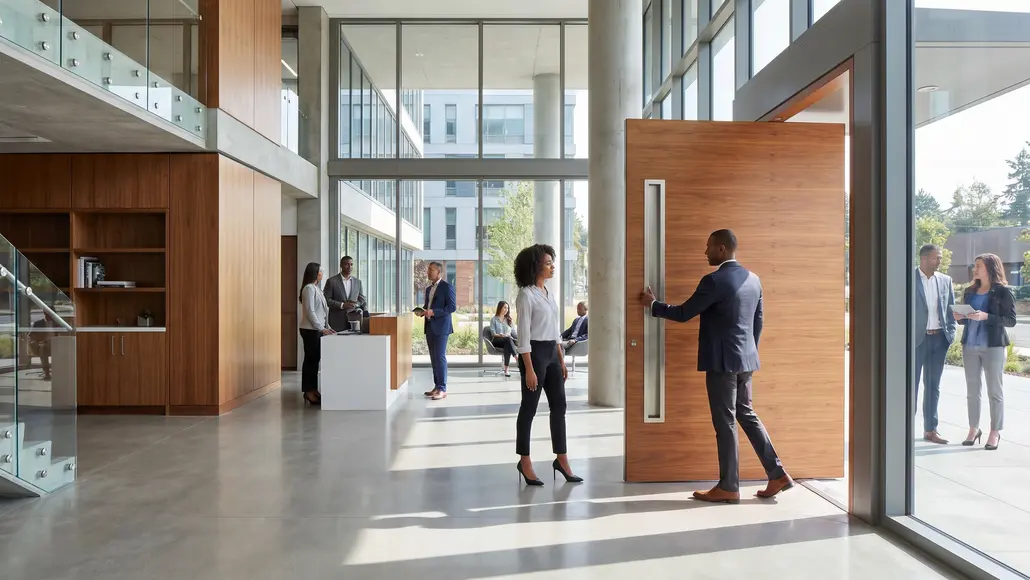
Concealed hinges, which are mortised directly into the door sash and frame, allow doors to sit flush with the wall when closed, creating a clean, seamless surface that is highly prized in minimalist design. Pivot door systems, designed to support massive doors weighing hundreds of pounds, utilize heavy-duty hydraulic pivots floor-mounted and header-mounted to allow the door to swing open with the light touch of a finger. These pivot systems can feature automated self-closing mechanisms and hold-open options, providing architects with the freedom to design impressive, grand entryways.
The Mechanics of Sliding and Folding Door Systems
Sliding and folding doors have become incredibly popular in modern residential and commercial interiors, as they allow for flexible spatial division and seamless indoor-outdoor transitions. However, the smooth operation of these massive panels is completely dependent on high-performance sliding door hardware.
These systems utilize precision-engineered overhead tracks, heavy-duty ball-bearing hangers, and bottom guides to ensure that panels sliding or folding move effortlessly. To enhance user experience, manufacturers integrate soft-closing and soft-opening dampers, which absorb the closing force and gently pull the door into its final position. This prevents slamming, protects the glass, and reduces operational noise. For large pocket doors that slide into wall cavities, magnetic push-to-release mechanisms allow the door to retract completely, maintaining flat, unobstructed openings when desired.
Specialized Window Hardware and Architectural Accessories
Just as door systems require precision-engineered fittings, modern high-performance window systems depend on specialized hardware to operate safely and maintain thermal performance. Window hardware must withstand extreme weather, wind-driven rain, and structural loads while remaining easy to operate.
Espagnolette multi-point locking systems are widely used in tilt-turn and casement windows. With a turn of a single handle, a series of locking bolts engage with keepers around the frame, pulling the window sash tightly against the weather stripping. This compression seal is essential for achieving high U-values and sound-attenuation ratings. Friction stays and hinges allow windows to remain open at precise angles without slamming shut in high winds. These components are manufactured from corrosion-resistant materials to ensure smooth, secure operation even in coastal or harsh industrial climates.
Smart Lock Integration and Digital Access Infrastructure
As building automation and smart home technology become standard, architectural hardware has evolved to support digital access control. The integration of smart locking systems with traditional door hardware represents a major step forward, combining high-level physical security with exceptional convenience.
Modern smart locks utilize biometric scanners, RFID cards, and mobile applications to grant access, eliminating the need for physical keys. These digital access systems are integrated into the door handle or lockset, preserving the clean aesthetic of the door fittings. For commercial properties and multi-family residential buildings, smart hardware is linked to centralized cloud-based management systems, allowing facility managers to update access privileges instantly, monitor entry logs, and receive security alerts in real time. This digital infrastructure not only improves physical security but also reduces administrative overhead and enhances tenant convenience.
Universal Design, Ergonomics, and Inclusive Architecture
Great architecture must be accessible and comfortable for everyone, regardless of age, physical ability, or strength. Universal design is a philosophy that seeks to create products and environments that can be used by all people to the greatest extent possible. In construction hardware, this philosophy has driven significant changes in the shape, operation, and placement of physical controls.
Standard round door knobs, which require a firm grip and twisting motion, present challenges for individuals with arthritis or limited hand strength. Modern hardware solutions favor lever handles, which can be operated with a gentle downward push, even using an elbow or forearm if a user’s hands are full. Touchless automatic exit devices and electromagnetic hold-open systems are standard in public buildings, facilitating easy egress in emergencies and smooth daily passage. Additionally, tactile details like knurled or textured surfaces on the underside of handles provide tactile cues and a more secure grip, enhancing the safety and comfort of all users.
Aesthetic Unity and the Coordination of Finishes
A common challenge in interior design is achieving visual consistency across different hardware elements. If the door handles, cabinet pulls, window fasteners, and bathroom accessories feature different styles, metals, or finishes, it can create visual clutter and disrupt the design language of the space.
To prevent this, leading manufacturers offer coordinated hardware suites, where all architectural accessories share the same design language, geometric lines, and finishes. This level of coordination is essential for creating a polished, professional, and luxurious interior. Modern finishes have also evolved, with choices extending far beyond standard polished chrome. Designers can now select sophisticated finishes like matte black, satin brass, brushed bronze, and graphite. These premium finishes are achieved using physical vapor deposition, a vacuum-coating process that provides exceptional resistance to wear, corrosion, and fading.
Performance Engineering and Material Durability Standards
Architectural hardware is subject to constant physical stress, environmental exposure, and heavy usage. In commercial buildings, a door handle may be operated thousands of times a day, meaning that materials and finishes must meet rigorous durability standards.
Grade 1 architectural hardware, certified by the Builders Hardware Manufacturers Association, is tested to withstand over one million operating cycles, ensuring reliable performance in high-traffic applications. For materials, marine-grade stainless steel (316) is widely used for its exceptional strength and resistance to rust, making it ideal for coastal projects and exterior gates. Solid brass offers heavy-weight, natural antibacterial properties, and outstanding durability, while engineered composite materials provide lightweight, corrosion-free performance in specialized industrial applications. Investing in high-grade materials reduces long-term maintenance costs and replacement frequency, securing a strong return on investment for building owners.
Sustainability, Circular Economy, and Carbon-Neutral Hardware
In line with global efforts to reduce the carbon footprint of construction, hardware manufacturers are adopting sustainable practices. This transition involves evaluating the entire lifecycle of a product, from raw material extraction and manufacturing processes to packaging, transport, and end-of-life recycling.
Many premium hardware brands now manufacture products using high percentages of recycled brass, aluminum, and steel, reducing the energy-intensive demand for virgin metals. Production facilities utilize renewable energy and closed-loop water systems to minimize waste. Furthermore, by designing products that are modular and repairable, manufacturers support a circular economy. Instead of replacing a complete lockset or handle when a spring wears out, users can easily replace individual internal components, significantly extending the lifespan of the hardware and reducing material waste.
The Unseen Detail Defining High-Performance Real Estate
In conclusion, implementing architectural hardware innovation enhancing building design is a fundamental requirement for creating successful, beautiful, and user-friendly buildings. By combining mechanical precision, digital technology, universal design, and durable materials, modern hardware solutions bridge the gap between architectural vision and human interaction.
As building demands become more complex and technology continues to advance, hardware will remain an essential driver of innovation in the built environment. For developers, architects, and owners, investing in high-quality hardware is a clear signal of design integrity and a powerful way to secure the long-term performance, safety, and value of real estate assets. A property that is easy and enjoyable to interact with at every physical touchpoint will always stand out in the market, proving that the smallest details often make the biggest difference.