




























Close
ALUMINIUM CHINA2026
Thursday, July 2, 2026
LiGHT26

Pilkington Introduces Lower-Carbon Float Glass Alternative

Note* - All images used are for editorial and illustrative purposes only and may not originate from the original news provider or associated company.

Subscribe

- Never miss a story with notifications

- Gain full access to our premium content

- Browse free from any location or device.

Media Packs

Expand Your Reach With Our Customized Solutions Empowering Your Campaigns To Maximize Your Reach & Drive Real Results!

– Access the Media Pack Now

– Book a Conference Call

Leave Message for Us to Get Back

Related stories

Adaptive Reuse Strategies Extending Building Lifecycles

Transforming existing structures for contemporary use has emerged as a cornerstone of sustainable urban development, offering a viable alternative to the carbon-intensive cycle of demolition and new construction. By creatively repurposing historical and underutilized buildings, cities can preserve their architectural heritage while meeting the evolving needs of modern populations. These methods prioritize resource efficiency and waste reduction, ensuring that the inherent energy and materials of our built environment are maximized for future generations.

Construction Cybersecurity Protecting Connected Job Sites

As digital transformation sweeps through the building industry, the vulnerability of connected job sites to sophisticated cyber threats has become a critical concern. Protecting sensitive project data, securing building information modeling systems, and ensuring the integrity of IoT-enabled machinery are now essential components of modern project management. Implementing robust defense mechanisms and a culture of digital vigilance is vital for safeguarding assets and maintaining the continuity of complex construction operations in an increasingly interconnected landscape.

Green Procurement Strategies in Construction Supply

Sourcing materials and services with environmental integrity has moved from a niche consideration to a core operational necessity within the global building sector. By prioritizing low-carbon alternatives, ethical labor practices, and circular economy principles, organizations can significantly mitigate their ecological footprint while fostering long-term resilience across the supply chain. This strategic shift requires a deep integration of sustainability metrics into the selection process, ensuring that every procurement decision aligns with broader climate goals and resource efficiency.
- Advertisement -

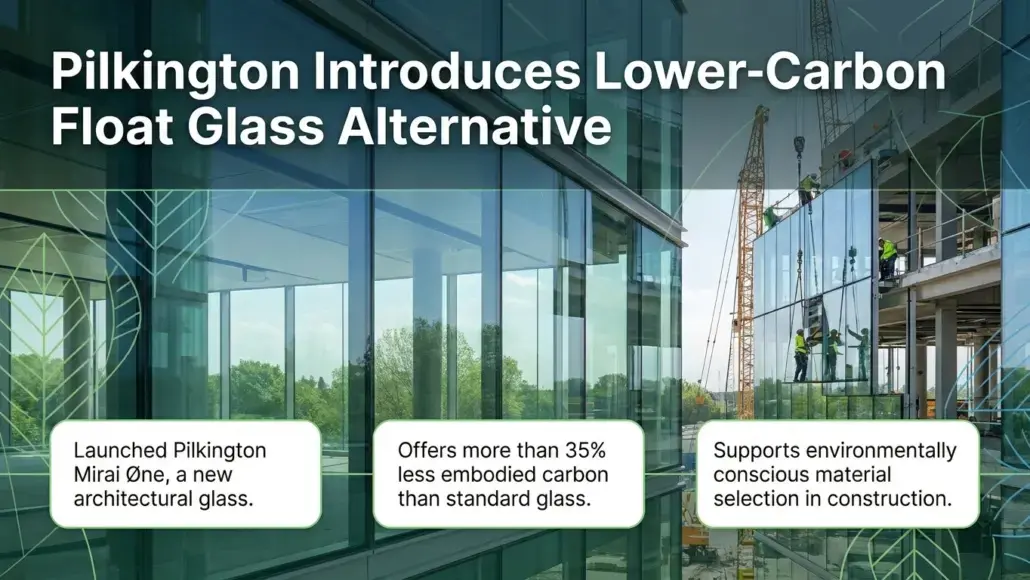
NSG Group, the Japanese owner of Pilkington, has launched Pilkington Mirai Øne, a new architectural glass product developed to offer a lower-carbon option for the construction sector. The company said the product delivers more than 35% less embodied carbon than its standard float glass and is intended to support environmentally conscious material selection across the built environment. The introduction forms part of the group’s broader sustainability strategy, which includes investment in alternative fuel trials, carbon capture technologies designed to reduce furnace emissions, and recycling initiatives carried out through its makechange platform.

The new lower-carbon float glass has been developed by increasing the proportion of recycled content used in manufacturing, reducing dependence on virgin raw materials while incorporating additional decarbonisation measures outlined in the company’s roadmap. According to Pilkington, the product maintains the same standards of aesthetics, quality and performance as conventional float glass when coated, laminated or subjected to further processing. The company said the glass can also contribute to lower emissions through its application in coated systems and insulated glazing units (IGUs), helping project teams reduce the environmental footprint of buildings throughout their operational lifespan.

Pilkington Mirai Øne builds on the company’s Pilkington Mirai range, introduced in 2023 and described as the architectural glass market’s lowest embodied carbon float glass at the time, with a 52% reduction in embodied carbon. While Pilkington Mirai remains targeted at projects pursuing more ambitious carbon-reduction objectives, the new product is positioned as a more accessible alternative that combines meaningful emissions reductions with broader flexibility for specification and procurement. The company said the offering allows architects, contractors and specifiers to choose a lower-carbon option while maintaining expected availability and performance characteristics.

The product is currently undergoing the process of obtaining a verified Environmental Product Declaration (EPD). It is designed to support embodied carbon benchmarks associated with sustainability frameworks including LEED and BREEAM, while also aligning with evolving regulatory requirements such as the Energy Performance of Buildings Directive, which is placing greater emphasis on transparency around embodied carbon in construction materials. Commenting on the launch, Kristian Chalmers, global strategic commercial manager at the NSG Group, said: “The drive to cut embodied carbon is accelerating across the construction industry and building materials like glass are central to that transformation. With Pilkington Mirai Øne we’re expanding the Pilkington Mirai family to deliver a solution that meets the industry’s growing need for lower carbon materials that are not only effective, but also readily available.” She added: “This launch represents a meaningful step forward – part of a broader commitment to helping the built environment deliver on their sustainability goals, without compromising on real-world project demands.” The lower-carbon float glass product is intended to support those objectives across a wider range of building projects.

Achema Middleeast

Never miss a construction headline

The construction industry moves fast – stay on top of it with our must - read briefings.

  • The top construction and infrastructure stories, straight to your inbox
  • The biggest news, features, interviews, and analysis
  • Dedicated coverage of the key developments shaping global construction markets

Latest stories

Related stories

Adaptive Reuse Strategies Extending Building Lifecycles

Transforming existing structures for contemporary use has emerged as a cornerstone of sustainable urban development, offering a viable alternative to the carbon-intensive cycle of demolition and new construction. By creatively repurposing historical and underutilized buildings, cities can preserve their architectural heritage while meeting the evolving needs of modern populations. These methods prioritize resource efficiency and waste reduction, ensuring that the inherent energy and materials of our built environment are maximized for future generations.

Construction Cybersecurity Protecting Connected Job Sites

As digital transformation sweeps through the building industry, the vulnerability of connected job sites to sophisticated cyber threats has become a critical concern. Protecting sensitive project data, securing building information modeling systems, and ensuring the integrity of IoT-enabled machinery are now essential components of modern project management. Implementing robust defense mechanisms and a culture of digital vigilance is vital for safeguarding assets and maintaining the continuity of complex construction operations in an increasingly interconnected landscape.

Green Procurement Strategies in Construction Supply

Sourcing materials and services with environmental integrity has moved from a niche consideration to a core operational necessity within the global building sector. By prioritizing low-carbon alternatives, ethical labor practices, and circular economy principles, organizations can significantly mitigate their ecological footprint while fostering long-term resilience across the supply chain. This strategic shift requires a deep integration of sustainability metrics into the selection process, ensuring that every procurement decision aligns with broader climate goals and resource efficiency.

Spain Allocates 364 Million Dollars to Decarbonize Cement Sector

The Spanish government has officially allocated 319 million euros,...

Subscribe

- Never miss a story with notifications

- Gain full access to our premium content

- Browse free from any location or device.

Media Packs

Expand Your Reach With Our Customized Solutions Empowering Your Campaigns To Maximize Your Reach & Drive Real Results!

– Access the Media Pack Now

– Book a Conference Call

Leave Message for Us to Get Back

Translate »