






















The evolution of modern engineering is inextricably linked to the development of advanced materials that can meet the increasing demands for strength, durability, and efficiency. In the global building sector, the strategic use of high performance aluminium alloys construction has become a defining characteristic of cutting-edge structural design. While aluminium has been used in architecture for over a century, the recent emergence of highly specialized alloys has transformed it from a secondary decorative material into a primary structural choice. These advanced building materials offer a unique combination of physical properties that allow engineers to solve complex challenges in bridge building, high-rise construction, and industrial infrastructure, where traditional materials like steel and concrete may reach their physical or economic limits.
The true strength of high performance aluminium alloys construction lies in their exceptional strength-to-weight ratio. By meticulously blending aluminium with specific quantities of elements such as silicon, magnesium, manganese, and zinc, metallurgists can create materials that rival the tensile strength of structural steel while remaining significantly lighter. This reduction in mass is a critical advantage in modern construction, as it lowers the dead load of a structure and reduces the seismic forces that act upon it. This capability allows for the creation of larger spans, more slender columns, and more daring cantilevers, providing architects with the freedom to push the boundaries of form and function. As our cities grow taller and more complex, the role of these lightweight, high-strength alloys becomes increasingly indispensable.
Understanding the Metallurgical Landscape of Structural Alloys
To appreciate the impact of high performance aluminium alloys construction, one must understand the specific characteristics of the different alloy series used in the industry. The 6000-series alloys, which contain magnesium and silicon, are the most common in the construction sector due to their excellent extrudability, corrosion resistance, and good weldability. Alloys like 6061 and 6082 are the workhorses of the structural aluminium world, providing a reliable balance of properties for everything from roofing systems to load-bearing frames. Their ability to be extruded into complex, multi-functional profiles makes them ideal for modern curtain walls and modular building systems, where precision and ease of assembly are paramount.
However, for applications requiring even higher levels of strength, the 7000-series alloys are the preferred choice. These zinc-based alloys offer some of the highest strengths available in the aluminium family, making them suitable for high-stress environments such as bridge decks and heavy-duty industrial structures. While these alloys require more careful handling during the fabrication and welding processes, their performance in demanding structural applications is unmatched. The development of new tempering processes, such as the T6 and T7 states, further enhances the mechanical properties of these structural aluminium components, ensuring they can withstand the rigorous demands of global infrastructure projects over a lifespan that can exceed several decades.
Corrosion Resistance and Lifecycle Longevity
One of the most significant advantages of using high performance aluminium alloys construction is their inherent resistance to atmospheric corrosion. Unlike steel, which requires constant maintenance and protective coatings to prevent rust and structural degradation, aluminium naturally forms a thin, protective oxide layer when exposed to air. In the context of durable alloys, this self-healing characteristic is a game-changer for infrastructure located in harsh environments, such as coastal areas with high salt concentrations or industrial zones with acidic pollutants. By eliminating the need for periodic repainting and chemical treatments, aluminium alloys significantly reduce the total cost of ownership for a building or bridge, providing a sustainable and cost-effective solution for long-term asset management.
Furthermore, the longevity of advanced building materials is a key factor in the sustainability of the built environment. Structures built with high-performance alloys are designed to last for generations with minimal intervention. This durability not only preserves the physical integrity of the structure but also maintains its aesthetic appeal over time. Whether it is the sleek facade of a corporate headquarters or the structural frame of a public transit hub, the use of aluminium ensures that the building remains a functional and attractive asset for the community. In an era where “embodied carbon” and “lifecycle impact” are central to the construction discourse, the ability of aluminium to remain in service for decades without degradation is a major selling point for forward-thinking developers.
Adaptability and Precision in Modern Fabrication
The versatility of high performance aluminium alloys construction extends beyond their mechanical strength to their exceptional workability. The extrusion process allows for the creation of intricate profiles that can incorporate multiple functions such as thermal breaks, moisture drainage channels, and attachment points for other building systems into a single structural element. This level of integration simplifies the on-site construction process and reduces the potential for errors, leading to faster and more efficient building schedules. The precision of these components ensures a tighter building envelope and better overall performance, contributing to the energy efficiency and comfort of the interior environment.
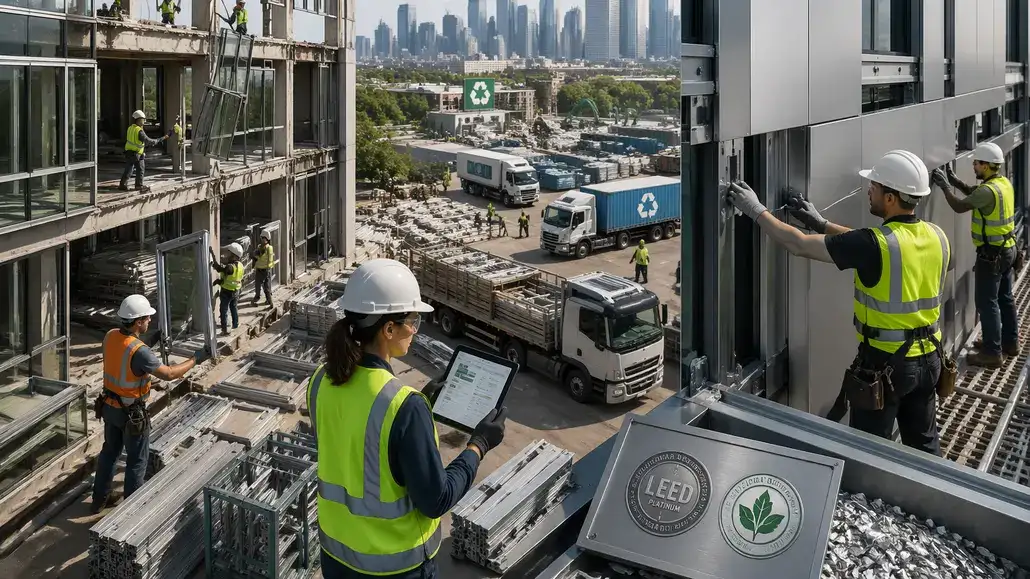
This adaptability also makes high-strength materials ideal for the growing market of prefabricated and modular construction. Because aluminium components are lightweight and dimensionally stable, they can be manufactured in a factory setting with a high degree of quality control and then easily transported to the site for rapid assembly. This approach is particularly valuable for projects in dense urban areas, where site access is limited and construction disruption must be minimized. The ability to “kit-of-parts” a building using high performance aluminium alloys construction is a powerful tool for meeting the global demand for high-quality housing and infrastructure in a rapidly urbanizing world, providing a scalable and reliable solution for the cities of the future.
Innovation in Alloy Design and Future Trends
The field of aluminium metallurgy is not static; it is a space of continuous innovation and discovery. Researchers are currently exploring the addition of rare-earth elements like scandium to create alloys with even higher fatigue resistance and thermal stability. These “ultra-high-performance” materials are opening up new possibilities in extreme engineering environments, such as aerospace-grade structures for terrestrial applications and specialized components for high-speed rail. The focus is also shifting toward the development of alloys that are optimized for additive manufacturing, or 3D printing. By tailoring the chemistry of the powder to the specific cooling rates of the 3D printing process, manufacturers can create structural aluminium parts with complex internal geometries that are impossible to achieve through traditional casting or extrusion.
As we look toward the future, the integration of smart technologies into the fabrication of high performance aluminium alloys construction is the next frontier. The use of digital twins and real-time sensor data allows for the precise monitoring of the alloy’s behavior during both the manufacturing and operational phases. This ensures that every component performs exactly as intended and allows for data-driven maintenance strategies that further extend the life of the infrastructure. The synergy between material science, digital innovation, and structural engineering is creating a new paradigm for the built environment, where the materials we use are as intelligent and adaptable as the designs they support. Aluminium, in its many high-performance forms, will undoubtedly remain at the heart of this progress.
Conclusion: The Strategic Choice for a Resilient World
The decision to utilize high performance aluminium alloys construction is a strategic investment in the future of the built environment. These materials provide the strength, durability, and flexibility required to meet the challenges of a complex and changing world, from the need for resilient infrastructure to the demand for sustainable and energy-efficient buildings. By leveraging the unique properties of advanced building materials, the construction industry can create structures that are not only high-performing but also inherently more responsible. As we continue to push the boundaries of architectural and engineering possibility, the partnership between human ingenuity and the remarkable potential of aluminium alloys will define the skylines and infrastructure of the next century.