






























The relationship between human health and the built environment has taken center stage in modern architectural discourse. Historically, building design focused primarily on structural integrity, aesthetic appeal, and energy efficiency. However, as research continues to reveal the profound impact of indoor spaces on psychological and physiological health, a major shift is underway. Since people spend approximately ninety percent of their lives indoors, the spaces we inhabit have a massive influence on our overall vitality. Today, the pursuit of healthy indoor environments redefining building design is driving architects and engineers to prioritize occupant comfort, indoor air quality, and mental wellness as fundamental design criteria. This holistic approach is transforming residential, commercial, and educational spaces into active platforms for health and productivity.
The Imperative for Human-Centric Built Environments
For decades, the architectural focus on energy efficiency sometimes led to unintended negative consequences. In the rush to seal buildings and reduce thermal loss, interior spaces became tightly sealed boxes with minimal fresh air exchange. This gave rise to sick building syndrome, where occupants experienced symptoms like headaches, respiratory irritation, fatigue, and difficulty concentrating due to poor ventilation and chemical buildup from synthetic materials.
Modern wellness architecture addresses these issues by designing buildings as dynamic systems that support human health. Designing healthy buildings is no longer viewed as a luxury but as a core requirement. It is a shift from merely preventing illness to actively promoting physical and mental well-being, acknowledging that the physical spaces where we work, sleep, and socialize can either enhance or diminish our quality of life.
Indoor Air Quality and Active Ventilation Engineering
The most critical component of a healthy interior is indoor air quality. Indoor air can contain up to five times more pollutants than outdoor air, including volatile organic compounds emitted by paint and furniture, carbon dioxide from respiration, particulate matter, mold spores, and airborne pathogens. Exposure to these pollutants can impair cognitive function, trigger asthma, and cause long-term health issues.
To maintain superior air quality, modern buildings employ high-performance mechanical ventilation systems, such as energy recovery ventilators. These systems introduce a continuous stream of fresh, filtered outdoor air while exhausting stale indoor air, recovering energy from the exhaust air to pre-temper the incoming air. Advanced filtration, including HEPA and activated carbon filters, captures fine particulate matter and gaseous chemical pollutants.
Additionally, real-time indoor air quality monitoring systems are increasingly integrated into building automation platforms. These systems use arrays of sensors to continuously track VOCs, CO2, temperature, and relative humidity. When pollutant levels rise, the mechanical ventilation system automatically increases outdoor air exchange rates, ensuring that the indoor atmosphere remains clean, fresh, and supportive of cognitive performance.
Biophilic Design and the Psychological Power of Nature
Biophilic design is the practice of connecting building occupants with nature by incorporating natural elements into the built environment. Evolutionary biology suggests that humans have an innate connection to the natural world, and that separating ourselves from nature can lead to stress, anxiety, and reduced cognitive performance. Integrating biophilia into sustainable interiors is a highly effective way to mitigate these negative effects.
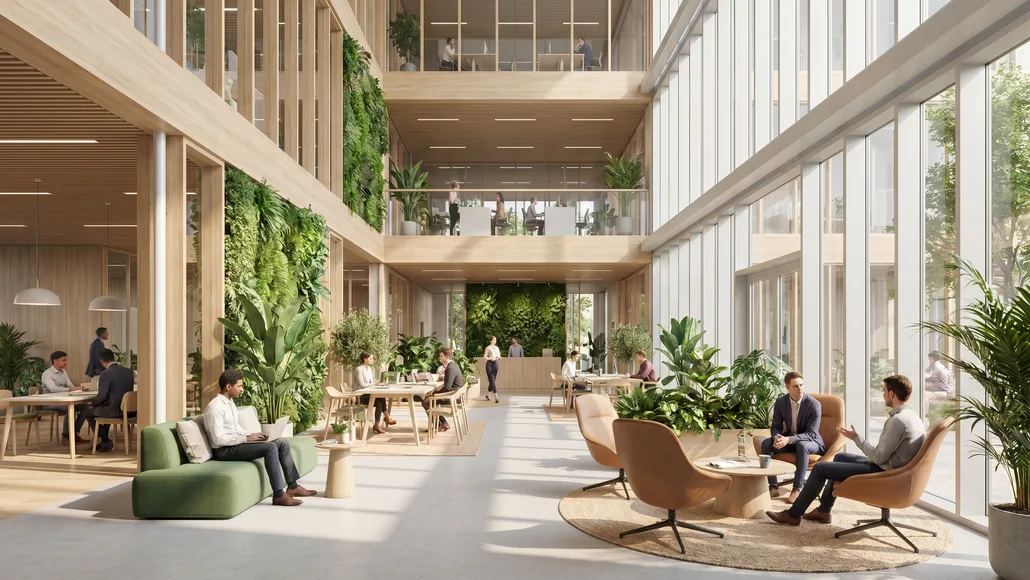
Architects incorporate biophilic design through direct experiences of nature, such as indoor living walls, potted plants, water features, and natural daylight. Living walls not only act as beautiful focal points but also improve air quality by absorbing carbon dioxide and filtering airborne toxins. Water features create soothing acoustic environments, masking distracting background noises and lowering stress levels.
In addition to direct nature, indirect experiences of nature such as using organic materials like wood and stone, nature-inspired patterns, and earth-toned color palettes are highly beneficial. These tactile and visual textures evoke the complexity and beauty of natural systems, creating a sense of calm and mental restoration that boosts productivity and creative thinking.
Circadian Lighting and Visual Comfort Dynamics
Light is a powerful biological signal that regulates our circadian rhythms, the internal clock that controls sleep-wake cycles, hormone release, and cognitive performance. Standard, static artificial lighting disrupts these natural cycles, leading to sleep disorders, daytime fatigue, and mood disturbances. Designing for visual comfort and circadian alignment is therefore a cornerstone of wellness architecture.
Circadian lighting systems utilize tunable white LED technology to mimic the natural progression of sunlight throughout the day. In the morning, the system emits cool, blue-enriched light that suppresses melatonin production and enhances alertness and focus. As the day progresses, the light gradually transitions to warmer, red-enriched tones that encourage melatonin production and help occupants wind down in the evening.
In addition to artificial light, maximizing natural daylighting is critical. Large windows, skylights, and light wells are designed to allow natural light to penetrate deep into the interior. Advanced daylight harvesting systems use sensors to dim artificial lights when daylight is abundant, saving energy while maintaining constant light levels. To prevent glare and thermal discomfort, automated shading systems adjust throughout the day, ensuring a balanced, visually comfortable environment.
Acoustic Comfort and Environmental Noise Control
Acoustic comfort is another essential element of a healthy indoor environment that is often overlooked. Excess noise from HVAC equipment, street traffic, and office conversations can cause stress, fatigue, and concentration loss. Conversely, spaces that are too quiet can feel sterile and raise privacy concerns, as private conversations can be easily overheard.
Acoustic design focuses on controlling sound transmission and reverberation. Architects use specialized sound-absorbing materials, such as acoustic panels made from felt or recycled fibers, acoustic ceiling tiles, and carpet tiles to manage sound reflections. These materials absorb sound energy, preventing echo and creating a balanced acoustic environment where conversations are clear but not distracting.
Furthermore, wall assemblies and partitions are designed with high sound-insulation ratings to prevent sound transmission between rooms. In open-plan offices, sound masking systems—which emit a gentle, low-level pink noise—can be used to obscure distracting speech sounds and improve acoustic privacy. By carefully engineering the acoustic landscape, designers create spaces that support deep concentration, productive collaboration, and physical relaxation.
Sustainable Interiors and Non-Toxic Material Selection
Creating healthy spaces requires careful scrutiny of the materials used in construction, furniture, and finishes. Many traditional building products emit volatile organic compounds and other harmful chemicals, which can persist in the indoor air for years. Sustainable interiors prioritize non-toxic, healthy materials to protect both the occupants and the wider environment.
Architects and interior designers specify low-VOC or zero-VOC paints, adhesives, sealants, and finishes to minimize off-gassing. They also choose natural flooring options like FSC-certified timber, cork, linoleum, and natural stone over synthetic laminates and carpets. These natural materials do not contain harmful plasticizers, phthalates, or heavy metals, ensuring a clean and safe interior environment.
Furthermore, transparency in the supply chain is supported by product declarations, such as Health Product Declarations and Cradle to Cradle certifications. These documents disclose the chemical composition of products and verify that they do not contain chemicals of concern, such as formaldehyde, flame retardants, and fluorinated compounds. By selecting materials with high environmental and health standards, designers protect the health of building occupants and construction workers alike.
Frameworks for Occupant Wellbeing and Building Certification
To guide and validate the design of healthy environments, several rigorous certification standards have emerged. The most prominent of these is the WELL Building Standard, which focuses exclusively on human health and wellness in the built environment. WELL evaluates buildings across several concepts, including air, water, nourishment, light, movement, comfort, sound, materials, mind, and community.
Another leading framework is Fitwel, a certification system developed by the US Centers for Disease Control and Prevention and the General Services Administration. Fitwel uses an evidence-based approach to score buildings based on their impact on physical activity, healthy eating, community health, and occupant safety.
These certification standards provide architects, developers, and facility managers with a clear, measurable framework for implementing wellness strategies. Achieving certification demonstrates a building owner’s commitment to occupant health, acting as a powerful marketing tool that attracts top-tier tenants and secures premium rental rates.
The Economic Value of Healthy Buildings
While designing for wellness can add to the initial development cost, the economic case for healthy buildings is compelling. The financial benefits of wellness architecture are realized through improved productivity, reduced absenteeism, lower healthcare costs, and enhanced property value.
In commercial office buildings, human resources represent the single largest expense, often accounting for up to ninety percent of operating costs. Therefore, even minor improvements in employee performance can yield massive financial returns. Numerous studies have shown that improved indoor air quality, natural light, and biophilic design lead to significant increases in cognitive performance, speed of work, and creative problem-solving.
For building owners and developers, healthy buildings command a premium in the market. Tenants are increasingly willing to pay higher rents for spaces that support their employees’ well-being and productivity. These properties experience lower vacancy rates, faster leasing times, and higher long-term asset appreciation.
In conclusion, healthy indoor environments redefining building design represent a fundamental evolution in how we plan and construct built spaces. By designing with a focus on human biology and environmental sustainability, we can create buildings that not only shelter us but also restore our health, inspire our minds, and enrich our lives. As our understanding of wellness architecture deepens, the integration of these principles will remain essential to creating a healthier, happier, and more sustainable future.