

























The property sector’s influence is being scrutinized due to rising sustainability concerns and increased scrutiny over different sectors’ contributions to climate change. The property industry is reevaluating the current state of affairs by using a sustainability perspective. As the biggest asset class in the world, it is expected to have a market value of over $338 trillion by 2022.
These days, sustainability issues impact every link in the property value chain, including regulators, developers, designers, managers, and renters.
At present, the real estate industry is responsible for 43% of the world’s carbon dioxide (CO2) emissions; building activities make up around 70% and construction the remaining 30%.
Due to their growing awareness of the potential value and profitability of properties managed with a focus on sustainability, investors are placing a higher priority on sustainable practices.
Sixty-three percent of these investors are looking into the use of IoT and building sensors, and sixty-two percent are looking at automated energy management and sustainability reporting.
Novel strategies for sustainability in the real estate industry
Thanks to innovative approaches in material sciences, 3D printing, water management, and energy efficiency, the real estate industry is seeing a strong movement toward sustainability.
The potential for a net-zero paradigm change in real estate construction is substantial, since it represents the third-largest contributor to CO2 emissions. This might lead to climate-conscious designs that improve efficiency and affordability.
Eco-friendly materials
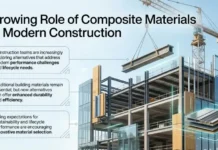
A paradigm change in property design is being made possible by the increased worldwide emphasis on material science, which is giving sustainability and structural integrity priority. The effects of new materials on the environment, their affordability, and their sustainable practices are what are driving this change.
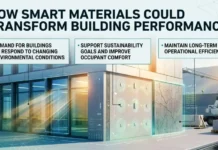
Climate-responsive smart glass and self-healing concrete are two examples of smart materials that lower emissions and capital costs throughout the course of a building’s life cycle. The latter material regulates opacity to manage light and heat.
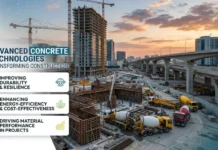
8% of the world’s CO2 emissions come from conventional cement, which has a significant carbon impact. Innovative companies like US-based Biomason and Partanna are tackling this issue.
While Partanna employs recycled resources like brine and slag to manufacture concrete without the high energy and emissions of typical concrete production, Biomason uses biological production platforms to generate concrete materials by combining aggregates with bacteria, nutrients, calcium, and carbon sources.
In the region, plastic trash is being used by firms such as TileGreen in Egypt to produce concrete substitutes that are carbon neutral. Using sustainable materials may lower the cost of real estate, particularly in areas like Sub-Saharan Africa where green buildings can save 16% on operating costs over the long run while requiring a 2% higher initial investment.
With the support of Lafarge Holcim, Switzerland-based 14Trees is building schools and homes in Malawi and Kenya using 3D printing in record time—less than 18 hours—and selling them for a reasonable $27,000. At every stage of the project, 14Trees seeks to further reduce building expenses.
3D printing and additive manufacturing
Significant advancements in 3D printing and additive manufacturing have resulted from developments in the material sciences. These techniques provide realistic cost and efficiency advantages by facilitating effective prototyping, meticulous scale modeling, and design visualization.
Even though they start off expensive, products produced by additive manufacturing may use up to 90% fewer raw resources, and as new materials become accessible, they should become more reasonably priced.
3D printed products work as concrete models that promote better communication and collaboration throughout the design and building phases.
By moving production closer to the end user, additive manufacturing improves security and reliability, reduces waste and delays during the design process, and simplifies supply chains.
In the real estate industry, the move towards sustainability is not only a reaction to environmental issues; rather, it is a holistic plan to improve productivity, affordability, and profitability.
By effectively replacing components in heavy equipment, regional players like Immensa—which is now pioneering additive manufacturing within the energy sector—can also take use of their knowledge and technological prowess to optimize the construction process.
In a similar vein, Innotech, an Omani company, provides 3D manufacturing and prototype services for a range of industries, including engineering and design.
Beyond process optimization, US-based Mighty Buildings and other regional investors, including Saudi Aramco’s Wa’ed Ventures and Khosla Ventures, use 3D printing technology and eco-friendly materials to produce prefabricated, low-emission buildings.
These structures come in a range of components, such as steel frames, panels, and insulation, and they provide flexible on-site assembly choices.
Water management, green construction, and energy efficiency
Beyond material selections, building amenities and central HVAC systems are clearly moving in the direction of sustainability. Energy-efficient lighting and other technologies are being integrated from the very beginning of the value chain.
The need of integrating sustainability into decision-making processes is emphasized by programs like the Africa Green Building Finance Initiative, Saudi Arabia’s developing national building regulations, and the UAE’s Al Sa’fat and Pearl grading systems.
Regional firms are launching extensive energy management networks, such as Taka Solutions, located in the United Arab Emirates. The company’s Cooling-as-a-Service (CaaS) concept lowers chiller costs for all facilities, and creative financing options for new construction or retrofit projects contribute to energy efficiency.
The portfolio of Taka Solutions has saved 100,000 MWh and assisted customers in saving over $12 million on energy costs, demonstrating how sustainability is compatible with both financial gains and environmental objectives.
Regarding water management, HT Materials Science in Ireland, which has Saudi Aramco as one of its customers in the GCC, creates sophisticated heat transfer fluids with the goal of improving the effectiveness of heating and cooling systems.
Their main offering, MaxwellTM, is a nanofluid additive that may enhance thermal performance by up to 15%, resulting in less energy being used and less carbon being released into the atmosphere.
Their solution is appropriate for a variety of applications, including data centers and commercial buildings, since it can be seamlessly incorporated into current systems without requiring major adjustments.
In the real estate industry, the move towards sustainability is not only a reaction to environmental issues; rather, it is a holistic plan to improve productivity, profitability, and accessibility.
The real estate industry can both fulfill the rising need for inexpensive and sustainable living spaces and dramatically lower its carbon footprint by adopting cutting-edge materials, manufacturing processes, and energy-efficient procedures.
