






















Close
MCE 2026
Friday, February 6, 2026
JEC WORLD 2026

McCarthy team wins $712m contract to build Next NGA West project in US

Note* - All images used are for editorial and illustrative purposes only and may not originate from the original news provider or associated company.

Subscribe

- Never miss a story with notifications

- Gain full access to our premium content

- Browse free from any location or device.

Media Packs

Expand Your Reach With Our Customized Solutions Empowering Your Campaigns To Maximize Your Reach & Drive Real Results!

– Access the Media Pack Now

– Book a Conference Call

Leave Message for Us to Get Back

Related stories

Indoor Air Quality Strategies for Health Focused Buildings

Prioritizing the atmospheric integrity of interior spaces has become a fundamental pillar of modern architectural design. By implementing comprehensive monitoring and purification protocols, developers can create environments that actively support the well-being and productivity of their occupants. The shift toward these specialized frameworks reflects a broader recognition of the profound impact that environmental variables have on human health and the long-term viability of high-performance structures.

Water Efficient Plumbing Systems in Sustainable Construction

Modern infrastructure is increasingly defined by its ability to manage vital resources with extreme care. The implementation of advanced fluid management frameworks allows for a drastic reduction in consumption while enhancing the overall resilience of urban water cycles. These solutions are essential for meeting stringent regulatory standards and ensuring the long-term viability of green development projects worldwide.

Sustainable Cooling Technologies Shaping Urban Construction

Innovative approaches to thermal regulation are becoming essential as urban centers grapple with rising temperatures and the heat island effect. Implementing low-energy methods for climate control allows for the creation of resilient structures that prioritize environmental responsibility alongside occupant comfort. The integration of these advanced systems marks a significant transition in the methodology of modern infrastructure development, ensuring that metropolitan growth remains viable in an era of climatic shifts.
- Advertisement -

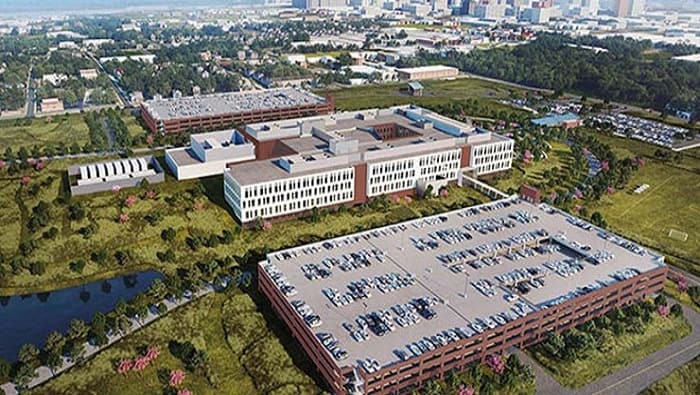
The design-build team of McCarthy HITT with Black & Veatch Gensler JV, and Akima has secured a $711.7m contract to deliver $1.7bn Next NGA West (N2W) project, a new campus for the National Geospatial-Intelligence Agency (NGA) in St. Louis, Missouri.

The new campus will be located in the St. Louis Place neighbourhood at Jefferson and Cass avenues in north St. Louis.

The total project cost includes the McCarthy HITT contract worth $711.7m, land procurement, post-construction outfitting of the building, and small business set-aside construction projects.

McCarthy Building Companies vice president of operations and the McCarthy HITT team’s project executive Jeffery Boyer said: “McCarthy is pleased to have been selected, along with our partners, to build the NGA’s new state-of-the-art campus.

“As the largest federal investment project in St. Louis history it is expected to have a tremendous regional impact in terms of expanding jobs, promoting economic development and strengthening our local community.”

To be built on a 97-acre site, the N2W campus will replace the existing NGA building situated south of downtown.

The new project will feature a 712,000ft² office building, a visitor centre, parking garages, a remote inspection facility and access control points.

The design and construction of the project will be overseen by the Kansas City District, US Army Corps of Engineers (USACE).

Preliminary works, including several design and preconstruction activities, submittals and joint planning are set to begin later this year.

Major construction work will commence in early 2020, with plans for the new campus to be operational in 2025.

The project is expected to create up to 1,300 jobs per day at the site during its peak construction in 2022. Overall, the development will create 5,000 construction jobs.

Boyer said: “Throughout the project we’ll be working closely with NGA and the U.S. Army Corps of Engineers, as well as many teams of trade partners, community organizations and others.”

He further added that the team includes some of the nation’s most capable experts in large federal project execution, design-build/O&M, construction, and federal operations and maintenance from across the nation.

Upon completion, the new campus will offer benefits such as expanded engagement opportunities with universities and innovative, technology-based companies; environmental and cost advantages; an improved ability to hire new employees; and proximity to NGA’s data facilities and current and future staff.

Achema Middleeast

Latest stories

Related stories

Indoor Air Quality Strategies for Health Focused Buildings

Prioritizing the atmospheric integrity of interior spaces has become a fundamental pillar of modern architectural design. By implementing comprehensive monitoring and purification protocols, developers can create environments that actively support the well-being and productivity of their occupants. The shift toward these specialized frameworks reflects a broader recognition of the profound impact that environmental variables have on human health and the long-term viability of high-performance structures.

Water Efficient Plumbing Systems in Sustainable Construction

Modern infrastructure is increasingly defined by its ability to manage vital resources with extreme care. The implementation of advanced fluid management frameworks allows for a drastic reduction in consumption while enhancing the overall resilience of urban water cycles. These solutions are essential for meeting stringent regulatory standards and ensuring the long-term viability of green development projects worldwide.

Sustainable Cooling Technologies Shaping Urban Construction

Innovative approaches to thermal regulation are becoming essential as urban centers grapple with rising temperatures and the heat island effect. Implementing low-energy methods for climate control allows for the creation of resilient structures that prioritize environmental responsibility alongside occupant comfort. The integration of these advanced systems marks a significant transition in the methodology of modern infrastructure development, ensuring that metropolitan growth remains viable in an era of climatic shifts.

Integrated Building Systems Drive Construction Innovation

Creating a unified mechanical and digital architecture within a structure allows for a synergistic approach to performance. By bridging the gap between isolated utilities like HVAC, lighting, and security, a holistic operational model emerges that prioritizes efficiency and user experience. This level of convergence is a primary catalyst for the advancement of modern engineering practices and smart infrastructure.

Subscribe

- Never miss a story with notifications

- Gain full access to our premium content

- Browse free from any location or device.

Media Packs

Expand Your Reach With Our Customized Solutions Empowering Your Campaigns To Maximize Your Reach & Drive Real Results!

– Access the Media Pack Now

– Book a Conference Call

Leave Message for Us to Get Back

Translate »