



















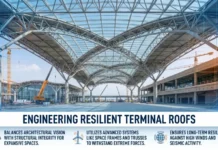




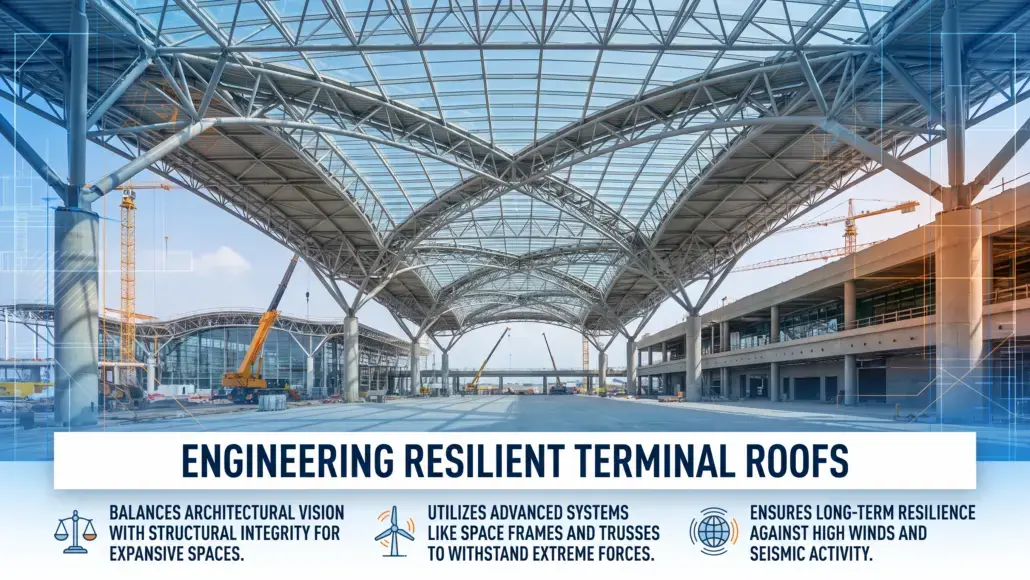


The engineering of terminal roof systems for large-span airport buildings is a task of immense complexity, requiring a balance between architectural ambition and structural necessity. These roofs must cover vast column-free spaces while withstanding extreme environmental forces, including high wind speeds and seismic activity. To achieve the necessary resilience, engineers utilize advanced structural systems such as space frames, cable-stayed structures, or long-span steel trusses. The design must account for the intense aerodynamic pressures that act on such large surface areas, particularly in coastal regions where typhoons or hurricanes are a concern. This involves the use of specialized wind-tunnel testing to understand the pressure distribution and to design the cladding and connections accordingly. In seismic zones, the roof must be engineered to move independently of the supporting columns to prevent the transfer of destructive forces, often utilizing base isolation or specialized dampening devices. The structural integrity of the roof is also critical for supporting secondary systems, such as large-scale glazing, mechanical units, and solar arrays. By prioritizing resilience, developers ensure that the terminal remains a safe and secure environment for passengers and staff, even in the event of a catastrophic natural disaster. The use of high-strength materials and advanced fabrication techniques allows for the creation of lighter, more efficient roof structures that can span hundreds of meters without intermediate support. This focus on engineering excellence is what enables the iconic, wide-open spaces that define modern airport architecture. As airports continue to grow in scale, the role of terminal roof systems in ensuring structural performance and passenger safety will remain paramount.
Integrating Natural Lighting and Solar Energy Harvesting
Modern terminal roof systems are increasingly being used as active components in a building’s energy management strategy. By integrating natural lighting and solar energy harvesting, developers can significantly reduce the environmental footprint and operational costs of the terminal. The use of large-scale skylights and translucent roofing materials allows for an abundance of natural daylight to reach deep into the building hall, reducing the need for artificial lighting during the day. This not only saves energy but also creates a more pleasant and healthy environment for passengers, as natural light has been shown to improve mood and reduce stress. The engineering challenge lies in balancing daylighting with thermal control, ensuring that the roof does not allow for excessive heat gain or loss. This is achieved through the use of high-performance glazing with low-emissivity coatings and integrated shading systems. In addition to lighting, the expansive surface area of a terminal roof provides an ideal platform for solar energy harvesting. Large-scale photovoltaic arrays can be integrated into the roof structure, generating a significant portion of the facility’s power requirements. The design must account for the weight and electrical connectivity of these systems, ensuring that they do not compromise the structural integrity or maintenance access of the roof. By turning the roof into a renewable energy plant, airport operators can achieve significant reductions in carbon emissions and move toward a more sustainable future. The integration of these green technologies into the core of the roof design is a hallmark of high-performance aviation infrastructure. As the cost of solar technology continues to fall, its adoption in large-scale airport projects is expected to become the industry standard.
Acoustic Performance and Environmental Control in Roof Design
Acoustic performance and environmental control are critical factors in the design of terminal roof systems, directly impacting the quality of the passenger experience. The expansive halls of an airport terminal can become echo chambers if the roof is not designed to absorb sound. This requires the use of specialized acoustic panels, micro-perforated liners, and sound-absorbing insulation within the roof assembly. These materials help to reduce reverberation and minimize the impact of external noise, such as jet engine roar or heavy rain, creating a quieter and more relaxing environment for travelers. In addition to acoustics, the roof plays a key role in the building’s thermal performance, acting as a primary barrier against the elements. Advanced insulation systems and thermal-break technology are used to prevent heat transfer and to maintain a consistent indoor temperature. The roof design must also incorporate effective ventilation and smoke extraction systems to ensure the safety and comfort of the occupants. In large-span buildings, the management of air movement is particularly important, often requiring the use of computational fluid dynamics (CFD) to optimize the placement of vents and louvers. By prioritizing these environmental factors, developers ensure that the terminal functions as a high-performance space that meets the demanding needs of modern travel. The integration of acoustic and thermal controls into the structural frame of the roof reflects a holistic approach to airport engineering. As terminals become more technologically advanced, the importance of effective environmental management will only increase. Through careful material selection and engineering, airport developers can create a facility that is both structurally sound and environmentally superior.
Maintenance, Longevity, and Lifecycle Performance of Canopies
The long-term performance and maintenance of canopy systems are essential considerations for airport owners, given the high costs and logistical challenges of repairing such large structures. Modern roof designs must prioritize longevity, utilizing materials and coatings that can withstand decades of exposure to UV radiation, pollution, and extreme weather. High-performance fluoropolymer coatings and stainless steel or aluminum cladding are often used for their superior corrosion resistance and color retention. The design must also include comprehensive access systems, such as permanent walkways, fall-protection anchors, and cradle systems, to allow for safe inspection and maintenance by technicians. The engineering of the roof should facilitate easy water drainage, with a network of high-capacity gutters and siphonic drainage systems to prevent the accumulation of water and the risk of leaks. Periodic inspections and proactive maintenance are critical for identifying potential issues, such as loose connections or degraded seals, before they lead to major structural problems. The use of digital maintenance platforms and sensor-based monitoring can further enhance the oversight of the roof’s condition, providing real-time data on structural health and weather impacts. By considering the entire lifecycle of the canopy, developers can ensure that the roof remains in peak condition for many years, minimizing the need for costly and disruptive repairs. The focus on durability and maintenance is a key feature of sustainable airport development, reducing the use of resources and the environmental impact of long-term operations. As airports become more complex, the role of resilient and easy-to-maintain roof systems will only become more critical. This commitment to long-term performance is what defines a truly world-class aviation hub.
Structural Innovation in Long-Span Steel and Composite Roofs
Structural innovation is at the heart of modern canopy systems, enabling the creation of the iconic large-span structures that characterize global aviation hubs. The transition from traditional heavy steel frames to lightweight long-span steel and composite roofs has revolutionized the possibilities for airport architecture. These innovative systems utilize high-strength-to-weight materials and advanced geometric forms, such as catenary curves or geodesic domes, to achieve enormous spans with minimal material. The engineering of these structures requires the use of sophisticated finite element analysis (FEA) to understand the complex distribution of stresses and to optimize the design for maximum efficiency. In addition to steel, the use of advanced composites, such as carbon fiber or glass-reinforced polymers, is beginning to play a role in roof construction, offering even greater weight savings and corrosion resistance. The integration of these new materials requires a deep understanding of material science and the development of specialized connection techniques. The result of this structural innovation is a roof that is not only highly efficient and resilient but also aesthetically striking, serving as a landmark for the airport and the city it serves. The ability to span hundreds of meters without intermediate columns provides ultimate flexibility for the internal layout of the terminal, allowing for the easy reconfiguration of passenger flows and commercial areas. As the demand for larger and more spectacular airport terminals continues to rise, the role of structural innovation in enabling these ambitious projects will remain paramount. The ongoing evolution of fabrication technology, such as 3D printing and robotic assembly, will further enhance the potential for creating complex and efficient roof structures.
Thermal Efficiency and Advanced Insulation in Terminal Envelopes
Thermal efficiency and the use of advanced insulation are critical components of the terminal envelope, directly impacting the energy performance and lifecycle costs of the facility. The roof, being the largest surface area of the terminal, is the primary source of heat gain in summer and heat loss in winter. To address this, modern canopy systems incorporate multi-layered insulation assemblies featuring high-performance materials such as polyisocyanurate (PIR) boards or mineral wool. These layers are meticulously engineered to prevent thermal bridging, where heat bypasses the insulation through structural components. The use of reflective ‘cool roof’ coatings further enhances thermal efficiency by reflecting a significant portion of solar radiation back into the atmosphere, reducing the temperature of the roof surface and the demand for cooling. Additionally, the integration of phase-change materials (PCMs) within the roof structure can help to stabilize indoor temperatures by absorbing and releasing thermal energy as the material transitions between solid and liquid states. This proactive approach to temperature management reduces the load on the advanced hvac systems and contributes to a more sustainable building. The engineering of the building envelope must also account for moisture control, utilizing vapor barriers and breathable membranes to prevent condensation and the resulting degradation of the structural and insulating materials. By prioritizing thermal efficiency, airport developers can achieve significant reductions in energy consumption and carbon emissions. The focus on high-performance envelopes is a hallmark of modern green building design, reflecting a broader commitment to environmental stewardship. As energy regulations become increasingly strict, the role of advanced insulation and thermal management in terminal construction will only become more critical. Through careful planning and the selection of best-in-class materials, airport operators can ensure that their facilities remain energy-efficient and comfortable for decades to come.