



























The fundamental challenge in cargo terminal design is the seamless coordination between landside logistics and airside operations. A well-designed facility must act as a high-speed transition zone where freight is moved efficiently between trucks and aircraft. This requires a strategic layout that minimizes the physical distance cargo must travel while ensuring a smooth flow of vehicles on both sides of the terminal. On the landside, the design must provide ample space for truck maneuvering, docking, and loading, with a clear separation between arriving and departing vehicles to prevent congestion. The integration of advanced dock management systems further enhances efficiency, allowing for the precise scheduling of truck arrivals and departures. On the airside, the terminal must be positioned to provide direct access to the aircraft stands, with wide ramps and specialized equipment to handle the rapid loading and unloading of wide-body freighters. The internal configuration of the terminal should follow a linear flow, with dedicated zones for screening, sorting, and storage that prevent cross-traffic and minimize handling. By optimizing these critical interfaces, developers can significantly reduce the dwell time of cargo, ensuring that time-sensitive shipments reach their destination as quickly as possible. The use of specialized equipment, such as nose-loading ramps and automated pallet handling systems, further streamlines the transition between the warehouse and the aircraft. As global trade volumes continue to grow, the ability to coordinate landside and airside activities with precision will remain a defining factor in the success of cargo terminal projects. The implementation of flexible layouts that can adapt to different aircraft types and cargo profiles also enhances the long-term viability of the facility.
Enhancing Speed of Processing and Cargo Handling Throughput
Increasing the speed of processing and maximizing throughput is a primary objective for any cargo terminal operator. This requires a deep focus on the technical details of cargo handling, from the initial intake and screening to the final build-up of unit load devices (ULDs). Cargo terminal design must incorporate high-speed conveyor systems, automated sorting matrices, and advanced weighing and dimensioning tools that can process thousands of items per hour. The integration of electronic data interchange (EDI) and automated manifest systems allows for the rapid exchange of information between shippers, airlines, and customs authorities, reducing the need for manual documentation and speeding up the clearance process. Inside the terminal, the use of automated storage and retrieval systems (ASRS) and specialized ULD handling equipment ensures that freight is moved and stored with high accuracy and minimal physical effort. This not only improves the speed of operations but also reduces the risk of damage to the cargo and injury to the staff. The design of the facility should also include dedicated areas for express and time-definite shipments, allowing them to bypass the standard processing flow and reach the aircraft more quickly. By analyzing every step of the cargo journey, planners can identify and eliminate bottlenecks, ensuring a consistent and reliable flow of freight through the terminal. The use of data analytics to monitor real-time throughput allows for the dynamic allocation of resources, such as opening additional screening lanes during peak periods. As the demand for fast, reliable air freight continues to rise, the ability to process cargo at high speed will remain a key competitive advantage. The focus on throughput also extends to the design of the airside ramps, ensuring that the ground support equipment can operate at peak efficiency.
Safety and Security Protocols in Modern Cargo Infrastructure
Ensuring the safety and security of both personnel and cargo is a non-negotiable requirement in modern cargo terminal design. The facility must be engineered to meet strict international standards for aviation security, incorporating a multi-layered approach to screening and access control. This involves the installation of high-resolution X-ray machines, explosive trace detection systems, and advanced biometrics to monitor and verify all individuals entering the secure zone. The physical layout of the terminal should facilitate a clear separation between different security levels, with secure corridors and controlled entry points that prevent unauthorized access. In addition to security, the design must prioritize the safety of the workforce, particularly in areas where heavy machinery and high-speed automated systems are in operation. This requires the inclusion of clear walkways, emergency stop systems, and lighting to ensure a safe and productive environment. Fire protection is another critical area, necessitating the use of advanced detection sensors and high-capacity sprinkler systems that can suppress a fire in a dense logistics environment. The use of flame-retardant materials and specialized smoke extraction systems further enhances the resilience of the facility. By integrating these safety and security protocols into the core of the design, developers create a secure environment that protects the integrity of the global supply chain and the well-being of the airport staff. The ongoing training of personnel and the regular auditing of security procedures are also essential components of a safety strategy. As the threats to aviation security continue to evolve, the ability to adapt the terminal’s infrastructure to new technology and regulations will remain a top priority for developers.
Future-Proofing Cargo Facilities for E-Commerce Expansion
The explosive growth of global e-commerce has fundamentally changed the requirements for air freight facilities, necessitating a focus on future-proofing in cargo terminal design. Modern terminals must be capable of handling a high volume of small, individual parcels alongside traditional palletized freight. This requires a shift toward more flexible and scalable layouts that can accommodate a wide range of sorting and processing technologies. The design should include provision for the integration of robotic arms for parcel handling, high-speed sorting belts, and specialized zones for e-commerce fulfillment. Additionally, the facility must have the capacity to handle high-frequency, low-volume shipments, which often require faster processing and more frequent aircraft turns. Future-proofing also involves the installation of data infrastructure and electrical capacity to support the next generation of automated systems. The layout of the terminal should allow for easy expansion or reconfiguration as market demands shift, ensuring that the infrastructure remains viable over the long term. This proactive approach to design reduces the risk of obsolescence and allows airport operators to respond quickly to new business opportunities. By anticipating the needs of the e-commerce sector, developers can create a facility that is both highly efficient and exceptionally adaptable. The integration of last-mile logistics facilities within or adjacent to the cargo terminal further enhances the efficiency of the e-commerce supply chain, providing a direct link between the airport and the end consumer. As the digital economy continues to expand, the ability to handle e-commerce freight with speed and accuracy will become an increasingly important metric of success for cargo terminals. The use of modular construction techniques can also facilitate faster upgrades and expansions, ensuring that the facility can keep pace with the rapid growth of the sector.
Integrating Environmental Sustainability into Cargo Terminal Projects
The aviation industry is under increasing pressure to reduce its environmental impact, and facility planning is playing a key role in this transition. Modern logistics facilities are incorporating a wide range of sustainable construction methodologies and energy-efficient technologies to minimize their carbon footprint. This starts with the building envelope, utilizing high-performance insulation and energy-efficient glazing to reduce the demand for heating and cooling. The installation of large-scale solar arrays on the expansive roofs of cargo terminals provides a significant source of renewable energy, often generating enough power to meet a substantial portion of the facility’s needs. Water conservation is another critical area, with designs featuring rainwater harvesting systems for irrigation and greywater recycling for sanitation. Inside the terminal, the use of LED lighting with smart controls and high-efficiency mechanical systems further reduces energy consumption. The selection of building materials also plays a role in sustainability, with a focus on low-carbon concrete, recycled steel, and non-toxic finishes. By integrating these green practices into the core of the project, airport developers not only meet regulatory requirements but also achieve significant long-term operational savings. The focus on sustainability also enhances the reputation of the airport, making it a more attractive destination for environmentally conscious airlines and shippers. Ultimately, the successful delivery of a green cargo terminal requires a holistic approach that balances operational efficiency with ecological stewardship. The use of life-cycle assessment tools allows engineers to evaluate the environmental impact of various design choices, ensuring that the finished facility is truly sustainable. As the industry moves toward a net-zero future, the integration of environmental considerations into every stage of the design process will remain a top priority.
Structural Requirements for Large-Span Logistics Facilities
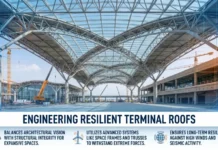
The structural engineering of a cargo terminal must address the unique challenges of creating a large-span, high-volume environment that can handle heavy industrial loads. To maximize the efficiency of cargo handling, the design typically requires a large column-free space that allows for the flexible placement of sorting systems and storage racks. This necessitates the use of advanced structural systems, such as long-span steel trusses or pre-stressed concrete beams, to support the roof without the need for internal columns. The floor of the terminal is another critical structural element, requiring a high-strength reinforced concrete slab that can support the weight of high-bay racking and heavy ground support equipment. The slab must meet strict tolerances for levelness and durability to ensure the smooth operation of automated cranes and vehicles. In addition to static loads, the structure must be engineered to resist dynamic forces, such as the vibrations from conveyor systems and the impact of loading operations. The use of specialized expansion joints and vibration damping measures helps to maintain the integrity of the building over time. The structural design must also account for wind and seismic loads, which can be significant for large, open-span buildings. By prioritizing structural performance and durability, developers create a facility that can withstand the intense demands of the logistics industry for decades. The focus on engineering excellence also extends to the integration of mechanical and electrical services within the structural frame, ensuring a clean and efficient layout. As the size and complexity of cargo terminals continue to increase, the role of advanced structural systems in enabling high-performance logistics will only become more prominent. The use of building information modeling (BIM) allows for the precise coordination of all structural and mechanical components, reducing the risk of conflicts and ensuring a smooth construction process.