



















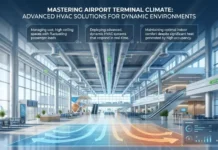




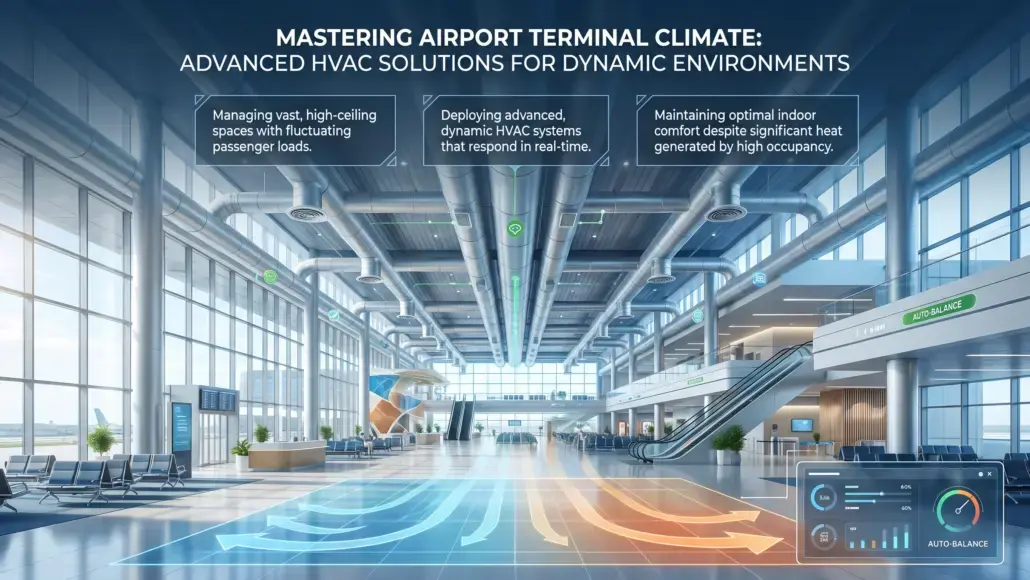


The thermal management of a large passenger terminal represents one of the most significant engineering challenges in modern airport construction. Passenger terminals are unique environments characterized by vast open spaces, high ceilings, and high occupancy levels that fluctuate wildly throughout the day. To maintain a comfortable indoor climate, developers must deploy advanced hvac systems capable of responding dynamically to these shifting loads. The primary source of heat in these facilities is a combination of solar gain through expansive glass facades and the internal heat generated by thousands of passengers and electronic devices. Engineering the building envelope to mitigate solar gain is a crucial first step, but the mechanical system must ultimately handle the residual load. This requires the use of high-capacity air handling units and sophisticated variable refrigerant flow systems that can target specific zones within the terminal. By concentrating cooling or heating efforts where they are most needed, such as in crowded gate areas or security checkpoints, airport operators can significantly reduce energy consumption. The integration of displacement ventilation, where conditioned air is introduced at the floor level and rises naturally as it warms, further improves the efficiency of the thermal management strategy. This approach not only ensures a more consistent temperature at the passenger level but also reduces the volume of air that needs to be treated, as the upper reaches of high-volume halls can be left at a slightly higher temperature without impacting comfort. The use of advanced hvac systems in this context is essential for balancing the demanding requirements of passenger comfort with the necessity of operational cost control. As energy costs continue to rise, the ability to manage thermal loads with precision becomes a defining characteristic of a high-performance terminal. The implementation of advanced predictive algorithms, which analyze flight schedules and weather forecasts, allows the system to pre-cool or pre-heat the building in anticipation of peak demand, further smoothing the energy profile of the facility.
Specialized Air Filtration and Ventilation Protocols for Public Health
Beyond temperature control, the role of advanced hvac systems in maintaining air quality and public health has become a paramount concern for airport developers. Large terminals host a diverse and global population, making the prevention of airborne disease transmission a critical design objective. This requires the installation of high-efficiency particulate air (HEPA) filters and ultraviolet germicidal irradiation systems within the air handling units to neutralize pathogens. The ventilation strategy must also ensure a high rate of air exchange, bringing in fresh outdoor air while effectively exhausting contaminants from the building. In areas such as restrooms and food courts, specialized exhaust systems are employed to prevent odors and pollutants from migrating to other parts of the terminal. The engineering of these systems must also account for the presence of jet engine exhaust and other outdoor pollutants, necessitating the use of activated carbon filters to remove volatile organic compounds and fine particulates. By prioritizing air quality, airport operators create a safer and more pleasant environment for travelers and staff alike. The use of advanced hvac systems to monitor and adjust air quality in real-time is a key feature of modern terminal design, with sensors continuously measuring levels of carbon dioxide and other indicators. This data-driven approach ensures that the ventilation rate is always optimized for the current occupancy level, avoiding the waste of energy associated with over-ventilating empty spaces. Additionally, the design of the air distribution network must minimize dead zones where air can become stagnant, utilizing computational fluid dynamics to verify the effectiveness of the layout. The integration of these public health protocols into the mechanical design reflects a broader commitment to passenger well-being and operational resilience. As international travel continues to grow, the ability to maintain a healthy indoor environment will remain a top priority for the aviation industry.
Integrating District Cooling for Large-Scale Aviation Facilities
The sheer scale of modern airport terminals often makes traditional decentralized cooling systems impractical and inefficient. Instead, many large-scale aviation projects are turning to district cooling as a more sustainable and cost-effective alternative. This involves the construction of a central utility plant that generates chilled water and distributes it to multiple terminal buildings and supporting facilities through an underground pipe network. Integrating mechanical systems with district cooling allows for greater economies of scale and improved energy efficiency, as the central plant can utilize high-efficiency centrifugal chillers and industrial-scale cooling towers. The use of thermal energy storage, where ice or chilled water is produced during off-peak hours and stored for use during periods of high demand, further enhances the economic viability of the system. This approach reduces the electrical load on the local grid during peak times and allows the airport to take advantage of lower utility rates. From a construction perspective, the use of district cooling simplifies the mechanical design of individual terminals, as they no longer require large rooftop chillers or cooling towers. This frees up valuable space for architectural features or renewable energy installations, such as solar panels. The maintenance of the cooling system is also centralized, allowing for more rigorous oversight and easier access for technicians. The underground distribution network must be carefully engineered to prevent heat loss and ensure the long-term integrity of the pipes, utilizing high-performance insulation and leak detection systems. By adopting this centralized approach, airport developers can achieve significant reductions in carbon emissions and operational costs over the lifecycle of the infrastructure. The integration of mechanical systems into a district cooling framework represents a sophisticated engineering solution that addresses the unique challenges of large-scale aviation facilities.
Smart Sensors and Data-Driven Energy Optimization Strategies
The evolution of smart building technology has provided airport operators with unprecedented control over their mechanical systems. By deploying a dense network of smart sensors throughout the terminal, developers can gather real-time data on temperature, humidity, occupancy, and air quality. This information is processed by mechanical systems that utilize machine learning to optimize the performance of the building in real-time. For instance, if a sensor detects an increase in carbon dioxide levels in a specific gate area, the system can automatically increase the ventilation rate in that zone until the levels return to normal. Similarly, the lighting and cooling systems can be adjusted based on the presence or absence of passengers, ensuring that energy is not wasted in unoccupied areas. The use of data-driven energy optimization strategies allows for a more proactive approach to facility management, where potential issues can be identified and addressed before they impact operations. Predictive maintenance is a key benefit of this approach, as the system can monitor the performance of individual components and alert technicians when a failure is imminent. This reduces the risk of unplanned downtime and extends the lifespan of the equipment. The integration of these smart systems also provides valuable insights into the long-term performance of the building, allowing for continuous refinement of the energy management strategy. As the aviation industry moves toward a more sustainable future, the role of data-driven optimization will only become more critical. The ability to minimize the environmental footprint of a terminal while maintaining high levels of comfort is a hallmark of modern engineering. By leveraging the power of smart technology, airport developers can create a more efficient, responsive, and resilient infrastructure that meets the demands of the 21st century.
Acoustic Control and Vibration Isolation in Mechanical Installations
In the design of mechanical systems, the management of noise and vibration is a critical factor in ensuring a high-quality passenger experience. Mechanical equipment, such as large fans, pumps, and chillers, can generate significant noise and structural vibration if not properly isolated. This is particularly important in terminals where expansive open spaces and hard surfaces can amplify sound. To address this, engineers employ a variety of acoustic control measures, including the use of sound attenuators in ductwork and specialized insulation for mechanical rooms. The placement of air handling units is also carefully considered, often locating them in dedicated plant rooms that are structurally isolated from the main terminal hall. Vibration isolation is achieved through the use of spring mounts, inertia bases, and flexible connectors that prevent mechanical energy from being transmitted to the building’s structural frame. This level of precision is necessary to protect sensitive electronics and to ensure that the quiet, tranquil atmosphere of a modern terminal is maintained. The design of the air distribution system also plays a role in acoustic performance, with low-velocity ductwork and carefully selected diffusers helping to minimize the sound of rushing air. By prioritizing acoustic control, developers ensure that the terminal remains a comfortable and relaxing space for travelers, even in the midst of a bustling airport environment. The integration of these specialized measures into the broader mechanical design reflects the high standards of modern aviation infrastructure. As terminals become more technologically advanced, the need for effective noise and vibration management will only increase. Through careful engineering and the selection of high-performance components, airport developers can create a facility that is both mechanically efficient and acoustically superior.
Lifecycle Maintenance and Scalability of Terminal Climate Systems
The long-term success of a terminal’s climate control strategy depends on the ability to maintain and scale the system as the facility grows. mechanical systems must be designed with a focus on lifecycle maintenance, ensuring that all components are easily accessible for inspection and repair. This involves the inclusion of generous service clearances, dedicated maintenance access routes, and modular equipment that can be replaced or upgraded without major disruption to operations. The use of standardized components and digital maintenance logs further simplifies the task of facility managers, allowing for more efficient oversight and troubleshooting. Scalability is another critical consideration, as the terminal may undergo multiple expansions over its lifespan. The mechanical infrastructure, including the main piping headers and electrical supply, should be sized to accommodate future growth, or be designed in a way that allows for easy extension. This proactive approach to planning ensures that the airport can adapt to increasing passenger volumes without requiring a complete overhaul of the mechanical systems. The integration of mechanical systems into a modular growth framework is a key feature of sustainable airport development, reducing the need for costly retrofits and minimizing the environmental impact of future construction. By considering the entire lifecycle of the building, developers can create a more resilient and economically viable facility. The ongoing transition toward green energy sources, such as electricity-based heating and cooling, also requires the system to be adaptable to new technology. Through a focus on maintenance and scalability, airport operators can ensure that their terminals remain at the forefront of energy efficiency and passenger comfort for decades to come. This commitment to long-term performance is what defines a truly world-class aviation hub.