
























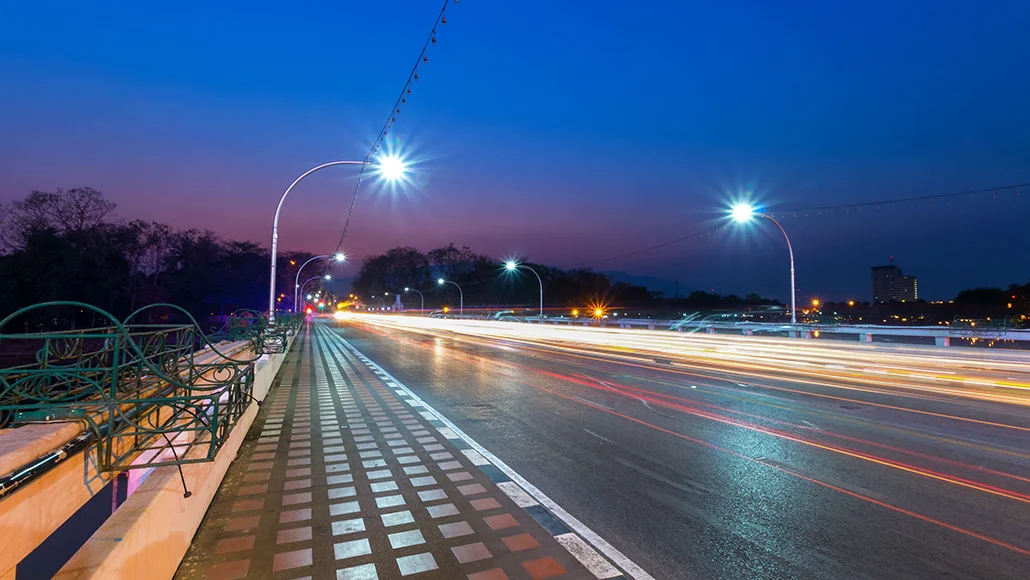


The evolution of street lighting systems over recent decades has been driven not only by the transition to LED light sources, but also by changes in control principles. Where lighting once operated on simple on/off schedules, today the key question is system architecture: how luminaires are controlled and how data is collected.
At the design stage, this decision defines not only system functionality, but also cost, scalability, and operational performance for years ahead. In practice, the choice comes down to two approaches: individual control of each luminaire or group control of network segments.
Two Control Approaches
Individual control (lamp-level) involves installing a controller on each luminaire. Each node becomes an addressable element of the system, capable of sending data and receiving commands independently.
Group control (segment-level) is implemented at the level of a power line or distribution cabinet. In this case, a group of luminaires connected within a single electrical segment is controlled together.
Both approaches support basic functions such as switching, scheduling, and simple automation. The differences emerge in operational details and control capabilities.
How Architecture Affects the System
Control granularity
Individual systems allow each luminaire to be controlled independently, including dimming levels, scenarios, and adaptive lighting strategies.
In group control, all luminaires within a segment operate uniformly, which limits flexibility.
Diagnostics and maintenance
Individual systems provide precise information about the status of each luminaire, including location and type of failure.
In segment-based architectures, diagnostics are limited to the line level, often requiring additional field inspections to locate issues.
Energy consumption
Individual control enables more precise adjustment of lighting levels and optimization of energy use.
Group control also reduces energy consumption compared to unmanaged systems, but without fine-tuned optimization.
Deployment speed
Segment-based solutions are typically faster to deploy, as they require fewer devices and less infrastructure modification.
Individual systems take more time to install and commission.
Cost
Group control has a lower entry cost due to fewer installed components.
Individual control requires higher upfront investment, but can reduce operational costs through improved diagnostics and control precision.
Scalability
Individual systems are easier to integrate into broader infrastructure, including other urban services.
Segment-based systems are more limited in scalability, especially when transitioning to more granular control is required.
Both architectures are implemented in modern lighting control systems, including solutions from providers such as DITRA Solutions.
When to Choose Each Approach
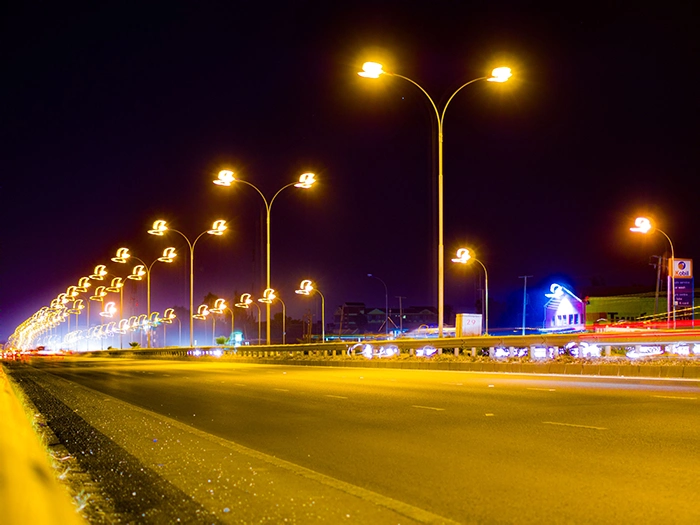
Group control is appropriate when:
- the project is budget-constrained;
- fast deployment is required;
- there is no need for detailed analytics or integration;
- the infrastructure is outdated and requires minimal modification.
Individual control is preferable when:
- high control precision is required;
- fast fault detection and response are important;
- integration with other city systems is planned;
- the project is designed for long-term operation and expansion.
According to experts at DITRA Solutions, the choice of architecture is typically driven not by technological limitations, but by a combination of budget constraints, control requirements, and the project planning horizon.
Conclusion
Individual and group approaches to street lighting control address different objectives. The former provides maximum control and system transparency, while the latter simplifies deployment and reduces initial costs.
The choice between them is not about which is “better.” It is an architectural decision that should reflect the specific conditions of the project: infrastructure, budget, functional requirements, and long-term development plans.