
























Close
MCE 2026
Thursday, January 8, 2026
JEC WORLD 2026

Garco Construction operates Link-Belt cranes around the clock in Seattle

Note* - All images used are for editorial and illustrative purposes only and may not originate from the original news provider or associated company.

Subscribe

- Never miss a story with notifications

- Gain full access to our premium content

- Browse free from any location or device.

Media Packs

Expand Your Reach With Our Customized Solutions Empowering Your Campaigns To Maximize Your Reach & Drive Real Results!

– Access the Media Pack Now

– Book a Conference Call

Leave Message for Us to Get Back

Related stories

3 Top Security Solutions for Harsh Weather Environments

Harsh weather conditions are detrimental to the integrity of...

Getting Field Workers to Actually Use Time Tracking Systems: What Works

Time tracking technology fails in construction for one simple...

The ROI of Getting Submittals Right the First Time

Every construction project manager knows the drill: submit, reject,...
- Advertisement -
Advancing Prefabrication 2026

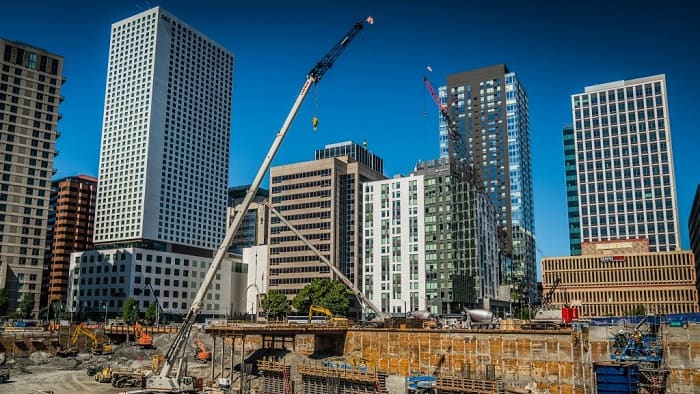
In the second quarter of 2019, Seattle City Council reached agreement on funding the largest new development in the city’s history – a $1.6 billion expansion of the Washington State Convention Center. Joint venture Clark-Lewis was awarded a $960 million construction contract for the project.

Garco Construction of Spokane, Washington will complete initial foundation work for the 1,500,000 sq. ft. (139 354 sq. m) convention center expansion. Garco has recently acquired two additional Link-Belt Cranes for the project, a 110-ton (100-mt) TCC-1100 and a 200-ton (182-mt) 248 HSL from Triad Machinery, the Pacific Northwest Link-Belt distributor.

In addition to their crane purchases, Garco rents several other cranes from Triad Machinery including a 75-ton (70-mt) TCC-750, 120-ton (110-mt) TCC-1200, and 110-ton (100-mt) 218 HSL.

The cranes primarily lift rebar and forms on-site, with 218 HSL, TCC-1100, and TCC-1200 and 248 HSL mainly used for the foundation – lagging with soldier piles and pouring concrete for walls. The deepest point of excavation will be 75 ft. (22.8 m) below street level.

Advancing Prefabrication 2026

Latest stories

Related stories

3 Top Security Solutions for Harsh Weather Environments

Harsh weather conditions are detrimental to the integrity of...

Getting Field Workers to Actually Use Time Tracking Systems: What Works

Time tracking technology fails in construction for one simple...

The ROI of Getting Submittals Right the First Time

Every construction project manager knows the drill: submit, reject,...

How Waterjet Cutting Technology Is Transforming Prefabricated Building Components

Introduction Waterjet cutting technology is a manufacturing process that uses...

Subscribe

- Never miss a story with notifications

- Gain full access to our premium content

- Browse free from any location or device.

Media Packs

Expand Your Reach With Our Customized Solutions Empowering Your Campaigns To Maximize Your Reach & Drive Real Results!

– Access the Media Pack Now

– Book a Conference Call

Leave Message for Us to Get Back

Translate »