























Close
WORLD OF CONCRETE
Saturday, December 20, 2025
JEC WORLD 2026

Dubai Plans a New Tech District to Become a Living Laboratory for Innovation and Urban Technology

Note* - All images used are for editorial and illustrative purposes only and may not originate from the original news provider or associated company.

Subscribe

- Never miss a story with notifications

- Gain full access to our premium content

- Browse free from any location or device.

Media Packs

Expand Your Reach With Our Customized Solutions Empowering Your Campaigns To Maximize Your Reach & Drive Real Results!

– Access the Media Pack Now

– Book a Conference Call

Leave Message for Us to Get Back

Related stories

How To Choose Trailer GPS Units That Actually Work for UK Fleets

You know the drill. A trailer van goes missing...

Improving Construction Efficiency Without Compromising Quality

Achieving construction efficiency requires process-focused improvements that enhance productivity while maintaining or improving quality standards. Through workflow optimization, enhanced coordination mechanisms, quality management practices, and strategic technology integration, construction organizations deliver projects faster and more cost-effectively without sacrificing structural integrity or compliance. Balancing speed with excellence transforms construction management from a trade-off exercise into a synergistic approach where efficiency and quality reinforce one another.

Training Strategies for Operating Advanced Construction Equipment

Modern construction equipment demands operator skills that extend far beyond basic machinery operation. Comprehensive training programs combining classroom instruction, simulator practice, and hands-on field experience prepare operators to safely and efficiently manage increasingly sophisticated equipment. Through structured certification approaches, ongoing skill development, and commitment to continuous learning, construction organizations develop operator competency that enhances project safety, productivity, and equipment longevity.
- Advertisement -
Achema Middleeast

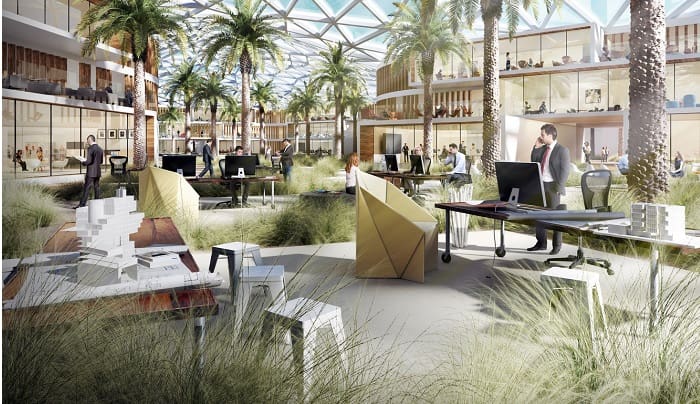
A new urban tech district is planned for the Creekside of Al Jaddaf area in Dubai. Developed by URB, the district aims to generate over four thousand jobs in urban technologies, education, and training, while also welcoming entrepreneurs to encourage a collaborative tech ecosystem. The district will provide facilities for training, research, conferences, business incubations, shared-desk spaces, and dedicated offices. It will also be home to an urban tech institute, which hopes to drive innovation by investing in applied research and by enabling public-private partnerships.

Dubai Plans a New Tech District to Become a Living Laboratory for Innovation and Urban Technology – Image 2 of 7Dubai Plans a New Tech District to Become a Living Laboratory for Innovation and Urban Technology – Image 3 of 7Dubai Plans a New Tech District to Become a Living Laboratory for Innovation and Urban Technology – Image 4 of 7Dubai Plans a New Tech District to Become a Living Laboratory for Innovation and Urban Technology – Image 5 of 7Dubai Plans a New Tech District to Become a Living Laboratory for Innovation and Urban Technology

The concept behind the development revolved around the idea that innovation and research centers such as these can inform the evolution of future cities. The tech-enabled urban district seeks to provide solutions to challenges in food availability, energy production, water harvesting, and zero-waste management. It also aims to develop more equitable living conditions by integrating technologies in the planning of cities, while also addressing environmental challenges and the threats of climate change.

The development is planned to become a net zero-carbon district, while also helping partner businesses reduce their carbon footprint. Each business in the district is expected to enroll in a tenant zero carbon engagement program, which hopes to tackle emissions by raising collective awareness and optimizing operational performance. The design of the buildings uses passive and active strategies for reducing the overall energy demand of the building. To provide occupational efficiency, safety, and security, the indoor lighting and temperature are automatically adjusted by sensors that monitor variables like the number of occupants in a room, time of day, and exterior weather.

The interior spaces also feature biophilic design to promote well-being and improve the office environment. The district provides a wide range of flexible working areas, all of which integrate greenery and natural elements as a proven way to increase the creativity, productivity, and happiness of employees. Breakout spaces with trees and landscaped gardens are also integrated into the design of the district. The integrated Urban Tech Institute further enhances this collaborative system by promoting networking events, conferences, workshops, lectures, and exhibitions. Overall, the Urban Tech District aims to provide the necessary support for innovators and entrepreneurs to develop more livable and resilient cities.

Across the world, innovation campuses are tackling various themes and challenges of urban environments. In Chicago, OMA recently unveiled the design of the new headquarters for the Discovery Partners Institute, which offers spaces for offices, laboratories, and classrooms where the students of the University of Illinois System can meet industry professionals. BIG also won a competition to design a Culinary Research and Innovation Hub in San Sebastian, while Snøhetta is designing the central building for Ford’s Research & Engineering Campus in Dearborn, Michigan.

Achema Middleeast

Latest stories

Related stories

How To Choose Trailer GPS Units That Actually Work for UK Fleets

You know the drill. A trailer van goes missing...

Improving Construction Efficiency Without Compromising Quality

Achieving construction efficiency requires process-focused improvements that enhance productivity while maintaining or improving quality standards. Through workflow optimization, enhanced coordination mechanisms, quality management practices, and strategic technology integration, construction organizations deliver projects faster and more cost-effectively without sacrificing structural integrity or compliance. Balancing speed with excellence transforms construction management from a trade-off exercise into a synergistic approach where efficiency and quality reinforce one another.

Training Strategies for Operating Advanced Construction Equipment

Modern construction equipment demands operator skills that extend far beyond basic machinery operation. Comprehensive training programs combining classroom instruction, simulator practice, and hands-on field experience prepare operators to safely and efficiently manage increasingly sophisticated equipment. Through structured certification approaches, ongoing skill development, and commitment to continuous learning, construction organizations develop operator competency that enhances project safety, productivity, and equipment longevity.

Managing Material Costs in a Volatile Construction Market

Construction material price volatility presents significant challenges to project budgeting and risk management. Strategic procurement approaches, supply chain resilience strategies, and contract mechanisms that balance risk effectively enable stakeholders to navigate market fluctuations successfully. Understanding market dynamics, implementing escalation clauses, developing flexible procurement strategies, and maintaining strong supplier relationships help construction professionals maintain project viability despite unpredictable material cost movements.

Subscribe

- Never miss a story with notifications

- Gain full access to our premium content

- Browse free from any location or device.

Media Packs

Expand Your Reach With Our Customized Solutions Empowering Your Campaigns To Maximize Your Reach & Drive Real Results!

– Access the Media Pack Now

– Book a Conference Call

Leave Message for Us to Get Back

Translate »