





















The integration of advanced post-tensioning systems within modern structural engineering represents a significant shift in how engineers approach the challenges of weight, span, and durability. By applying compressive stress to concrete elements after the curing process has commenced, these systems enable the creation of thinner slabs and longer spans that were previously considered unattainable with traditional reinforcement methods. The mechanical principle relies on high-strength steel tendons, typically housed in ducts or grease-filled sheaths, which are tensioned using hydraulic jacks. This active reinforcement method counteracts the tensile forces that concrete naturally struggles to resist, resulting in a more efficient use of materials and a substantial reduction in the overall dead load of the structure.
Engineering Principles and Mechanical Dynamics of Tensioning
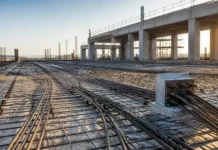
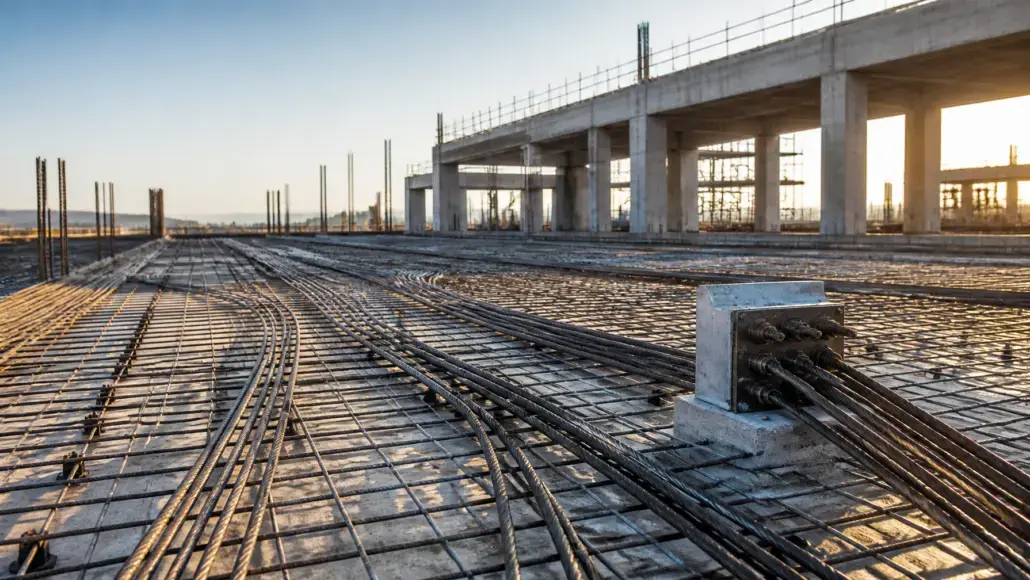
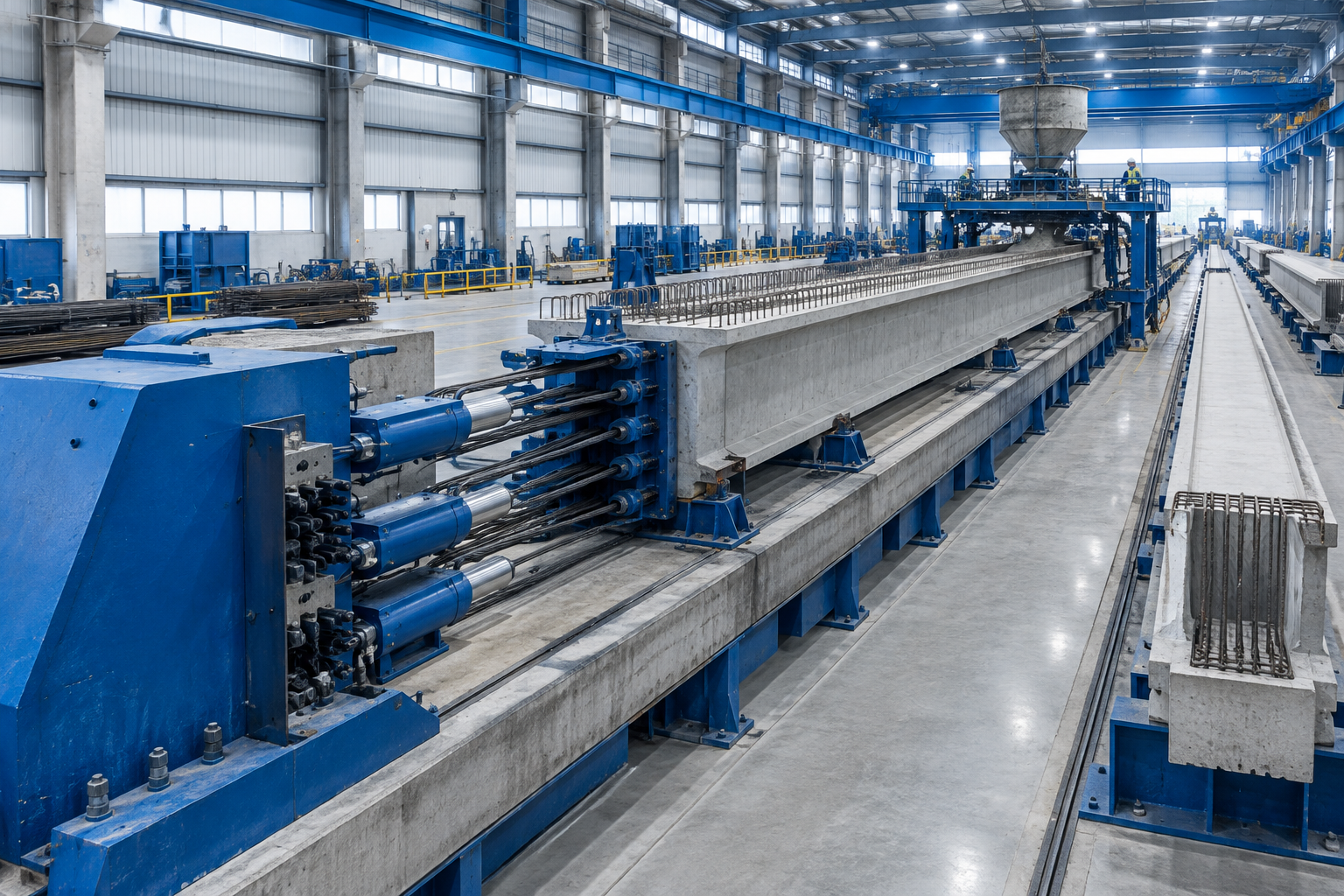
The fundamental mechanical advantage of post-tensioning systems lies in their ability to actively manage internal stresses within a concrete member. Unlike passive reinforcement, where steel only begins to work once the concrete starts to crack or deflect, post-tensioning introduces a pre-calculated internal force that offsets external loads. This process begins with the placement of tendons along a specific profile, often draped to follow the moment diagram of the span. As the hydraulic jacks pull the tendons to their designated force, the concrete is squeezed together, closing potential micro-cracks and increasing the stiffness of the entire assembly.
This mechanical squeezing effect is particularly beneficial in multi-story commercial buildings where floor-to-floor heights are a critical design constraint. By utilizing post-tensioning systems, architects and engineers can reduce slab thicknesses by up to 20 or 30 percent compared to conventional reinforced concrete. This reduction not only saves on the volume of concrete required but also lowers the height of the building, which in turn reduces the cost of the building envelope, mechanical systems, and foundation requirements. The precision required in these calculations is paramount, as the placement of the anchors and the profile of the tendons must perfectly align with the structural analysis to avoid unwanted secondary moments.
Additionally, the choice between bonded and unbonded systems dictates the long-term maintenance and performance characteristics of the structure. Bonded systems involve injecting grout into the ducts after tensioning, creating a permanent bond between the tendon and the concrete. Unbonded systems, common in residential and commercial slabs, utilize a grease-coated tendon that allows for future adjustments or replacement if necessary. Each approach offers unique benefits depending on the environmental exposure and the specific load requirements of the project.
Structural Efficiency in Commercial Building and High-Rise Construction
In the realm of high-rise construction, the application of post-tensioning systems has become the standard for achieving open floor plans and minimizing the number of internal columns. Developers prioritize large, unobstructed spaces to maximize leasing flexibility, and post-tensioned slabs provide the structural capacity to support these spans without the need for deep beams. This architectural freedom is a direct result of the high-strength steel used in the tendons, which typically has a much higher yield strength than standard rebar.
The reduction in material usage also has a profound impact on the sustainability profile of the project. By using less concrete and steel, the embodied carbon of the building is significantly lowered. Additionally, the lighter slabs result in smaller columns and foundations, compounding the material savings throughout the entire structural frame. The structural performance of these tendons is often enhanced when paired with advanced concrete admixtures that improve the initial flow and setting properties of the grout, ensuring that the tendons are fully protected and the force transfer is uniform across the slab.
Construction timelines are another area where these systems offer a competitive edge. Because post-tensioned slabs reach their required structural capacity faster than traditional slabs, formwork can be stripped and cycled more quickly. This acceleration of the floor-cycle time is critical in tall buildings where the schedule is often driven by the structural frame. The ability to tension the slabs just a few days after pouring allows the next level of formwork to be positioned, reducing the overall duration of the concrete works and leading to earlier project completion.
Bridge Deck Applications and Span Extension Capabilities
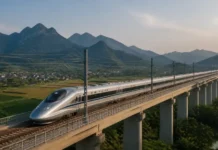
Bridge engineering has long relied on post-tensioning to cross geographical barriers with elegant, long-span designs. Whether in the form of precast segmental bridges or cast-in-place cantilever construction, the use of post-tensioning systems allows engineers to design sections that are both light and incredibly strong. The ability to segment the bridge into manageable units that are then pulled together by longitudinal tendons facilitates construction in difficult terrains, such as deep valleys or busy urban intersections where traditional shoring is not feasible.
- Transverse post-tensioning is frequently applied to bridge decks to increase their resistance to heavy wheel loads and environmental degradation.
- External post-tensioning provides a method for retrofitting and strengthening older bridges that no longer meet modern load standards.
- The use of multi-strand tendons allows for the concentration of high forces in small areas, simplifying the geometry of bridge piers and abutments.
- Corrosion protection systems, including specialized plastic ducts and vacuum-assisted grouting, ensure that the tendons remain protected from de-icing salts and moisture.
The durability of bridge decks is significantly improved because the compressive force keeps the concrete in a state of compression even under heavy traffic. This minimizes the formation of cracks that could otherwise allow water and chlorides to reach the steel, leading to premature deterioration. The long-term economic benefits of reduced maintenance and extended service life make post-tensioning the preferred choice for major infrastructure projects worldwide. The integration of sensors within the anchorages also allows for real-time monitoring of tendon forces, providing engineers with data on the health of the structure throughout its life cycle.
Seismic Resilience and Long-Term Durability in Seismic Zones
In regions prone to seismic activity, the flexibility and resilience of post-tensioned structures offer distinct advantages. The inherent elasticity of the high-strength steel tendons allows the building to absorb and dissipate energy during an earthquake without suffering catastrophic failure. Post-tensioning systems can be designed to provide a self-centering capability, where the building returns to its original position after the shaking stops, reducing the need for costly repairs and downtime.
The durability aspect is equally important in harsh environments. In parking structures and coastal buildings, the risk of rebar corrosion is high due to exposure to chlorides. Because post-tensioned slabs are designed to remain crack-free under service loads, the entry of corrosive agents is significantly restricted. The use of fully encapsulated systems, where the tendon and anchorages are completely sealed in a plastic housing, provides an additional layer of protection. This systematic approach to durability ensures that the structural integrity of the building is maintained for decades, even in the most aggressive atmospheres.
Modern engineering software has further refined the design process, allowing for complex 3D modeling of tendon layouts. This ensures that the post-tensioning force is optimally distributed and that potential conflicts with other embedded items, such as electrical conduits or plumbing sleeves, are resolved before construction begins. The coordination between the structural engineer and the post-tensioning supplier is a critical component of a successful project, ensuring that the specific requirements of the site and the design are fully met.
Integration with Specialized Construction Methods and Future Trends
The future of post-tensioning lies in the integration of smart materials and automated installation techniques. Carbon fiber reinforced polymer (CFRP) tendons are emerging as a non-corrosive alternative to traditional steel, offering even higher strength-to-weight ratios. While still in the early stages of widespread adoption, CFRP tendons represent the next frontier in creating maintenance-free structures in highly corrosive environments.
Robotic placement of tendons and automated stressing equipment are also beginning to appear on large-scale job sites. These technologies improve the accuracy of the tendon profile and the consistency of the stressing operation, reducing the potential for human error. As the construction industry continues to embrace digitalization, the data generated during the stressing process will be integrated into the Building Information Modeling (BIM) system, providing a digital twin of the structural reinforcement.
The adaptability of post-tensioning systems to various structural forms, from curved shells to complex cantilevered balconies, ensures their continued relevance in the evolution of architectural design. By providing the means to push the boundaries of concrete engineering, these systems empower designers to create buildings that are not only functional and safe but also aesthetically striking. The ongoing research into high-performance grouts and more efficient anchorage designs will only further solidify the role of post-tensioning as a cornerstone of modern construction technology. The commitment to innovation in this field reflects the broader goals of the industry to build smarter, faster, and more sustainably in an increasingly complex global environment.