


















The ongoing Arizona highway expansion has reached a significant point with the early completion of major drainage structures. This progress facilitates the next phase of utility and roadway development for the four-mile extension of State Route 303 in the West Valley of Phoenix.
Project Overview and Structural Progress
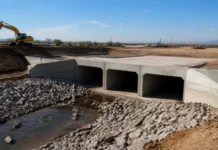
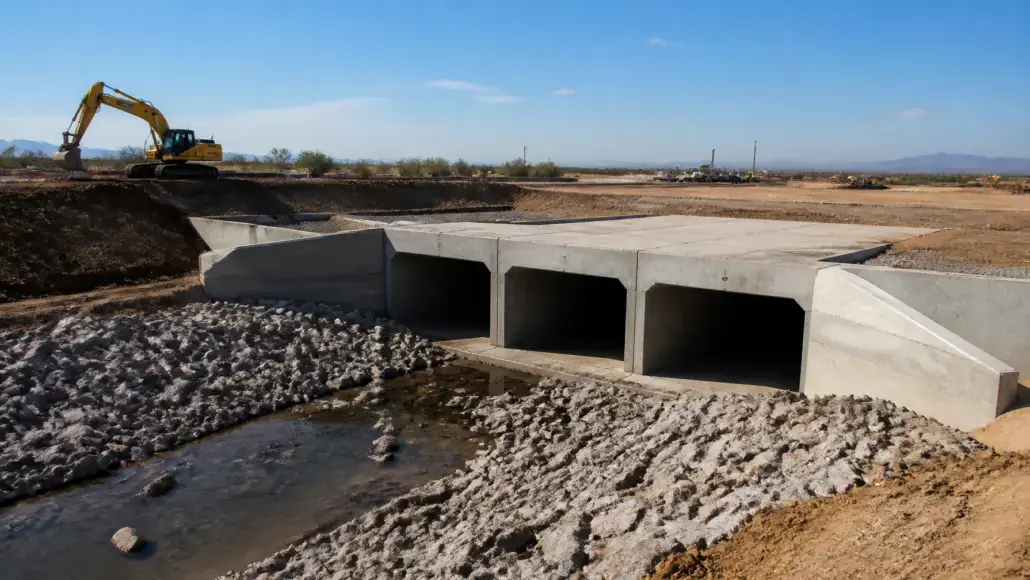
Pulice, a FlatironDragados company, successfully finalized the initial structural phase for the Arizona Department of Transportation project spanning from MC 85 to Van Buren. The installed components include reinforced concrete box culverts and U-channel sections situated within the designated frontage roads. By prioritizing these drainage structures ahead of earthwork, the construction crews have established a clear path for upcoming utility relocations and surface development.
Technical Execution of Highway Construction
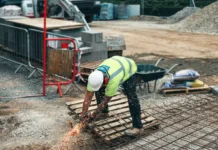
The workflow implemented by the construction crews involved precise excavation, grading, and foundation preparation. Following these site preparations, the teams installed reinforcing steel and specialized formwork. The integration of ready-mix concrete was achieved through the use of concrete pumps, which allowed for continuous placement throughout the reinforced segments. Once the concrete reached the necessary strength, forms were removed and underwent rigorous quality control inspections. Throughout this process, crane operations were utilized to maneuver heavy formwork and materials across the highway construction site.
Scope of Transportation Infrastructure Development
This Arizona highway expansion represents a critical component of regional transportation infrastructure development. The four-mile project serves to connect the MC 85 vicinity to Van Buren Road, further integrating with the existing 35-mile corridor that supports communities throughout the Phoenix West Valley.
The project, which is being executed under contract with the Arizona Department of Transportation, is scheduled for full completion by 2030. This initiative highlights the procedural sequencing required for large-scale transportation infrastructure, where early completion of subterranean elements is essential for the seamless transition into advanced road surfacing. As the road extension progresses, additional drainage systems will be integrated alongside the evolving frontage roads and freeway improvements.