






























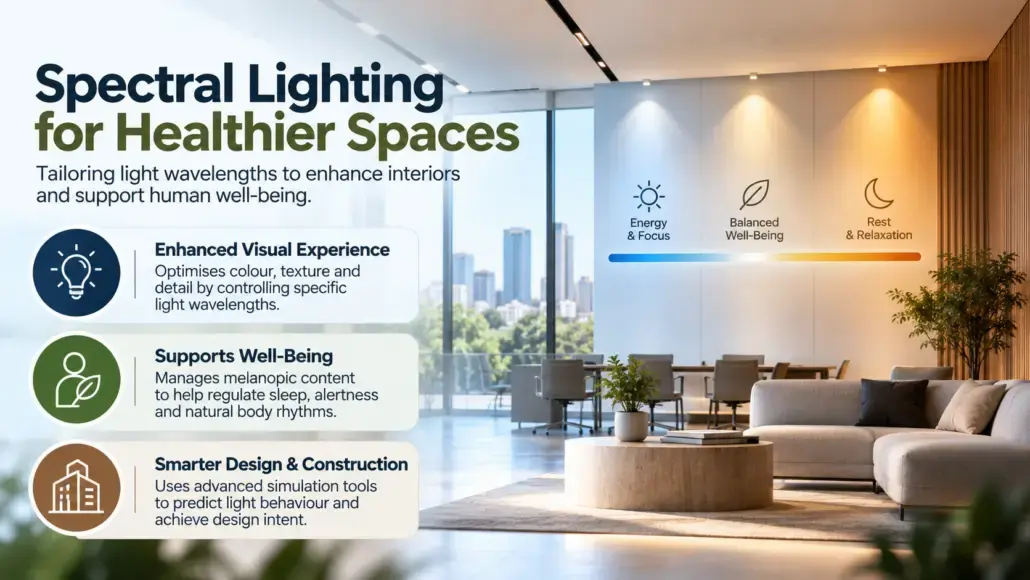


The precision of modern interior design is increasingly defined by the ability to manage the spectral composition of light. As the construction sector moves toward more human-centric approaches, the implementation of spectral lighting design has emerged as a vital tool for optimizing the relationship between the built environment and its occupants. Unlike traditional lighting methods that focus primarily on illuminance and color temperature, spectral design involves the detailed manipulation of specific wavelengths to achieve desired visual and biological outcomes. This level of technical sophistication is essential for creating spaces that not only look appealing but also support the physiological and cognitive needs of the users. In commercial and residential projects alike, the strategic application of spectral data is redefining the standards for excellence in architectural lighting.
The Technical Specification of Spectral Lighting Design in Modern Interiors
The foundation of spectral lighting design lies in the ability to measure and control the Power Spectral Distribution (PSD) of a light source. The PSD describes the amount of energy emitted at each wavelength across the visible spectrum, providing a detailed “fingerprint” of the light. By selecting light sources with specific PSD profiles, designers can enhance the appearance of interior materials, improve color rendering, and manage the biological impact of the light. This process requires a deep understanding of the interactions between light and matter, as the reflective properties of surfaces can significantly alter the spectral composition of the light in a space. In the construction phase, this translates to the careful selection of luminaires and the precise calibration of control systems to ensure that the design intent is realized.
The technical complexity of spectral lighting design also necessitates the use of advanced simulation tools that can model the spectral behavior of light within a digital twin of the building. These tools allow engineers to predict how different light sources will interact with specific finishes and furnishings, ensuring that the final environment meets all performance criteria. This proactive approach to design reduces the risk of costly errors and ensures that the lighting system provides a consistent and high-quality experience for the occupants. As the availability of high-fidelity spectral data from manufacturers increases, the ability to integrate this information into the broader building information modeling (BIM) workflow is becoming a standard requirement for major construction projects.
Impact of Light Wavelengths on Visual Acuity and Material Appearance
One of the primary visual benefits of wavelength management is the ability to optimize visual acuity and the appearance of materials within a space. Different wavelengths of light interact with the human eye and physical surfaces in unique ways, affecting how we perceive color, texture, and detail. For example, a light source that is rich in certain red wavelengths can enhance the warmth and richness of wood finishes, while a cooler, blue-enriched spectrum can make a space feel more clinical and energetic. By tailoring the spectrum to the specific needs of the environment, designers can create a more engaging and functional interior. In retail and hospitality settings, where the visual presentation of products and brand identity is critical, this level of control is a powerful competitive advantage.
Beyond aesthetics, the spectral composition of light also plays a crucial role in supporting visual tasks that require high levels of precision. In environments like laboratories, manufacturing facilities, or architectural studios, the ability to perceive fine details and subtle color differences is essential for safety and performance. wavelength management allows for the creation of task-specific lighting environments that maximize contrast and clarity, reducing eye strain and improving accuracy. By carefully managing the spectral peaks and valleys of the light source, engineers can ensure that the visual environment is perfectly tuned to the needs of the users. This data-driven approach to illumination represents a significant step forward from the “one-size-fits-all” mentality of traditional lighting design.
Engineering for Melanopic Content and Non Visual Biological Responses
The non-visual impact of light on human health is a major focus of modern wavelength management. Research has demonstrated that specific blue wavelengths are particularly effective at stimulating the intrinsically photosensitive retinal ganglion cells (ipRGCs) in the eye, which regulate the body’s internal clock. By managing the melanopic content of the light, the specific portion of the spectrum that triggers these cells, designers can support the natural circadian rhythms of the occupants. During the morning hours, increasing the melanopic stimulus can promote alertness and concentration, while reducing it in the evening can help prepare the body for rest. This biological engineering is a key component of human-centric design, providing a tangible way to improve the well-being of the building’s users.
Achieving the desired biological effect requires a precise balance between spectral tuning and intensity modulation. It is not enough to simply provide more blue light; the timing and duration of the exposure must also be carefully considered. Advanced control systems can automate these changes, providing a dynamic lighting environment that evolves throughout the day in response to the needs of the occupants. In the context of large-scale construction, the integration of these systems into the building’s infrastructure requires a collaborative approach between lighting designers, electrical engineers, and facility managers. The result is a more responsive and healthy environment that enhances the long-term value of the asset. The ability to quantify and manage these biological impacts is a hallmark of professional excellence in the modern era of construction.
Integrating Spectral Controls Within Smart Building Infrastructures
The success of wavelength management depends on the ability to integrate sophisticated controls within the broader smart building infrastructure. These systems must be capable of processing complex spectral data and making real-time adjustments to the output of individual luminaires or entire zones. This requires a high degree of interoperability between lighting controllers, sensors, and the building management system (BMS). When these systems are properly integrated, they can provide a seamless and highly personalized lighting experience for the occupants. For instance, a user could adjust the spectral profile of the light at their workstation to suit their personal preferences or the specific task they are performing.
The integration of spectral controls also enables the collection of valuable data on how the lighting system is being used and its impact on the built environment. This information can be used to further optimize the performance of the building, identifying opportunities to save energy or improve occupant comfort. In addition, the use of smart sensors can provide real-time feedback on the spectral composition of the light in a space, allowing the system to automatically correct for any deviations from the design intent. This level of automated quality control ensures that the lighting environment remains consistent and high-performing over time. The transition to spectrum-centric controls is a key part of the ongoing digital transformation of the construction industry, providing the foundation for a more intelligent and responsive built environment. Additionally, the use of cloud-based platforms for managing these controls allows for the remote monitoring and optimization of lighting systems across multiple sites. This capability is particularly valuable for large corporate real estate portfolios where maintaining a consistent brand identity and occupant experience is a high priority. The data generated by these systems can be used to bench-mark performance and identify best practices that can be applied to future projects. Similarly, the integration of these controls with occupancy sensors and daylight harvesters can lead to significant energy savings, as the system only provides the specific spectrum and intensity of light that is needed at any given time. The resulting efficiency not only reduces operating costs but also contributes to the building’s overall sustainability profile. The long-term benefits of this integrated approach are clear, providing a additionally and flexible framework for the future evolution of the built environment. By prioritizing these advanced controls in the construction phase, developers can ensure that their buildings remain relevant and high-performing for decades to come. The ability to update the spectral profiles of the lighting system through software updates further enhances the longevity of the infrastructure, allowing for the incorporation of new research and technologies as they emerge.
Future Directions for Spectrum Centric Standards in The Construction Sector
As the importance of wavelength management becomes more widely recognized, the construction industry is seeing the emergence of new standards and certifications that focus on the quality and biological impact of light. These frameworks provide a structured way for project teams to specify and verify the spectral performance of their lighting systems, ensuring that they meet the highest benchmarks for human-centric design. The adoption of these standards is a key driver of innovation, encouraging manufacturers to develop a new generation of spectrum-tunable fixtures and control systems. In the future, the ability to demonstrate compliance with these spectrum-centric requirements will likely become a mandatory part of the building approval process in many jurisdictions.
Looking ahead, the continued evolution of artificial intelligence and machine learning will further enhance the capabilities of wavelength management. These technologies will allow for more sophisticated simulations and more automated optimization of the lighting environment, providing deeper insights into the complex interactions between light, health, and productivity. The integration of these tools into the standard construction workflow will make it easier and more cost-effective to deliver high-quality, spectrum-tuned environments for all building types. By embracing these challenges today, construction professionals can lead the way in creating a built environment that truly supports the health and well-being of its occupants for generations to come. The commitment to this level of technical detail and human-centric design is essential for building a more sustainable and responsible future for the industry. The ongoing refinement of wavelength management will continue to push the boundaries of what is possible, setting new standards for excellence in the built environment. Consequently, the adoption of these practices is not merely a technical choice but a strategic imperative for any firm looking to lead in the human-centric design space. The financial and operational advantages of a healthier and more productive workforce are undeniable, and the tools to achieve these outcomes are becoming more accessible and sophisticated every day.
As the industry continues to evolve, the integration of wavelength management will become a standard benchmark for quality, driving innovation and improving the lives of people around the world. The commitment to maintaining these systems post-occupancy will ensure that the benefits are sustained over the long term, protecting the health of the occupants and the value of the asset. This holistic view of the building lifecycle represents the next frontier in construction, where technical performance and human wellness are inextricably linked. By prioritizing these factors, we can build a better, more sustainable world for everyone. The resulting clarity and focus on human outcomes will define the next generation of architectural and engineering achievements, setting a new standard for what a building can and should be. The transition to this new era of construction is already underway, and those who lead the way will be well-positioned to shape the future of the built environment for generations to come. The ability to integrate these complex factors into a cohesive and effective lighting strategy is a hallmark of professional excellence in the modern era, reflecting a deep commitment to the well-being of the people who inhabit our built spaces. By continuing to push the limits of spectral control, we can create environments that are not only efficient but also truly restorative and inspiring.