




























The traditional approach to construction and infrastructure management has long been characterized by a “build it and leave it” mentality, with maintenance and safety checks performed on a periodic, often reactive basis. However, we are currently undergoing a fundamental shift as smart sensors construction technology integrates intelligence directly into the physical assets we create. As a professional who has spent fifteen years in the field, I have seen how the lack of real-time visibility can lead to costly delays, safety oversights, and premature structural failure. The emergence of the Internet of Things (IoT) in construction is changing this narrative, turning our buildings, bridges, and tunnels into “living” structures that can communicate their health and performance in real-time. This connectivity is the foundation of a safer, more efficient, and more resilient built environment.
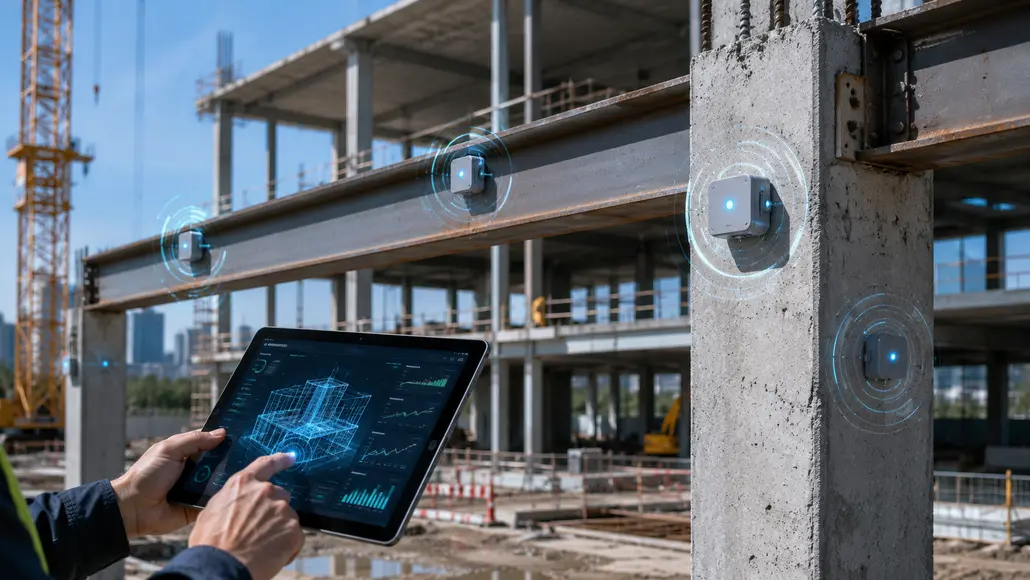
Smart sensors are the nervous system of the modern construction site. These small, relatively inexpensive devices can be embedded in concrete, attached to structural steel, or worn by workers, providing a continuous stream of data that was previously impossible to collect. This information is not just a collection of numbers; it is actionable intelligence that allows project managers to make informed decisions based on the actual conditions of the site. Whether it is monitoring the moisture levels in a new foundation or tracking the strain on a massive support beam, smart sensors in construction are providing a level of foresight that is revolutionizing our industry.
Enhancing Structural Health Monitoring (SHM)
The most profound application of this technology is in Structural Health Monitoring (SHM). Traditionally, assessing the integrity of a bridge or a high-rise required manual inspections, which are time-consuming and can only identify problems that are visible to the human eye. Smart sensors, however, can detect microscopic changes in vibration, tilt, and strain that may indicate the onset of a structural issue long before it becomes a hazard. This allows for proactive maintenance, extending the lifecycle of the infrastructure and ensuring the safety of the public. This continuous monitoring is particularly vital in seismically active areas or for structures subjected to heavy environmental stress.
Real-Time Concrete Maturity Monitoring
One of the most immediate benefits of smart sensors construction is in the curing process of concrete. In a traditional build, we often wait for a predetermined number of days before stripping the formwork or moving to the next phase, which can be inefficient. By embedding sensors directly into the concrete, we can monitor the internal temperature and humidity in real-time to calculate the exact strength of the mix. This “maturity method” allows us to proceed as soon as the concrete has reached the required strength, often saving days on a project schedule. This is a perfect example of how digital data can directly translate into operational speed and efficiency.
Environmental and Geotechnical Monitoring
Construction sites are inherently susceptible to the surrounding environment. Smart sensors are now being used to monitor ground stability, groundwater levels, and air quality around a project. For instance, in deep excavation projects, sensors can provide real-time alerts if the surrounding soil begins to shift, allowing for immediate stabilization and preventing catastrophic collapses. Similarly, monitoring the dust and noise levels on an urban site ensures that the project remains in compliance with local regulations and minimizes the impact on the neighboring community. This level of environmental awareness is essential for modern, responsible construction.
Safety and Worker Well-Being
The “smartness” of a site extends to the people working on it. Wearable smart sensors are becoming a standard part of personal protective equipment (PPE). These devices can monitor a worker’s vital signs, detect falls, and even identify if someone has entered a high-risk “no-go” zone. In the event of an accident, the sensor can automatically trigger an alert with the worker’s exact location, significantly reducing response times for emergency services. By creating a proactive safety net, smart sensors construction technology is helping to reduce the incidence of on-site injuries and fatalities, making the industry safer for everyone.
Proximity Detection and Collision Avoidance
Heavy machinery and pedestrian workers often occupy the same space, which is a major source of accidents. Smart sensors mounted on equipment and integrated into worker vests can create a “geofence” around a machine. If a worker enters a dangerous proximity, both the operator and the worker are instantly alerted through haptic or audible signals. In some advanced systems, the machinery can even be programmed to automatically slow down or stop. This real-time interaction between sensors is a key element of the “connected job site,” where safety is baked into the technology rather than just being a set of rules on a poster.
Optimizing Resource and Equipment Utilization
Beyond safety and structural health, smart sensors are invaluable for fleet management and resource optimization. By tracking the location and usage patterns of equipment, project managers can identify which machines are being underutilized and adjust their fleet accordingly. Sensors can also monitor fuel consumption and engine health, facilitating predictive maintenance that prevents unexpected breakdowns. This data-driven approach ensures that every asset on the site is being used to its maximum potential, reducing waste and improving the overall profitability of the project.
The Role of Data Integration and BIM
The true value of smart sensors construction is only realized when the data they generate is integrated into a broader digital framework. By feeding sensor data into a Building Information Model (BIM) or a Digital Twin, we can create a dynamic, real-time representation of the project. This allows stakeholders to visualize the site’s performance and health in a way that is intuitive and easy to understand. This “single pane of glass” view of the project is essential for managing the complexity of modern infrastructure and ensuring that every decision is based on the most accurate and up-to-date information available.
Challenges of Connectivity and Security
While the benefits are clear, the widespread adoption of smart sensors faces several challenges, particularly regarding connectivity and data security. Construction sites are often in environments where maintaining a stable internet connection can be difficult. Furthermore, as we collect more data, the need for robust cybersecurity measures to protect sensitive information becomes paramount. However, the development of 5G and low-power wide-area networks (LPWAN) is solving many of the connectivity issues, and the industry is rapidly adopting new standards for data protection and privacy.
The Future of Self-Sensing Infrastructure
Looking ahead, we are moving toward a future of “self-sensing” infrastructure, where the sensors are not just added to the structure but are an inherent part of the building materials themselves. We are seeing the development of “smart concrete” that can conduct electricity and sense its own stress levels. This will turn every square inch of our infrastructure into a source of data, leading to a world where our built environment is as intelligent and responsive as the digital devices we carry in our pockets.
The integration of smart sensors construction technology is a transformative shift that is making our industry more intelligent, safe, and efficient. By providing a continuous window into the hidden forces and conditions that shape our sites, these devices are allowing us to build with a level of confidence and precision that was previously unimaginable. As we continue to innovate and refine these tools, we are not just building structures; we are building a more resilient and connected future for everyone. The era of the “dumb” building is over, and in its place, we are creating a world of smart infrastructure that can look after itself and the people who use it.