






















For over a century, concrete has been the literal foundation of our modern world, providing the strength and versatility needed to build everything from modest homes to massive dams and skyscrapers. Yet, for much of its history, concrete was seen as a relatively simple material a mix of water, aggregate, and cement. Today, we are in the midst of a material science revolution that is fundamentally changing what concrete can do. Having spent fifteen years in the construction industry, I have seen the transition from standard mixes to sophisticated, high-performance systems that are stronger, more durable, and more sustainable than ever before. Concrete technology innovations are not just incremental improvements; they represent a leap forward in our ability to create infrastructure that can withstand the test of time and the challenges of a changing climate.
The push for innovation is driven by two primary factors: the need for extreme structural performance in complex modern designs and the urgent requirement to reduce the carbon footprint of the construction industry. Traditional concrete production is a major source of CO2, primarily due to the energy-intensive process of making cement. To address this, the industry is exploring new chemistries and additives that not only improve the material’s physical properties but also its environmental profile. From self-healing capabilities to ultra-high-performance mixes, the “new concrete” is a high-tech material that is redefining the boundaries of engineering.
Ultra-High-Performance Concrete (UHPC)
One of the most significant concrete technology innovations in recent years is the development of Ultra-High-Performance Concrete (UHPC). This material features a compressive strength that can be more than five times that of conventional concrete. But strength is only part of the story; UHPC also possesses incredible ductility and durability. By incorporating fine sands, silica fume, and high-strength steel or organic fibers, we can create a material that is so dense it is virtually impermeable to water and chlorides. This makes it ideal for bridges and coastal infrastructure, where the prevention of rebar corrosion is the primary challenge for longevity.
Ductility and Design Freedom
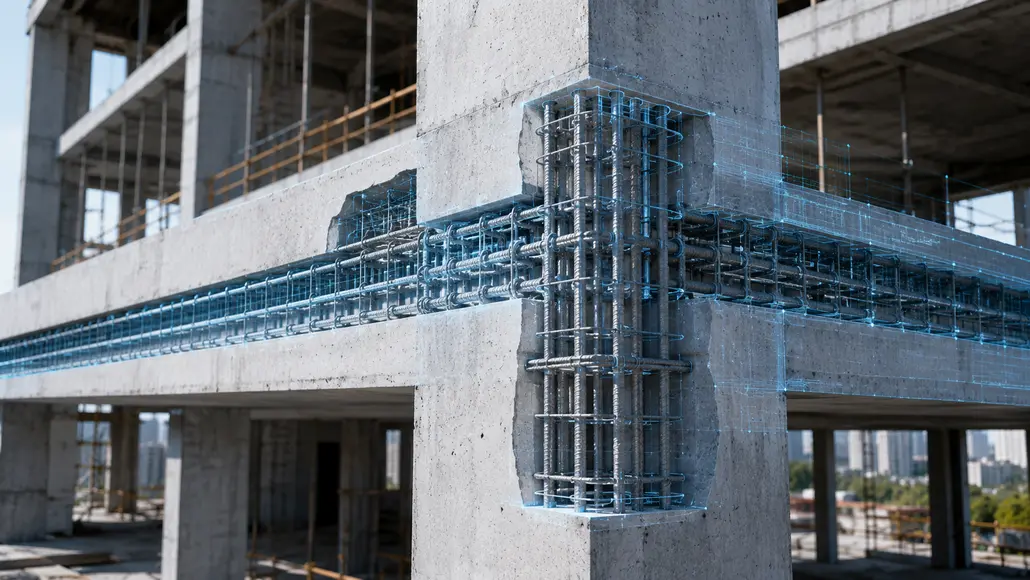
Traditionally, concrete was seen as a brittle material that was strong in compression but weak in tension, requiring extensive steel reinforcement. UHPC, however, exhibits a level of ductility that allows it to bend and deform without catastrophic failure. This property is opening up a new world of design freedom for architects and engineers. We are seeing thinner, more graceful structures that use significantly less material to achieve the same or better structural outcomes. This reduction in material volume not only lowers the overall weight of the structure but also reduces the total amount of cement required, contributing to the industry’s sustainability goals.
Accelerating Construction Through Rapid-Set Mixes
Efficiency on the job site is often a function of how quickly we can move from one phase to the next, and concrete technology innovations are helping to speed up this process. New rapid-setting concrete mixes can reach structural strength in a matter of hours rather than days. This is invaluable for infrastructure repair projects such as highway or airport runway resurfacing where minimizing downtime is critical. These advanced mixes use specialized admixtures to control the hydration process with extreme precision, ensuring that the material is easy to work with during placement but sets and hardens rapidly once in place.
The Rise of Self-Healing Concrete
Perhaps the most “futuristic” of all concrete technology innovations is the development of self-healing concrete. As I have seen throughout my career, the greatest enemy of concrete is the micro-crack. Once a crack forms, it allows moisture and chemicals to enter the structure, leading to long-term degradation. Self-healing concrete addresses this by incorporating “healing agents” such as dormant bacteria or specialized polymers directly into the mix. When a crack forms and water enters, these agents activate and produce a substance (like limestone) that fills and seals the crack. This biological or chemical response drastically extends the life of the structure and reduces the need for expensive and disruptive maintenance.
Carbon-Capturing and Carbon-Negative Concrete
The environmental impact of concrete is perhaps its greatest challenge, and innovations in this area are some of the most vital. We are seeing the development of concrete that actually absorbs CO2 as it cures, a process known as carbonation. Some manufacturers are even using captured industrial CO2 as an ingredient in the mix, where it becomes chemically mineralized into a solid form. These concrete technology innovations are turning one of the industry’s biggest liabilities into an asset, moving us toward a future where our buildings and roads can act as carbon sinks, helping to mitigate the effects of climate change.
Integration of Recycled and Alternative Aggregates
Sustainability is also being achieved through the use of recycled materials. We are increasingly seeing the use of “green” aggregates, such as recycled glass, plastic waste, and even crushed demolition waste, to replace traditional sand and stone. When carefully engineered, these materials can match or even exceed the performance of virgin aggregates. Furthermore, the use of supplementary cementitious materials (SCMs)—like fly ash, slag, or calcined clay is reducing the total amount of traditional Portland cement needed in a mix. These strategies are essential for creating a more circular economy within the construction sector.
Intelligent and “Conductive” Concrete
The intersection of material science and digital technology is creating a new category of “smart” concrete. By adding conductive materials like carbon fibers or nanotubes, we can create concrete that can conduct electricity. This has several exciting applications: it can be used for snow-melting pavements that eliminate the need for salt and plowing, or for structural health monitoring, where the concrete itself acts as a sensor that can detect its own stress and strain. This level of functionality turns a passive structural material into an active participant in the safety and operation of the built environment.
3D Printing and Extrudable Concrete Mixes
The rise of 3D printing in construction has necessitated the development of highly specialized concrete mixes. These materials must be fluid enough to be pumped through a robotic nozzle but firm enough to hold their shape immediately after being deposited. This requires a precise balance of rheology and setting time, often achieved through the use of advanced chemical admixtures. 3D printing allows for complex, organic shapes that are impossible to create with traditional formwork, and it minimizes material waste by placing concrete only where the structural analysis says it is needed.
Challenges in Standardization and Adoption
While the potential of these concrete technology innovations is enormous, the industry faces challenges in bringing them into the mainstream. Construction is a highly regulated field, and new materials must undergo rigorous testing and standardization before they can be widely used. Furthermore, there is often a higher initial cost associated with advanced mixes, which can be a barrier for budget-conscious developers. However, as we move toward a “whole-life” view of building costs, the long-term benefits of reduced maintenance and extreme durability are making the economic case for advanced concrete much stronger.
The evolution of concrete is a testament to the power of material science to solve some of our most pressing engineering and environmental challenges. By embracing these concrete technology innovations, we are building a future that is stronger, more resilient, and more sustainable. As an industry, we have the tools to create infrastructure that is not only functional but also intelligent and environmentally responsible. The journey of concrete from a simple stone-like substance to a high-tech engineering system is one of the most exciting stories in modern construction, and the structures we build with it will be the enduring legacy of our era.