
























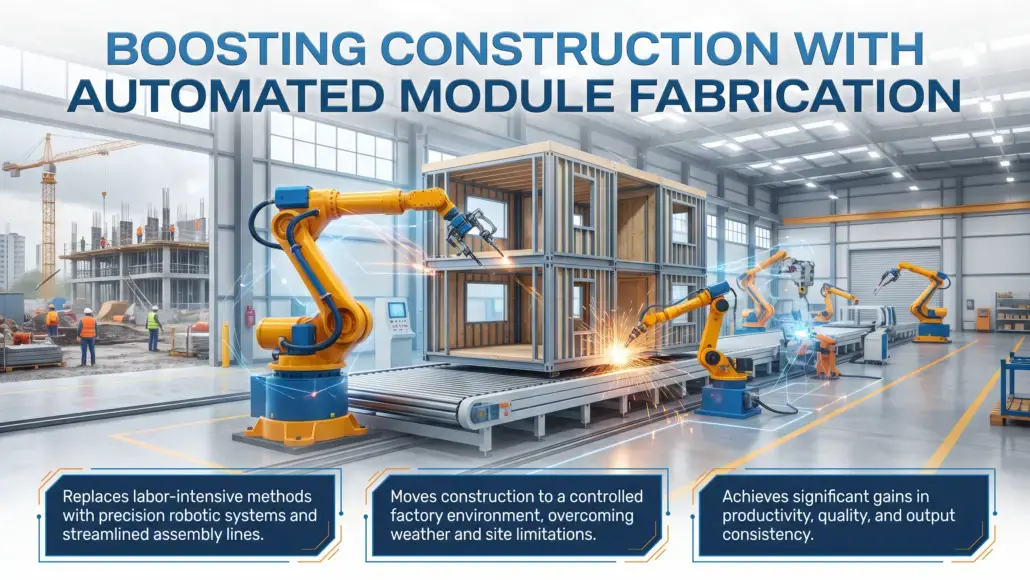


The adoption of industrial manufacturing principles within the construction sector has led to significant gains in productivity and quality. At the heart of this shift is automated module fabrication, a process that replaces traditional labor-intensive methods with precision robotic systems and streamlined assembly lines. By moving the construction of building components into a controlled factory environment, contractors can overcome the limitations of weather, site congestion, and local labor shortages. This transition is not merely a change in location: it represents a fundamental reimagining of the construction workflow, where the emphasis shifts from manual on-site assembly to sophisticated engineering and high-speed production. The ability to produce complex volumetric units at scale is a critical factor for meeting the growing demand for housing and commercial infrastructure globally. This systematic approach allows for a level of operational consistency that is virtually impossible to achieve in a traditional field environment, where variability in site conditions and trade performance can lead to unpredictable outcomes.
The shift toward automation also addresses long-standing concerns regarding safety and consistency in the industry. Human error and environmental variability are minimized when structural frames and interior finishes are handled by specialized machinery. This level of control ensures that every unit produced meets the same high standards of performance and aesthetic finish. As the technology continues to mature, the integration of artificial intelligence and machine learning into the fabrication process allows for even greater levels of optimization. Automated systems can now adjust their operations in real time based on sensor data, ensuring that components are manufactured with surgical precision. This technological evolution is essential for maintaining the competitive edge of firms specializing in industrialized building solutions. The reliability of these systems provides a foundation for more ambitious architectural projects, as the certainty of the fabrication process reduces the technical risks associated with complex designs.
Robotic Precision in Controlled Factory Environments
The use of multi-axis robotic arms in the assembly of modular units has revolutionized the way structural components are joined and finished. In an automated module fabrication facility, robots can perform tasks such as welding, fastening, and material handling with a speed and accuracy that far exceeds human capabilities. This precision is particularly important for the structural integrity of modular buildings, which must withstand the rigors of transportation and crane lifting. By utilizing advanced sensors and computer-aided manufacturing software, these systems can execute complex patterns and connections with minimal deviation from the digital model. This ensures that every module is perfectly square and dimensionally accurate, facilitating a smoother assembly process once the units reach the construction site. The elimination of geometric inconsistencies at this stage prevents a cascade of issues that often plague traditional construction projects during the later phases of fit-out and finishing.
Beyond structural tasks, robotic systems are increasingly being used for interior finishing work, such as drywall installation, painting, and tiling. These machines can apply coatings and adhesives with extreme uniformity, reducing material waste and improving the durability of the final product. The controlled environment of the factory also allows for better management of environmental variables like humidity and temperature, which can significantly impact the curing times and performance of various materials. By isolating the production process from the unpredictability of the outdoors, manufacturers can maintain a consistent output regardless of the season or local weather conditions. This predictability is a cornerstone of the modern industrialized construction model, allowing for more accurate scheduling and financial forecasting across the entire project portfolio.
Optimizing Material Usage and Reducing Waste
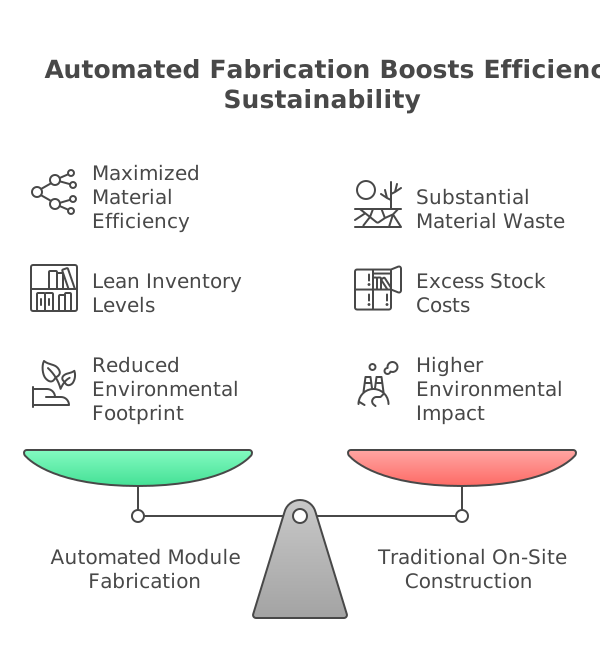
One of the primary economic drivers of automated module fabrication is the ability to maximize material efficiency through computerized nested cutting and precise inventory management. Traditional on-site construction often results in substantial material waste due to over-ordering, damage during storage, and the inherent inefficiencies of manual cutting and fitting. In a factory setting, software can optimize the layout of parts on a sheet of material to minimize off-cuts, significantly reducing the overall material consumption for a project. Any waste that is generated can be easily collected and recycled within the facility, contributing to a more sustainable construction lifecycle. The financial benefits of this reduced waste are substantial, particularly when dealing with high-value materials like specialized steel alloys or advanced composites.
This focus on resource optimization extends to the procurement process as well. Automated systems provide real-time data on material usage, allowing manufacturers to maintain lean inventory levels and avoid the costs associated with excess stock. The ability to track the exact quantity of materials used in each module also provides a high level of transparency for clients and regulators, which is increasingly important in an era of strict environmental reporting. By aligning production with actual project requirements, firms can reduce their environmental footprint while simultaneously improving their bottom line. The integration of sustainability into the core of the fabrication process is a significant advantage of automated methods, appealing to a growing segment of environmentally conscious developers and investors who prioritize long-term asset value and ESG performance.
Scalability through Industrialized Assembly Lines
The move from bespoke, project-specific fabrication to standardized assembly lines allows construction firms to scale their operations to meet large-scale housing demands. Automated module fabrication enables the creation of a continuous production flow, where different stages of the module’s assembly happen concurrently across different stations. While one team focuses on the structural frame, another can work on the installation of insulation, while a third handles the interior cladding. This parallel processing significantly reduces the total time required to produce a single unit, allowing for a much higher output than traditional methods could ever achieve. The efficiency gained through this industrialized approach is especially beneficial in high-density urban environments where the speed of delivery is a primary project constraint.
The scalability of these systems also allows for the development of multi-site projects where standardized modules can be delivered to various locations from a single central facility. This centralization of production provides economies of scale that are difficult to replicate through fragmented site-based construction. By concentrating expertise and equipment in a single hub, manufacturers can continuously refine their processes and invest in the latest technological advancements. The ability to replicate high-quality building units rapidly and efficiently is a key factor in addressing the global housing crisis and supporting the expansion of urban infrastructure. This capability provides a pathway for governments and private entities to implement large-scale social infrastructure programs with a degree of speed and quality that was previously considered unattainable.
Real Time Quality Monitoring Systems
In an automated module fabrication environment, quality control is integrated directly into the production line rather than being a retrospective inspection process. High-resolution cameras and laser scanning systems can monitor the fabrication of each module in real time, comparing the physical product against the digital twin at every stage of the process. If a discrepancy is detected, the system can alert operators immediately, allowing for corrections to be made before the module moves to the next station. This proactive approach to quality assurance ensures that every unit leaving the factory meets the required specifications, reducing the risk of costly rework or structural failure. This continuous feedback loop creates a high level of confidence in the final product, which is essential for maintaining the reputation of modular providers.
These monitoring systems also generate a wealth of data that can be used to improve future production cycles. By analyzing the frequency and nature of production errors, manufacturers can identify bottlenecks or systemic issues in their assembly lines. This data-driven continuous improvement cycle is a hallmark of advanced manufacturing and is now becoming standard practice in the modular construction sector. The ability to provide clients with a detailed digital record of the quality checks performed on their modules adds a layer of trust and accountability that is often missing in traditional construction. The focus on verifiable quality is a major selling point for industrialized building solutions, particularly in sectors with stringent regulatory requirements such as healthcare and education.
Integrating Technical Skills into the Production Workforce
The transition to automated module fabrication is also reshaping the construction workforce, requiring a shift from manual trade skills to technical proficiency in robotics and data management. While the need for physical labor is reduced, the demand for skilled technicians who can program, operate, and maintain sophisticated machinery is on the rise. This evolution provides an opportunity for the construction industry to attract a new generation of talent that is comfortable working in a high-tech manufacturing environment. The factory setting also offers a safer and more predictable workplace compared to the physically demanding and often hazardous conditions of a traditional construction site. This professionalization of the workforce is essential for long-term industry sustainability.
This shift in labor dynamics requires a concerted effort in training and professional development. Construction firms must invest in upskilling their existing employees and partnering with educational institutions to create curricula that align with the needs of the industrialized sector. The integration of technical expertise into the production process not only improves efficiency but also fosters a culture of innovation and problem-solving. As the industry continues to move toward more automated and data-driven methods, the ability to manage the intersection of human intelligence and robotic precision will be a critical factor for success. The human element remains central to the construction process, as the oversight and creative input of experienced professionals are still required to manage the complexities of large-scale building projects. This hybrid model of human-machine collaboration represents the next frontier of construction productivity.