

























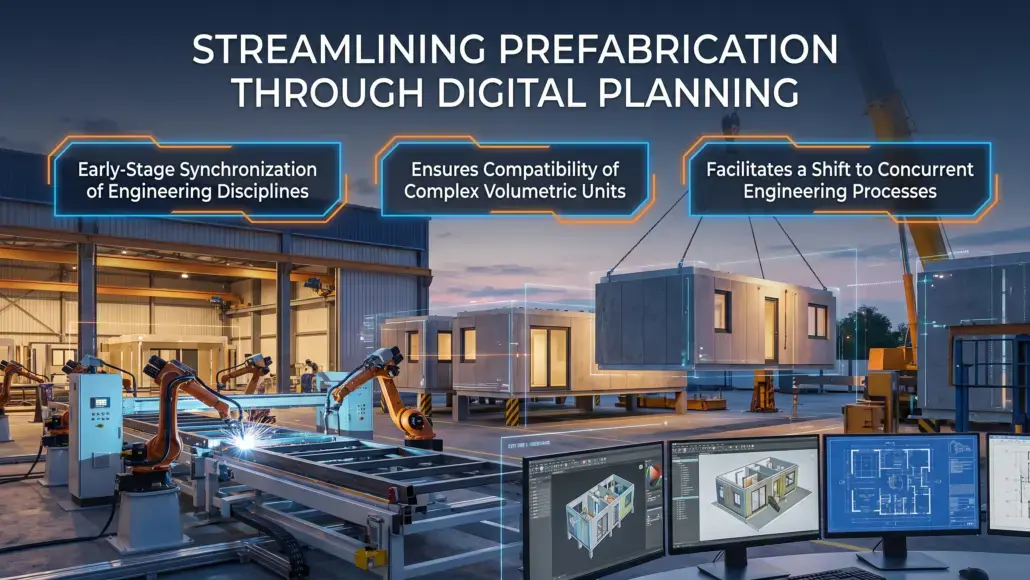


The transition toward industrialized construction methods relies heavily on the precision of early-stage planning and the ability to synchronize various engineering disciplines before a single component is manufactured. Within this context, digital module design serves as the primary mechanism for ensuring that complex volumetric units are compatible with site conditions and structural requirements. This approach moves away from traditional sequential design processes, favoring a concurrent engineering model where every aspect of a module is defined with millimeter accuracy. By creating a comprehensive digital twin of the building unit, project teams can identify potential spatial conflicts and logistical hurdles long before the fabrication phase begins. This proactive stance is essential for maintaining the tight tolerances required for successful modular assembly, where even minor discrepancies can lead to significant delays and increased costs during the on-site installation phase.
The efficacy of digital module design lies in its capacity to aggregate data from multiple stakeholders into a single, cohesive model. Architectural intent, structural capacity, and mechanical routing are all integrated into the digital workspace, allowing for a level of coordination that was previously unattainable through fragmented 2D documentation. As the construction industry faces increasing pressure to deliver high-quality assets within shorter timeframes, the reliance on these sophisticated design tools becomes a strategic necessity. The ability to simulate the entire lifecycle of a module, from factory floor to crane lift, provides developers and contractors with the certainty needed to invest in large-scale off-site projects. This level of foresight is particularly valuable when managing the intricate interfaces between prefabricated components and traditional site-cast elements, such as foundation systems and core structures.
Integrating Building Information Modeling for Enhanced Precision
The application of Building Information Modeling within the sphere of modular construction represents a fundamental shift in how project data is managed and utilized. Unlike traditional projects where BIM might be used primarily for visualization or basic clash detection, modular projects require a model that is fabrication-ready. This means the digital module design must include every connection detail, fastener, and material specification necessary for the factory production line. When these models are shared across the design team, they act as a single source of truth, reducing the likelihood of miscommunication between the architect, the structural engineer, and the modular manufacturer. The integration of high-fidelity data ensures that every stakeholder is working from the same geometric and functional parameters, which is critical when components are being produced in geographically distant locations.
Additionally, the use of BIM allows for the automation of quantity take-offs and material scheduling, which directly influences the financial viability of off-site initiatives. By extracting precise data from the digital module design, manufacturers can optimize their procurement processes and minimize waste on the factory floor. This data-driven approach also facilitates the implementation of lean manufacturing principles, as production schedules can be aligned with the actual assembly requirements of each module. The model serves not only as a design tool but also as a logistical roadmap, guiding the movement of materials through the assembly line and ensuring that the right components are available at the right time. This level of operational visibility is a key advantage of digitalized workflows in the modern construction sector.
Parametric Workflows and Geometric Optimization
Parametric design tools have introduced a new dimension of flexibility to the modular sector, allowing designers to create complex geometries that remain compatible with standardized manufacturing constraints. Through digital module design, engineers can establish rules and parameters that govern the shape and size of modules, ensuring that any modifications to one part of the structure are automatically reflected throughout the entire system. This capability is particularly useful when adapting a modular system to fit irregular site footprints or varying building heights. By defining the relationships between different building elements, parametric workflows enable the rapid iteration of design options, allowing teams to evaluate the structural and economic implications of different configurations in real time.
The optimization of module geometry also plays a vital role in logistical planning. The dimensions of a module are often constrained by transportation regulations and the lifting capacity of site cranes. Digital module design allows teams to simulate the transport and installation process, ensuring that each unit can be safely moved from the factory to the site. Parametric tools can be used to calculate the center of gravity for each module, which is essential for determining the optimal rigging points and ensuring stability during the crane lift. This focus on physical logistics during the design phase reduces the risk of accidents and equipment failure, contributing to a safer and more efficient construction environment. The ability to balance architectural vision with practical manufacturing and transport constraints is a hallmark of sophisticated modular engineering.
Cloud Based Data Exchange and Collaborative Environments
The collaborative nature of off-site construction necessitates a communication infrastructure that can support real-time data exchange across multiple organizations. Cloud-based platforms have become the backbone of digital module design, providing a centralized repository for all project information. These environments allow team members to access the latest version of the model from any location, ensuring that decisions are based on the most current data. The ability to track changes and maintain a detailed version history is also critical for quality control and accountability. When an engineer modifies a structural connection or an architect changes a finish specification, the update is instantly visible to the manufacturer, preventing the production of outdated components.
These collaborative environments also facilitate the participation of subcontractors and suppliers early in the design process. By providing access to the digital module design, lead contractors can solicit input from MEP specialists and facade providers, ensuring that their requirements are incorporated into the module’s architecture. This early involvement is essential for avoiding the costly rework that often occurs when specialized systems are integrated into a building at a later stage. The transparency provided by cloud-based tools fosters a culture of partnership and shared responsibility, which is vital for the success of complex modular projects. The shift toward digital collaboration is not just about technology: it is about creating a more integrated and responsive supply chain.
Mitigating Structural and Systems Conflicts Early
One of the most significant benefits of a rigorous digital module design process is the ability to resolve technical conflicts before they reach the factory floor. In a traditional construction setting, conflicts between structural members and mechanical systems are often discovered during the installation phase, leading to expensive field fixes and schedule delays. In a modular environment, these issues must be resolved digitally, as the cost of modifying a completed module is prohibitively high. Automated clash detection tools allow designers to identify interferences between different building systems, such as a plumbing line passing through a structural beam, and rectify them within the virtual environment.
Beyond simple geometric clashes, digital tools also allow for the analysis of structural performance and thermal efficiency. Engineers can subject the digital module design to simulated wind loads, seismic events, and temperature fluctuations, ensuring that the final product will meet all regulatory requirements and performance standards. This level of analytical depth provides a degree of confidence that is difficult to achieve through traditional methods. By validating the design against a wide range of criteria, project teams can reduce the likelihood of long-term maintenance issues and improve the overall durability of the building. The focus on pre-emptive conflict resolution is a fundamental driver of quality in the off-site construction industry.
Data Management for Long Term Asset Maintenance
The utility of digital module design extends far beyond the completion of the construction phase. The detailed information contained within the digital model provides a comprehensive record of the building’s components, which is invaluable for long-term facility management. Each module can be tracked as a discrete asset, with data on its material composition, maintenance history, and expected lifespan. This digital ledger allows building owners to plan for future repairs and upgrades with a high degree of precision. If a specific component within a module fails, the maintenance team can refer to the digital model to identify the exact part number and manufacturer, streamlining the procurement of replacements.
This data-driven approach to asset management also supports the growing trend toward circularity in the construction sector. By maintaining an accurate record of the materials used in each module, owners can facilitate the reuse or recycling of components at the end of the building’s life. The digital module design serves as a manual for deconstruction, providing instructions on how to safely disassemble the units and reclaim valuable resources. As sustainability becomes a core focus for the global construction industry, the ability to manage the entire lifecycle of a building through digital tools will be a critical differentiator for developers and contractors. The integration of design, fabrication, and maintenance into a single digital workflow represents the future of professional construction practice.