

























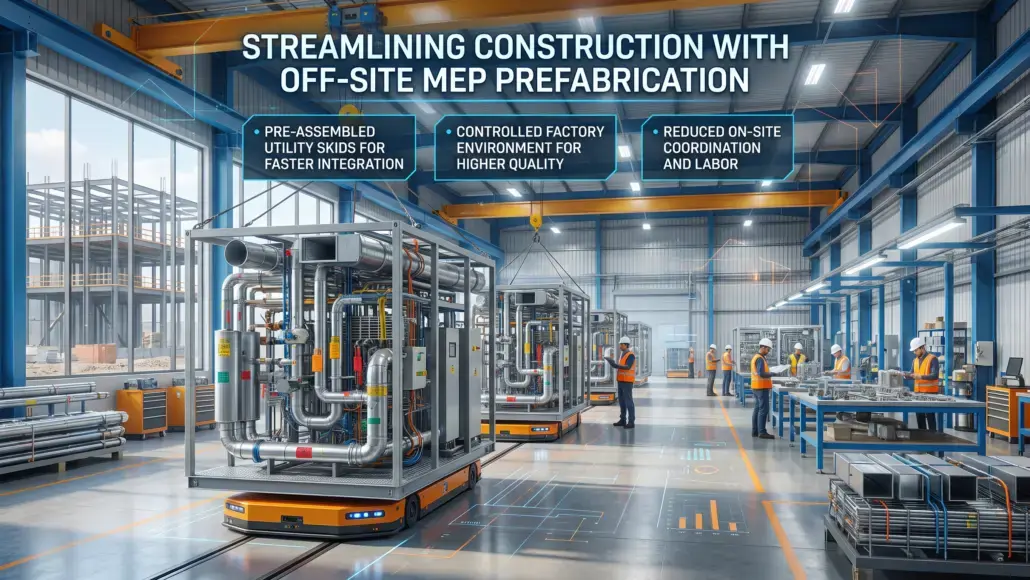


The integration of mechanical, electrical, and plumbing systems into the broader modular construction workflow has transformed the way modern buildings are serviced and maintained. Off-site MEP prefabrication involves the assembly of complex utility networks into discrete, transportable skids or modules within a controlled factory environment. This approach addresses one of the most significant bottlenecks in traditional construction: the intensive on-site coordination required for multiple specialized trades working in confined spaces. By moving the majority of utility assembly away from the construction site, project teams can significantly reduce the risk of spatial conflicts and schedule delays, ensuring that the building’s essential infrastructure is delivered with a high degree of technical precision. This industrialized method provides a level of quality control that is fundamentally superior to field-based assembly, where environmental factors and site-specific constraints often compromise the integrity of complex systems.
The shift toward prefabricated MEP systems also provides a higher level of quality assurance than can be achieved through traditional installation methods. In a factory setting, every weld, connection, and joint can be inspected and tested under ideal conditions, minimizing the likelihood of leaks or failures once the systems are operational. This focus on reliability is particularly critical for high-performance buildings such as hospitals, data centers, and industrial facilities, where utility uptime is a primary operational requirement. As the construction industry continues to face a shortage of skilled MEP tradespeople, the ability to utilize industrialized production methods to deliver complex utility systems is a strategic advantage for contractors and developers alike. The predictability of factory production cycles allows for more accurate financial planning and resource allocation, reducing the volatility that often characterizes large-scale construction ventures.
Technical Complexity of Prefabricated MEP Skids
The design and fabrication of MEP skids represent a high point of engineering integration within the construction sector. These units often combine multiple systems, such as chilled water piping, electrical conduits, and ductwork, into a single structural frame that is designed for easy transport and installation. Through off-site MEP prefabrication, engineers can optimize the spatial arrangement of these components, ensuring that they fit within the tight constraints of the building’s service zones while remaining accessible for future maintenance. This level of optimization is achieved using advanced 3D modeling and collision detection software, which allows for the precise routing of every pipe and wire before a single component is cut. This proactive design phase is essential for maximizing the efficiency of the assembly line and ensuring that the final product meets all functional requirements.
The fabrication process itself utilizes specialized jigs and fixtures that ensure every assembly is identical and meets the required tolerances. This repeatability is essential for projects that involve a large number of similar service modules, such as hotels or multi-unit residential buildings. The use of automated cutting and bending machinery further enhances the precision of the fabrication process, reducing material waste and improving the overall aesthetic finish of the utility systems. By concentrating the most complex technical work in a specialized facility, manufacturers can utilize a highly trained workforce and the latest technological tools to deliver a level of quality that is virtually impossible to replicate in the field. This centralization of expertise fosters a culture of technical excellence and continuous improvement, which is a hallmark of the modern manufacturing sector.
Reducing Congestion in Vertical Service Risers
One of the most impactful applications of off-site MEP prefabrication is the creation of multi-story service risers that are pre-assembled and delivered as single units. In traditional construction, the installation of vertical services is a slow and hazardous process that involves multiple trades working in narrow shafts across different floor levels. By pre-assembling these risers in a factory, the on-site installation time is reduced from weeks to hours. Each riser section is designed to be lifted into place by a crane and connected to the adjacent sections using standardized coupling systems, significantly reducing the amount of on-site welding and soldering required. This streamlined process allows the main structural work to proceed without being delayed by the installation of essential services.
This reduction in site-based activity also leads to less congestion and improved safety within the building core. With fewer workers required in the service shafts, the risk of accidents and equipment damage is minimized. The pre-assembled risers also provide a high level of thermal and acoustic performance, as the insulation and fire-stopping materials are applied under factory conditions. This ensures that the building’s service cores meet all regulatory requirements for safety and efficiency, providing long-term peace of mind for building owners and occupants. The ability to manage the most complex part of a building’s infrastructure through an industrialized workflow is a fundamental driver of project success and operational longevity.
Factory Testing and Commissioning for Improved Reliability
The factory environment provides an ideal setting for the rigorous testing and commissioning of MEP systems before they are delivered to the site. Off-site MEP prefabrication allows for every assembly to be pressure tested, electrically verified, and functionally checked against the project specifications. Any issues or defects can be identified and rectified immediately, preventing the costly rework and schedule delays that often occur when problems are discovered during on-site commissioning. This proactive approach to quality control ensures that the utility systems are ready for immediate operation once they are connected to the building’s main services, providing a seamless transition from construction to occupancy.
This level of pre-delivery verification is especially valuable for complex projects with high reliability requirements. For instance, in a data center project, the pre-testing of electrical switchgear and cooling skids can shave months off the overall project schedule. The detailed digital records generated during factory testing also provide a valuable baseline for future maintenance and performance monitoring. By treating the building’s utility systems as high-performance products rather than site-built assemblies, the modular industry has set a new standard for operational excellence and technical reliability. The focus on verifiable quality is a key reason why more developers are turning to prefabricated MEP solutions for their most critical assets, as it provides a level of risk mitigation that is unavailable through traditional methods.
Logistics of Modular Utility Distribution
Managing the transport and installation of large-scale MEP modules requires a detailed understanding of logistics and site coordination. Each skid or riser section must be carefully planned to ensure that its dimensions and weight are compatible with the available transport equipment and the site’s lifting capacity. Off-site MEP prefabrication involves the use of specialized cradles and bracing systems that protect the delicate internal components during transit. The delivery schedule must be perfectly aligned with the broader construction sequence, ensuring that the utility modules arrive on-site exactly when they are needed for installation. This coordination is critical for maintaining a clean and efficient site environment, as it eliminates the need for long-term storage of bulky components.
Once on-site, the installation process is guided by the use of standardized connection protocols that simplify the integration of the prefabricated modules with the building’s site-built systems. These connections are designed to be completed rapidly using common tools, minimizing the need for specialized site-based labor. The use of digital tracking and reality capture technology allows project managers to monitor the progress of the installation in real time, ensuring that every module is positioned correctly and connected according to the design. This level of logistical control is essential for maintaining the momentum of large-scale construction projects and ensuring that the building’s infrastructure is delivered on time and within budget. The ability to manage the entire lifecycle of a utility module, from the factory floor to the building core, is a core competency of modern modular providers.
Environmental and Safety Benefits of Off Site Utility Assembly
The shift toward off-site MEP prefabrication offers significant advantages in terms of environmental sustainability and workplace safety. By concentrating the assembly process in a factory, manufacturers can implement more efficient material management strategies, significantly reducing the amount of scrap metal, insulation off-cuts, and chemical waste generated. Any waste that is produced can be easily segregated and recycled within the facility, contributing to a more circular construction economy. The factory environment also allows for better control over the storage and handling of hazardous materials, such as refrigerants and cleaning solvents, reducing the risk of environmental contamination on the construction site and improving the overall sustainability profile of the project.
From a safety perspective, moving the most hazardous aspects of MEP installation into a factory setting is a major step forward for the industry. Workers in a prefabrication facility operate in a stable, well-lit, and ergonomically designed environment, which significantly reduces the risk of musculoskeletal injuries and accidents. The use of specialized lifting equipment and automated machinery further enhances safety by minimizing the need for manual handling of heavy and awkward components. By reducing the number of high-risk tasks performed on-site, such as working at height in service shafts or welding in confined spaces, the off-site model creates a safer and more productive workforce. This focus on human well-being is a core value of the modern industrialized construction sector and a key driver of its ongoing growth and evolution. The ability to deliver complex infrastructure while prioritizing safety and sustainability represents a significant achievement for the global construction industry and sets a new benchmark for professional practice.