

























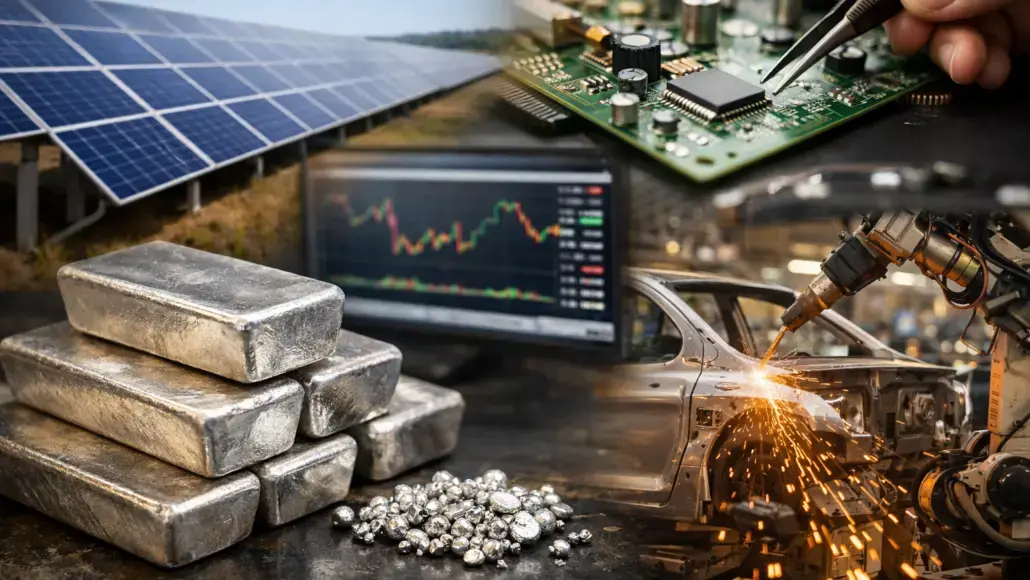


The conversation about silver demand tends to operate at a high level of abstraction. Investors hear that industrial use is growing, that solar deployment matters, that electronics consume meaningful quantities. The numbers get quoted in millions of ounces and the analysis stops there. The spot price of silver, visible on any live dealer chart such as SD Bullion’s price feed, ultimately reflects the aggregate of these individual demand streams, but the streams themselves rarely get examined in the detail they deserve. A sector-by-sector look reveals where the metal is actually going, which industries are accelerating their consumption, which are decelerating, and where the structural pressure on supply is most likely to come from over the next several years. The picture is more interesting than the aggregate numbers suggest.
Photovoltaic Solar Manufacturing
Solar panel production has become the single largest source of industrial silver demand, and the trajectory shows no sign of moderating. Each gigawatt of crystalline silicon solar capacity requires several million ounces of silver, used in the conductive paste that allows the cells to function as electrical generators. The exact silver loading per panel has been declining over time as manufacturers optimize their processes, but the rate of capacity growth has consistently outpaced the rate of thrifting, with the result that aggregate solar silver demand has continued to climb. China dominates global manufacturing capacity, with smaller but meaningful production bases in the United States, Europe, and India. The metal consumed in panels does not return to the market as scrap; it remains locked into installed infrastructure for the operational life of the system, typically twenty-five to thirty years.
Electric Vehicles and Charging Infrastructure
Electric vehicles consume substantially more silver per unit than internal combustion vehicles, with the metal used in battery management systems, power electronics, charging port contacts, and various sensor applications. A single EV typically uses between twenty-five and fifty grams of silver compared to roughly fifteen to twenty-eight grams in a conventional vehicle, and the gap widens as vehicles add more sophisticated electronics. Charging infrastructure adds another layer of demand, with high-power charging stations consuming meaningful silver quantities in their switching equipment. The combined effect of vehicle electrification and charging network buildout represents one of the steadier sources of demand growth, less subject to the boom-bust cycles that characterize some other consumer electronics segments.
Consumer Electronics and the Persistent Demand Layer
Consumer electronics represent a mature but persistent silver demand category. Smartphones, laptops, tablets, televisions, and the countless smaller devices that fill modern households all consume modest quantities of silver in their printed circuit boards, switches, and connectors. Individual device loadings are small, but global production volumes scale into substantial aggregate demand. This category does not produce the dramatic growth that solar or EVs deliver, but it does provide a stable baseline that has proven resilient through multiple economic cycles. The replacement cycles of consumer electronics also mean that scrap recovery is somewhat better in this category than in industrial applications, though it remains far from complete recycling.
Medical Applications and Healthcare Infrastructure
Silver’s antimicrobial properties have made it a quiet but growing component of medical devices, wound care products, surgical instruments, and hospital infrastructure. Antimicrobial coatings on catheters, surgical tools, and high-touch surfaces in healthcare facilities all consume silver in quantities that aggregate into meaningful demand. The medical category has grown steadily as healthcare systems have invested in infection control following the lessons of recent pandemics. Unlike industrial applications where price sensitivity can affect demand, medical applications often face inelastic demand because the metal serves functions that few substitutes can replicate. This inelasticity makes medical demand a particularly reliable component of the structural picture, growing with healthcare investment regardless of what happens to silver prices in any given year.
Artificial Intelligence Hardware and Data Center Buildout
The most recent addition to the major silver demand categories is the hardware required for artificial intelligence computing. AI chips, the networking equipment that connects them, the power distribution systems that feed them, and the cooling infrastructure that keeps them operational all consume silver in various forms. Hyperscale data center construction has accelerated dramatically over the past two years as the major technology platforms have invested heavily in AI capacity, and the silver consumption associated with this buildout is now showing up in industry demand statistics. The exact figures are harder to track than for established categories like solar, because the data center category has only recently grown to the point of being separately measured, but the trajectory is clearly steep and the multi-year capital spending plans announced by the major operators suggest continued growth through the rest of the decade.
The International Energy Agency publishes detailed forecasts on data center electricity consumption that imply the underlying hardware buildout, and reading these forecasts produces a useful frame for understanding the silver demand component embedded in them.
Brazing, Soldering, and Industrial Joining
Silver alloys are used in brazing and soldering applications across heavy industry, particularly in HVAC systems, refrigeration, automotive manufacturing, and aerospace components. The category is mature and grows roughly with global industrial production rather than producing the dramatic growth that newer applications deliver, but it represents a meaningful share of total industrial silver consumption. Substitution pressure exists in this category, with copper-based alloys occasionally replacing silver-based ones when silver prices rise sharply, but the substitution has limits because silver’s specific properties remain superior for high-reliability applications. The category serves as a kind of demand floor that has persisted through multiple commodity cycles.
Photography and the Long Decline That Bottomed Out
For most of the twentieth century, photography was the largest single source of silver demand, with silver halide chemistry powering both consumer film and professional imaging. The transition to digital photography produced a decades-long decline in this category that bottomed out years ago at a fraction of its peak. What remains is primarily professional medical imaging (X-ray film), some artistic and archival photography, and a few specialized industrial applications. The category will likely never return to its former scale, but its decline is now complete enough that it no longer offsets the growth in newer applications. Photography’s exit from the demand picture is part of why current growth in industrial silver consumption is more durable than some observers expect.
Jewelry and Silverware Beyond Pure Industrial Use
Jewelry and decorative silverware sit somewhat awkwardly in the industrial demand category, since their consumption pattern resembles luxury goods more than industrial inputs. India is by far the largest consumer in this category, with Chinese demand a distant second and developed-market demand modest by comparison. Indian silver jewelry demand can shift dramatically based on wedding seasons, festival timing, and gold-silver price differentials, producing seasonal patterns that show up in the overall demand data. The category is large enough to matter for aggregate demand but volatile enough to make near-term forecasting difficult, which is part of why analysts often discuss industrial demand without it and then add it back as a separate variable.
The Aggregate Picture and What It Implies
Looking across these categories together produces a clearer picture than any single sector view provides. Solar, EVs, and AI hardware are all in steep growth phases that show no sign of moderating. Electronics, medical, and brazing provide a stable baseline that grows with global economic activity. Photography is no longer a significant variable. Jewelry adds volatility around the trend. The combined trajectory points toward continued demand growth that supply will struggle to match, particularly given the by-product nature of most silver mining. This structural picture does not predict the next quarter’s spot price, which depends on too many short-term variables to forecast usefully, but it does suggest that the metal’s industrial demand floor is rising in ways that should provide meaningful support across multi-year horizons. Investors who track these sectoral trends individually, rather than relying on aggregate demand statistics alone, develop a more textured understanding of what is actually driving the market they participate in.