




















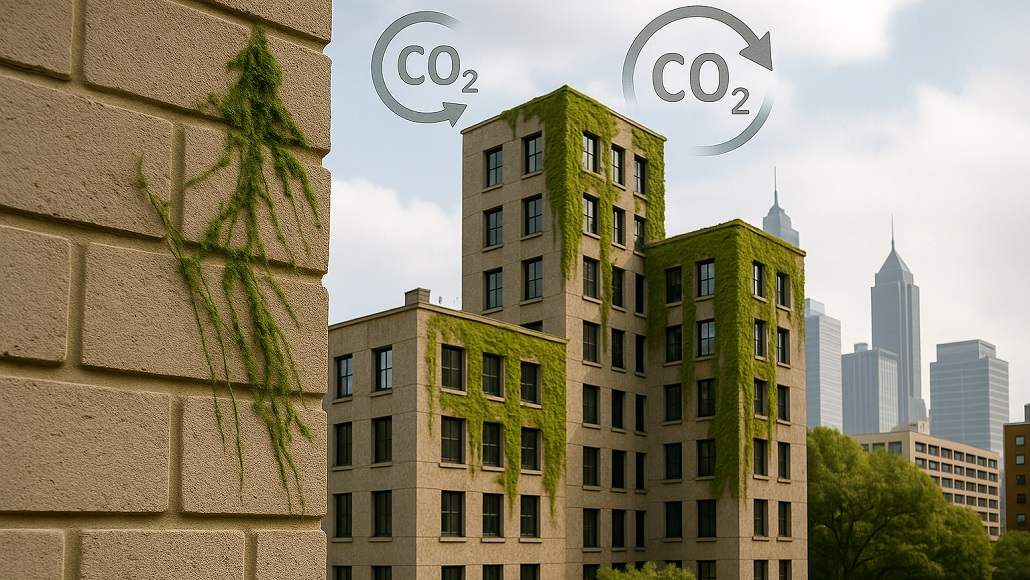


As a world that is confronted with the immediate imperative of slowing down climate change and reducing the natural footprint of the built world, the idea of living building materials has become the game-changer that this world needs. Among its most radical possibilities is bioengineered concrete—a building material not only intended to bear weight and hold structures upright, but also to do so while actively storing atmospheric carbon dioxide. As the world’s building industry struggles with its own massive carbon footprint, bioengineered living building materials such as concrete have the potential to turn our cities into immense carbon sinks, a revolution in green architecture.
Facing Up to Concrete’s Carbon Footprint
Ordinary concrete, a vital element of contemporary infrastructure, accounts for about 8% of global carbon dioxide emissions, states the International Energy Agency. The process of manufacturing cement, the crucial binder in concrete, requires heating limestone at temperatures exceeding 1,400°C, releasing vast amounts of CO₂ both from fossil fuel combustion and from the chemical conversion itself. As urbanisation continues unabated, by 2050, it’s estimated that nearly 70% of the world’s population will reside in cities. Hence, the demand for concrete is set to soar, exacerbating an already critical environmental challenge.
Bioengineered Concrete: The Science of a Living Material
The living building material idea relies on the utilisation of biological processes to develop or change the properties of the normal building materials. Bioengineered concrete, for example, includes certain bacteria strains, like Sporosarcina pasteurii, directly in the mix. The microbes cause calcium carbonate to precipitate, repairing not just self-healing cracks as they appear but, importantly, allowing the sequestration of carbon dioxide absorbed from the air.
Researchers at the University of Colorado Boulder have developed a way in which photosynthetic cyanobacteria are used to cultivate bio-cement, effectively “growing” bricks under ambient conditions, avoiding the high energy input required for conventional kiln-produced cement. The living concrete has the ability to regenerate, evolve, and most importantly, capture and store carbon throughout its life cycle. Researchers at the Living Materials Laboratory at the university showed that these living building materials could reduce the construction’s carbon footprint by half compared to conventional methods.
Transforming Structures into Carbon Sinks: Mechanisms and Potentials
The essence of the promise in living building materials hinges on the potential for active carbon drawdown inherent in the building envelope itself. In conventional carbon capture and storage, technologies tend to be retrofitted onto existing buildings or industrial facilities. Instead, bioengineered concrete brings CO₂ capture into the material matrix itself, rendering every façade, floor, and wall an arena for atmospheric remediation.
If only a small percentage of the 30 billion tonnes of concrete made every year contained living building materials, collective carbon sequestration would match the reduction benefits of big geoengineering schemes. Additionally, the continuing metabolic processes of buried microorganisms—especially in moist or shaded environments—bear potential for sustained carbon absorption during a building’s lifetime. This dynamic nature distinguishes living building materials from inert, fixed construction products.
Challenges, Constraints, and the Road to Mainstream Acceptance
Although the future of living building materials is certainly bright, many challenges are to be addressed. Bioengineered concrete has to demonstrate its resistance to the multiple stresses encountered within the built environment: temperature cycling, humidity, UV light, and chemical contaminants. The sustainability of microbial functions and structural integrity over decades is an ongoing area of research.
There are also regulatory and economic barriers to be addressed. Currently, living building materials are more expensive to manufacture than traditional concrete and have no standardised test procedures and building codes. But as the technology continues to mature and economies of scale move in, costs should go down.
The potential for large-scale use of bioengineered concrete worldwide will depend on interdisciplinary cooperation among microbiologists, materials scientists, architects, and civil engineers. Pilot applications in the United States, Europe, and Asia are already proving the feasibility of “living” infrastructure, from self-healing bridges to carbon-sequestering façade panels for commercial buildings.
Redefining Our Relationship with the Built Environment
The idea of living building materials is more than a technical proposal; it is a philosophical rethinking of how we understand the relationship between ourselves and the built world. Instead of seeing buildings as inert things that use resources and emit waste, we can see them as active partners in the repair of ecological harmony.
By this definition, the use of living building materials marks a new era in architectural history, one that wedges function with regenerative performance. Picture cityscapes in which the concrete underfoot and above us is working to clean the air, where each building, from schools to skyscrapers, is part of the climate-change-fighting army.
Conclusion: Building Toward a Carbon-Negative Future
With the global community racing toward ambitious carbon neutrality, never before has the call to innovation in building materials been stronger. Living building materials, as typified by bioengineered concrete, provide a bold, science-based avenue to transform our built world from a climate liability to a climate asset.
Living building materials are now no longer science fiction; they are a developing reality, driven by thorough research and promising early results. If pursued in full, this paradigm could dramatically change the environmental math of urbanisation, aiding in securing a more sustainable, resilient future for generations to come.