

















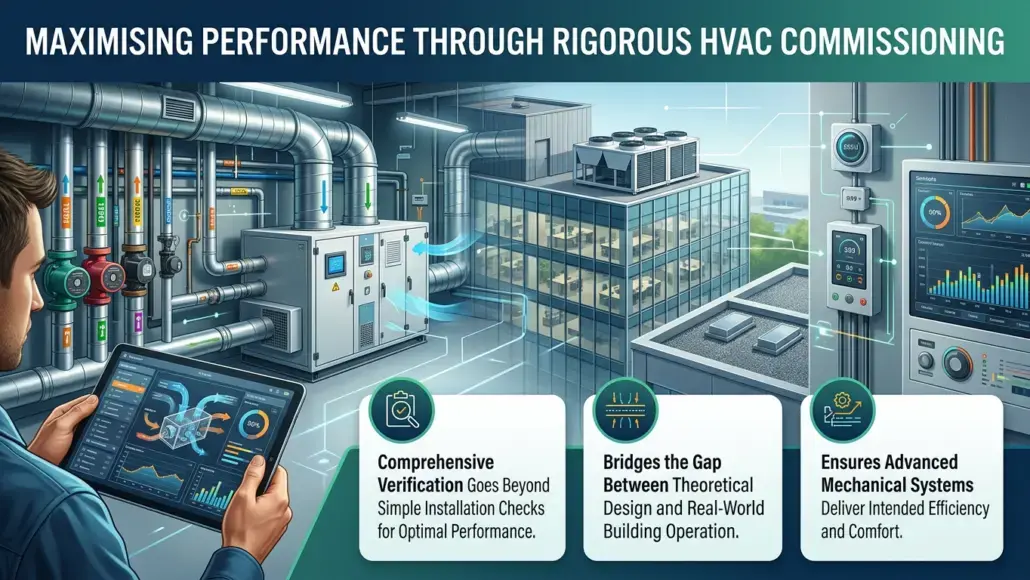


The verification of mechanical systems in high-performance commercial buildings has evolved into a sophisticated discipline that balances technical precision with operational oversight. As construction projects become more complex, the reliance on traditional installation checks is no longer sufficient to guarantee that systems operate as intended. A comprehensive approach to HVAC commissioning is essential for bridging the gap between design theory and real-world performance. This process involves a systematic method of testing, adjusting, and balancing all mechanical components to ensure they function in harmony with the building’s architectural and electrical infrastructure. By prioritizing verification early in the project lifecycle, developers can mitigate risks associated with system failure, high energy costs, and poor indoor environmental quality.
The role of hvac commissioning in technical verification
System verification serves as the foundation for modern building management, providing a documented trail of performance data that validates the design intent. The primary objective is to confirm that the mechanical equipment, controls, and distribution networks are installed correctly and can meet the specified load requirements under various operating conditions. This technical oversight extends beyond the physical hardware to include the software logic that governs system behavior. By scrutinizing the control sequences, commissioning authorities can identify errors in programming that would otherwise lead to energy waste or occupant discomfort. This level of detail is critical for ensuring that the building remains efficient throughout its entire lifecycle, as small discrepancies in initial setup can compound into major operational issues over time.
Effective verification also involves a collaborative effort between the design team, contractors, and the building owner. This partnership ensures that everyone understands the performance goals and the methods used to achieve them. Through rigorous field testing, the commissioning team can verify that airflows, water pressures, and temperature setpoints align with the engineering models. This process often reveals hidden deficiencies, such as improperly sized dampers or miscalibrated sensors, that could compromise the building’s integrity. By addressing these issues before the facility is occupied, the construction team can provide a higher quality product that meets the stringent demands of modern commercial tenants.
Benefits of early phase system testing
Initiating the verification process during the design and pre-construction phases offers significant advantages in terms of cost control and project scheduling. Early involvement allows the commissioning authority to review design documents for clarity and “commissionability,” identifying potential conflicts before they reach the job site. This proactive strategy reduces the likelihood of expensive change orders and delays during the final stages of the build. By establishing clear performance metrics and testing protocols from the outset, the entire construction team can work toward a unified goal of system excellence.
Key benefits of integrating testing throughout the project include:
- Enhanced communication between mechanical and electrical trades, ensuring that all cross-system dependencies are addressed.
- Reduction in post-occupancy maintenance calls by identifying and correcting equipment flaws during the construction period.
- Improved energy efficiency by verifying that all variable speed drives and economizers are functioning at their optimal points.
- Comprehensive documentation of system settings and operational logic, providing a valuable resource for future facility managers.
- Increased tenant satisfaction through the delivery of a stable and responsive indoor environment that meets all comfort standards.
These advantages demonstrate that hvac commissioning is not merely a final checklist but a continuous quality assurance process that adds value at every stage. By embedding verification into the construction workflow, developers can ensure that their buildings are prepared to handle the stresses of daily operation while maintaining low utility expenditures. This focus on early testing also facilitates a smoother transition for the operations team, as they are provided with a system that has already been proven to work under real-world conditions.
Data driven performance metrics in commercial builds
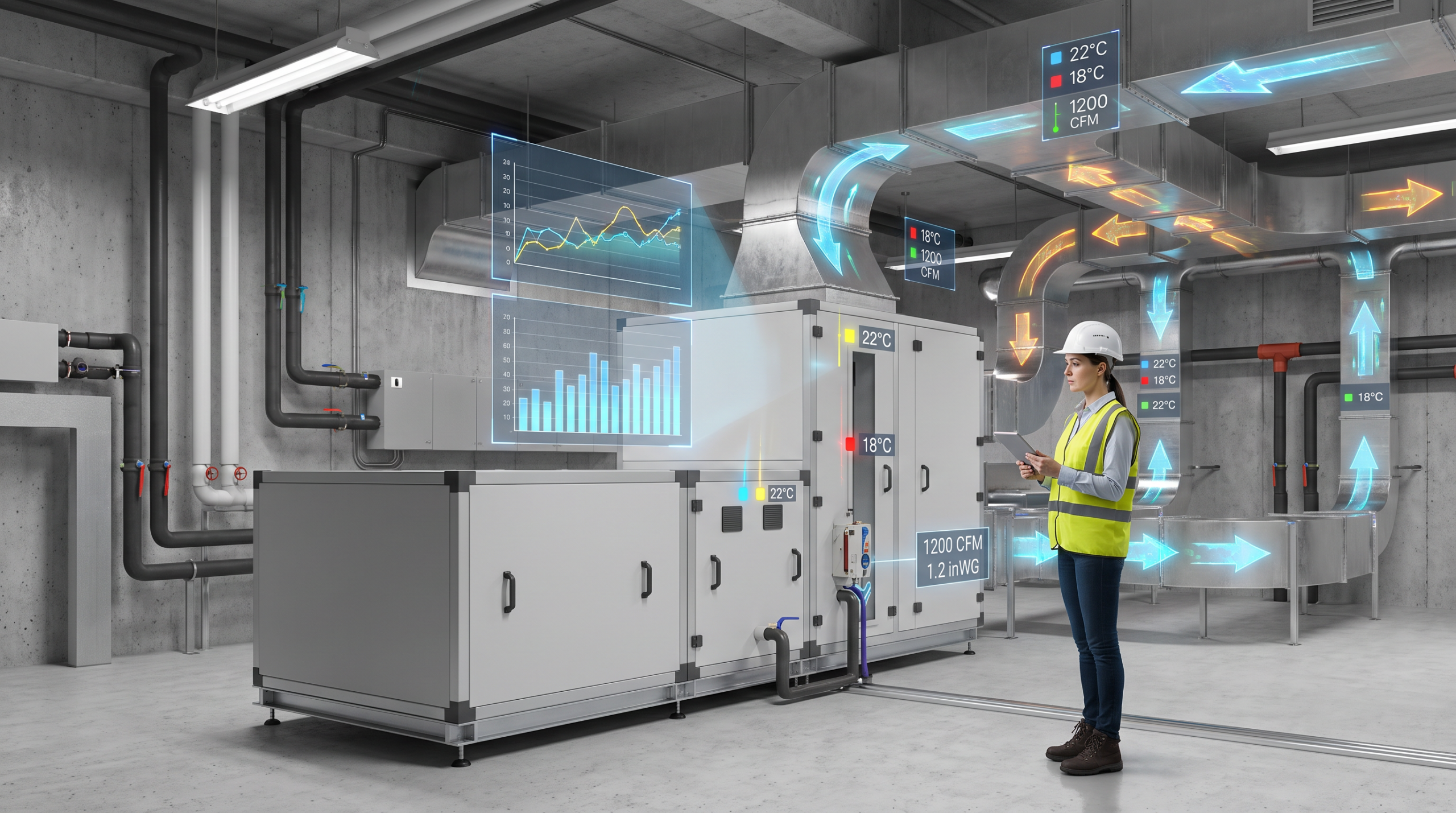
The shift toward data-driven verification has transformed how mechanical systems are analyzed and optimized. Modern buildings are equipped with hundreds of sensors that generate a continuous stream of information regarding energy usage, temperatures, and pressures. By utilizing advanced software tools, commissioning professionals can aggregate this data to create a detailed picture of how the building is behaving in real time. This analytical approach allows for the identification of subtle trends that might be missed during manual inspections, such as a slow drift in sensor calibration or a recurring fault in a control sequence. Achieving chilled water optimization requires a baseline established during the initial verification of all mechanical components, ensuring that the plant can adapt to changing loads without sacrificing efficiency.
These metrics also provide a basis for benchmarking the building’s performance against industry standards and local energy codes. By comparing the actual energy intensity of the facility to its design projections, stakeholders can verify the success of the sustainability strategies implemented during construction. This transparency is increasingly important for investors who prioritize environmental, social, and governance factors in their portfolios. The availability of high-quality performance data also supports the pursuit of certifications like LEED or WELL, which require rigorous documentation of the building’s environmental impact. In this context, the verification process acts as a vital tool for turning abstract performance goals into measurable results that can be verified by third-party auditors.
Continuous commissioning for operational longevity
While the initial verification during construction is critical, the long-term success of a building depends on its ability to maintain high performance levels over years of operation. Continuous commissioning, also known as monitoring-based commissioning, involves the ongoing analysis of system data to identify and correct performance degradation. Over time, mechanical components wear out, occupancy patterns change, and building management systems are often overridden by facility staff. These factors can lead to a significant increase in energy consumption and a decline in indoor air quality. By implementing a continuous verification program, building owners can ensure that their systems remain optimized for current conditions.
This ongoing process utilizes automated fault detection and diagnostic tools to alert facility managers to issues as they arise. For example, if an outdoor air damper becomes stuck in the open position, the system can flag the anomaly immediately, preventing the unnecessary heating or cooling of outside air. This proactive management strategy significantly reduces the need for large-scale retro-commissioning projects, which can be disruptive and expensive. By maintaining a constant focus on system verification, buildings can achieve a longer operational lifespan and lower total cost of ownership. The integration of hvac commissioning into the daily management of the facility ensures that the initial investment in high-performance systems continues to pay dividends for the life of the structure.
Standardized protocols for building system optimization
The adoption of standardized protocols for system verification ensures consistency and reliability across different construction projects. Organizations such as ASHRAE and the Building Commissioning Association have developed comprehensive guidelines that define the roles, responsibilities, and technical requirements of the commissioning process. These standards provide a framework for creating detailed commissioning plans, functional test procedures, and final reports. By adhering to these industry-recognized methods, engineers can ensure that their verification activities are thorough and follow the best practices established by the global building science community. This structural consistency is vital for large scale developments where multiple mechanical systems must be integrated into a single cohesive network. When every system is verified using the same rigorous criteria, the overall reliability of the facility is significantly enhanced.
Furthermore, these protocols provide a clear roadmap for resolving disputes that may arise between contractors and owners regarding system performance. If a piece of equipment fails to meet its design specifications, the standardized testing results provide objective evidence that can be used to determine the root cause of the problem. This level of accountability is essential for maintaining high quality standards in the construction industry. By following a structured approach to hvac commissioning, project managers can ensure that all technical requirements are met without compromising the project timeline or budget. This commitment to procedural excellence is a hallmark of professional engineering practice, ensuring that every commercial building is a testament to quality and efficiency. Additionally, the use of standardized reporting formats allows for easier comparison of performance data across different facilities, enabling building owners to identify best practices and areas for improvement across their entire portfolio of assets.
Standardization also facilitates better communication between stakeholders by providing a common language for discussing performance issues and solutions. When all parties follow the same protocols, there is less ambiguity regarding the expected outcomes of the commissioning process. This clarity is particularly important in large-scale commercial projects involving multiple engineering firms and specialized subcontractors. By using a standardized approach to hvac commissioning, the construction industry can elevate the quality of building systems and ensure that every facility is capable of meeting the highest standards of efficiency and comfort. This commitment to rigorous verification is essential for creating a sustainable and resilient built environment that serves the needs of both current and future generations. The ongoing evolution of these protocols reflects the industry’s dedication to continuous improvement and technical excellence in the face of changing environmental and economic challenges.