























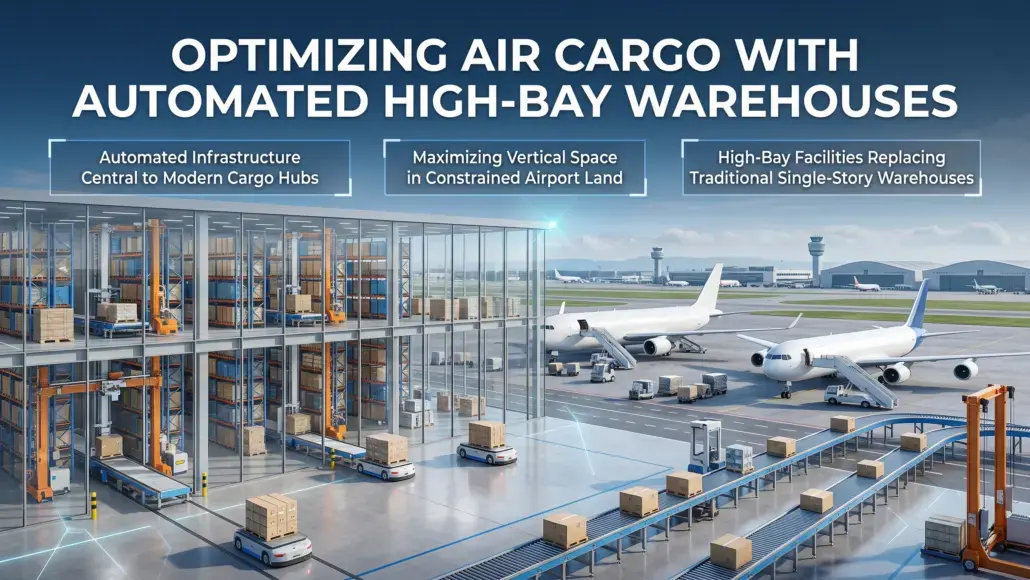


The increasing volume of global air freight has necessitated a radical shift in the design of cargo facilities, with automated warehouse infrastructure becoming the centerpiece of modern logistics hubs. At the heart of this evolution is the need for vertical space optimization, as airport land remains one of the most expensive and constrained commodities in the construction sector. Traditional single-story warehouses are being replaced by high-bay facilities that utilize the full vertical envelope allowed by aviation height restrictions. These structures house multi-level automated storage and retrieval systems (ASRS) that can reach heights of 30 meters or more, vastly increasing the storage capacity per square meter of footprint. The engineering of these facilities requires a focus on precision, as the automated cranes and shuttles rely on a perfectly level and stable structural frame to operate at high speeds. This necessitates the use of high-strength steel and advanced foundation techniques to prevent any settling or tilting over time. By maximizing the use of vertical space, developers can handle significantly higher cargo volumes without expanding the physical boundaries of the airport. This approach is particularly valuable for hubs located in dense urban areas where land acquisition is difficult or impossible. The integration of automated warehouse infrastructure into the broader terminal layout also facilitates faster turnaround times for aircraft, as cargo can be moved more quickly between the warehouse and the airside ramps. The result is a highly efficient logistics environment that meets the intense demands of the modern e-commerce and global trade sectors. As the industry continues to evolve, the ability to optimize space will remain a defining factor in the success of cargo terminal projects. The implementation of modular racking systems also allows for future scalability, ensuring that the facility can adapt to changing cargo profiles and volumes.
Integrating Robotics and Autonomous Systems into Freight Logistics
The integration of robotics and autonomous systems into cargo terminal operations has transformed the way freight is handled, sorted, and dispatched. Automated warehouse infrastructure now includes a wide range of sophisticated machines, from automated guided vehicles (AGVs) that transport heavy pallets to robotic arms that perform high-speed parcel sorting. These systems work in concert to eliminate the bottlenecks associated with manual labor and to improve the overall accuracy of the logistics process. The design of the facility must account for the specific needs of these machines, including the installation of data networks and wireless charging stations. The flooring of the warehouse is another critical area, requiring a high degree of flatness and durability to support the continuous movement of heavy robotic equipment. Additionally, the layout must provide clear separation between human workers and autonomous machines to ensure a safe working environment. The use of advanced software to coordinate the movements of these various systems is essential for maximizing throughput and minimizing downtime. By automating the most labor-intensive and repetitive tasks, cargo terminal operators can achieve significant reductions in operational costs and improvements in service levels. The integration of robotics also allows for 24/7 operations, ensuring that time-sensitive air freight can be processed and shipped without delay. As the technology continues to mature, we can expect to see even more sophisticated applications of autonomous systems, including drones for inventory management and AI-driven predictive maintenance for all warehouse equipment. The successful deployment of these technologies requires a holistic approach to facility design, where the physical structure and the digital systems are developed in tandem. This synergy is what enables modern cargo hubs to function as high-performance logistics engines.
Structural Engineering for High-Density Automated Storage Systems
The structural requirements for high-density automated storage systems are among the most demanding in the industrial construction sector. Unlike traditional warehouses where the building and the racking are separate entities, modern automated warehouse infrastructure often utilizes rack-clad construction, where the storage racks themselves form the primary structural support for the walls and roof. This method provides significant cost savings and reduces the construction timeline, but it requires a high level of engineering precision to handle the complex interplay of static and dynamic loads. The foundation must be designed to withstand the immense concentrated pressure exerted by the vertical racks and the high-speed cranes that operate within them. This often involves the use of deep pile foundations and heavily reinforced concrete slabs that meet strict tolerances for levelness and surface finish. The structural frame must also be engineered to resist wind and seismic forces, which can be particularly challenging in tall, narrow high-bay buildings. Additionally, the integration of fire suppression systems within the racking structure is a critical safety requirement, necessitating the installation of complex pipe networks and high-capacity sprinkler heads at multiple levels. The use of advanced modeling and simulation tools allows engineers to verify the performance of these structures under a wide range of conditions, ensuring the long-term safety and reliability of the facility. By prioritizing structural integrity, developers create a secure environment for the valuable cargo and sophisticated equipment housed within the warehouse. The focus on precision engineering also extends to the installation process, where laser-guided tools are used to ensure that every component is perfectly aligned. This level of detail is what allows automated storage systems to operate at peak efficiency for decades, providing a foundation for global trade.
Cold Chain Logistics and Climate-Controlled Infrastructure
The growth of the global pharmaceutical and perishable goods markets has led to a significant increase in the demand for climate-controlled cargo facilities. Modern logistics infrastructure must now incorporate sophisticated cold chain logistics solutions that maintain precise temperature and humidity levels throughout the storage and handling process. This involves the construction of specialized cold rooms and deep-freeze areas that are integrated into the automated storage and retrieval system. The engineering challenge lies in maintaining the thermal integrity of these zones while allowing for the efficient movement of goods in and out of the cold areas. Specialized high-speed thermal doors and air curtains are used to minimize heat gain during loading and unloading operations. Additionally, the insulation of the building envelope must be of the highest quality, utilizing high-performance sandwich panels and specialized seals to prevent thermal bridging. The mechanical systems that provide the cooling must be highly reliable, featuring redundant compressors and advanced monitoring tools that alert operators to any deviation from the set parameters. The integration of cold chain logistics into an automated environment also requires the use of specialized materials that can withstand extreme temperatures, from low-temperature lubricants for robotic components to frost-resistant electronics. By providing a secure and controlled environment for sensitive cargo, airport operators can attract high-value business and ensure compliance with strict international regulations. The ability to handle complex pharmaceutical shipments and fresh produce with high accuracy is a key competitive advantage in the modern air freight market. As the demand for cold chain services continues to rise, the integration of these specialized facilities into the broader cargo terminal will remain a top priority for developers.
Data-Driven Workflow Management and Real-Time Tracking
In the fast-paced world of air freight, the ability to manage workflows and track shipments in real-time is essential for operational success. logistics infrastructure is increasingly driven by sophisticated data management systems that provide a comprehensive view of the logistics process. These systems utilize a network of sensors, RFID tags, and cameras to monitor the location and status of every item in the warehouse. This data is fed into a central management platform that uses advanced algorithms to optimize sorting, storage, and dispatching operations. For example, the system can automatically prioritize time-sensitive shipments or reconfigure the storage layout based on anticipated demand. The integration of real-time tracking also provides significant benefits for customers, who can receive up-to-the-minute information on the status of their cargo. From an operational perspective, the use of data-driven workflow management allows for a more efficient allocation of resources and the identification of potential bottlenecks before they impact throughput. The system can also monitor the performance of individual machines, allowing for predictive maintenance and reducing the risk of unplanned downtime. The transition toward a more data-centric approach requires a and secure IT infrastructure, featuring high-speed connectivity and advanced cybersecurity measures. By leveraging the power of data, cargo terminal operators can achieve new levels of efficiency and reliability, ensuring that they can meet the ever-growing demands of global trade. The ongoing evolution of artificial intelligence and blockchain technology will further enhance the capabilities of these systems, providing even greater transparency and optimization across the entire supply chain.
Safety Protocols and Resilient Design in Automated Environments
The operation of high-speed autonomous machines in a dense logistics environment requires a rigorous approach to safety and resilient design. logistics infrastructure must be engineered to protect both personnel and the expensive equipment from potential accidents or system failures. This involves the installation of comprehensive safety systems, including light curtains, emergency stop buttons, and physical barriers that prevent unauthorized access to the automated zones. The design of the facility must also include redundant systems for power, data, and fire protection to ensure that operations can continue even in the event of a localized failure. For example, a backup power supply or a decentralized control architecture can prevent a single point of failure from bringing the entire warehouse to a standstill. In terms of structural resilience, the building must be designed to withstand extreme weather events and potential impacts from ground vehicles. The fire protection strategy is particularly critical in high-bay warehouses, where the vertical height and density of cargo can facilitate the rapid spread of flames. This requires a multi-layered approach that includes early detection sensors, high-volume sprinkler systems, and specialized smoke extraction vents. By prioritizing safety and resilience, developers create a secure and reliable environment that can handle the intense pressures of the aviation logistics industry. The ongoing training of personnel in the safe operation and maintenance of automated systems is also an essential component of the overall safety strategy. As the complexity of warehouse infrastructure increases, the need for a culture of safety and a commitment to resilient design will remain paramount. Through careful planning and the implementation of best-in-class technology, cargo terminal operators can ensure that their facilities remain safe, efficient, and fully operational for years to come.