
























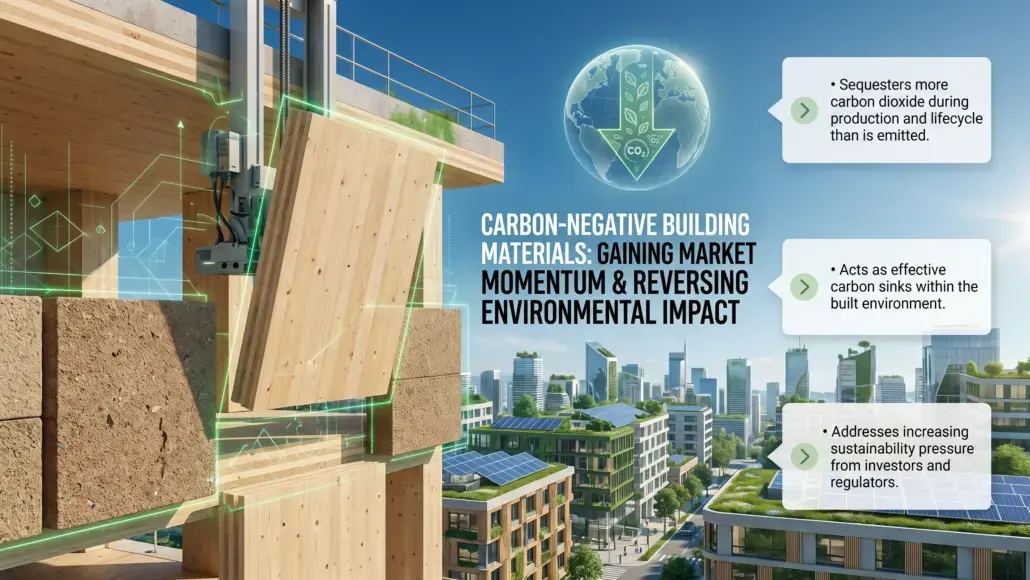


The emergence of carbon-negative building materials represents a pioneering frontier in the construction industry, moving beyond the goal of mere carbon neutrality toward actively reversing environmental impact. These materials are defined by their ability to sequester more carbon dioxide during their production and lifecycle than is emitted, effectively functioning as carbon sinks within the built environment. As the commercial sector faces increasing pressure from investors and regulators to address climate change, the adoption of these advanced materials has shifted from a niche interest to a strategic priority for large-scale developments. The technology behind these products ranges from bio-based composites that utilize rapidly renewable agricultural waste to synthetic minerals that capture industrial emissions. The integration of these solutions requires a fundamental rethink of material sourcing, manufacturing processes, and structural design.
Market momentum for these innovations is driven by a combination of technological breakthroughs and a maturing financial ecosystem that rewards carbon sequestration. Forward-thinking developers are recognizing that the use of carbon-negative building materials can provide a significant competitive advantage, both in terms of meeting sustainability targets and attracting high-value tenants. Additionally, the development of standardized metrics for measuring embodied carbon is providing the transparency needed to validate the environmental claims of these products. This data-driven approach is essential for building trust among engineers, architects, and building owners. The following analysis explores the feedstocks, scalability, and economic drivers that are propelling carbon-negative materials into the mainstream of the construction sector.
Identifying Feedstocks for Net-Negative Manufacturing
The quest for net-negative emissions begins with the identification of suitable feedstocks that can provide the necessary carbon-storing properties without compromising structural performance. Bio-based materials are at the forefront of this effort, utilizing plant-derived components that have naturally sequestered carbon through photosynthesis. Agricultural residues, such as straw, hemp, and flax, are being repurposed into high-performance insulation panels and structural composites. These materials offer the advantage of being rapidly renewable and often have a lower processing energy requirement than traditional minerals. The challenge for manufacturers lies in ensuring a consistent supply of these feedstocks and developing processing techniques that can handle their inherent variability.
Beyond agricultural waste, the industry is exploring the use of captured carbon as a direct feedstock for the manufacturing of synthetic aggregates and binders. This process involves the mineralization of industrial CO2 into solid carbonates, which can then be used in the production of concrete and masonry products. This approach not only sequesters carbon but also provides a high-quality alternative to traditional mined aggregates. The sourcing of this captured carbon requires close collaboration with heavy industries, such as power generation and steel manufacturing, to create integrated circular systems. By turning a waste product into a valuable building material, these technologies offer a powerful example of the circular economy in action.
The environmental impact of these feedstocks is assessed using rigorous lifecycle analysis, which considers the total carbon balance from extraction to end-of-life. This analysis must account for the land use and water requirements of bio-based materials, as well as the energy intensity of carbon capture and mineralization processes. Identifying the most efficient and scalable feedstocks is a primary focus of ongoing research and development. As the technology matures, the industry is expected to see a diversification of carbon-negative building materials, with new products being developed for a wide range of applications, from interior finishes to load-bearing structural elements.
Scaling Bio-Based Composites for Structural Use
While bio-based materials have long been used in non-structural applications, their expansion into the structural realm is a key development for the construction industry. Advanced engineering is allowing for the creation of bio-based composites that rival the strength and durability of conventional materials. This is achieved through the use of high-performance resins and innovative manufacturing techniques, such as 3D printing and pultrusion. By optimizing the orientation of fibers and the density of the composite, engineers can create structural elements that are both lightweight and resilient. The use of these materials in prefabricated modules further enhances their scalability, allowing for rapid and efficient assembly on the job site.
The transition to structural bio-composites requires a thorough understanding of their long-term behavior, including their response to moisture, fire, and biological degradation. Manufacturers are investing in extensive testing to demonstrate that these materials can meet the same safety and performance standards as steel and concrete. This includes the development of specialized coatings and treatments that provide additional protection against environmental stressors. The integration of bio-based composites into building codes is also a vital step for their widespread adoption. As more data becomes available, regulatory bodies are increasingly recognizing the viability of these materials for a broader range of construction types.
Scaling production is another significant challenge for the bio-composites sector. Many current manufacturing facilities are small-scale and may lack the capacity to meet the demands of large commercial projects. Addressing this requires significant capital investment in automated production lines and the development of resilient supply chains for both the raw materials and the finishing processes. The collaboration between material scientists, engineers, and industrial designers is essential for creating products that are not only functional but also aesthetically pleasing and easy to install. As the industry scales, the cost of carbon-negative building materials is expected to become more competitive, further driving their adoption in the mass market.
Financial Incentives and Carbon Credit Integration
The economic environment for carbon-negative building materials is being reshaped by the emergence of carbon markets and green financing. Developers who use materials that sequester carbon can now potentially generate carbon credits, which can be sold on voluntary or compliance markets. This provides a new revenue stream that can offset the higher initial costs of some sustainable materials. The integration of carbon credit systems into the construction industry requires a high degree of transparency and verification to ensure that the carbon sequestration is permanent and additional. Digital tracking and blockchain technology are being used to provide the necessary audit trails for these transactions.
Green financing is also playing a major role in driving the demand for carbon-negative materials. Many financial institutions are now offering preferential interest rates for projects that achieve significant carbon reductions. This is driven by the recognition that low-carbon buildings represent a lower long-term risk and are more likely to retain their value in a decarbonizing economy. Insurance companies are also beginning to factor the resilience and sustainability of materials into their premium structures, providing further incentives for the use of high-performance carbon-negative products. These financial drivers are essential for de-risking new technologies and encouraging large-scale investment in sustainable construction.
The valuation of carbon sequestration within the built environment is a complex task that requires the development of standardized accounting methods. The industry is working to create clear frameworks for valuing the carbon stored in a building over its entire lifecycle. This includes considering the potential for the materials to be reused or recycled at the end of the building’s life, which could extend the period of carbon storage. As these financial and accounting systems mature, they will provide a more comprehensive picture of the economic benefits of carbon-negative building materials. This, in turn, will allow developers and investors to make more informed decisions about the materials they choose for their projects.
Performance Longevity of Emerging Synthetic Materials
As new synthetic carbon-negative materials enter the market, their performance longevity is a key consideration for the construction industry. These materials, which are often produced through industrial carbonation or the chemical synthesis of waste products, must demonstrate that they can withstand the rigors of the construction environment for decades. Testing for durability involves simulating extreme conditions, such as freeze-thaw cycles, high UV exposure, and exposure to corrosive chemicals. The results of these tests are crucial for building the confidence of structural engineers and building officials. Many manufacturers are providing long-term warranties and third-party certifications to back up their performance claims.
The consistency of synthetic materials is often superior to that of natural materials, as their production can be highly controlled in a factory setting. This allows for a more predictable performance, which is essential for the design of complex structures. Additionally, the ability to engineer specific properties into the material, such as thermal insulation or acoustic dampening, provides designers with more options for optimizing building performance. The integration of these materials into building information modeling software allows for more accurate simulations of how they will behave within the overall structure. This digital-first approach to material science is accelerating the development and adoption of carbon-negative building materials.
The long-term maintenance requirements of these new materials are also being carefully studied. In many cases, synthetic carbon-negative products are designed to be low-maintenance and resistant to common forms of degradation, such as cracking and spalling. This can lead to significant cost savings for building owners over the life of the asset. As the industry gains more experience with these materials in real-world applications, the understanding of their aging characteristics will continue to improve. This ongoing feedback loop between manufacturers and the construction sector is vital for refining the material properties and ensuring their long-term success in the market.
Procurement Shifts in Sustainable Public Infrastructure
The public sector is a powerful driver for the adoption of carbon-negative building materials through its procurement policies. Many governments are introducing “Buy Clean” initiatives that require the use of low-carbon or carbon-negative materials in public infrastructure projects, such as schools, hospitals, and transportation hubs. By using their massive purchasing power to prioritize sustainable innovation, these agencies are helping to create a stable market for new technologies and encourage private sector investment. These policies often include requirements for environmental product declarations, which provide a standardized way to compare the carbon intensity of different products.
Public procurement is also fostering a more collaborative approach to construction, with agencies working closely with manufacturers and designers to identify opportunities for using carbon-negative building materials. This includes the use of pilot projects and innovation challenges to test new solutions in a real-world setting. The data collected from these projects is then used to inform future policy and refine the procurement process. By taking a leadership role in sustainable construction, the public sector is not only reducing its own environmental impact but also helping to drive the broader market transition. This commitment to sustainability is essential for meeting national and international climate goals.
The impact of these procurement shifts is particularly evident in the infrastructure sector, where large volumes of materials are used. The shift toward carbon-negative concrete and steel is significantly reducing the embodied carbon of bridges, highways, and tunnels. These projects often serve as high-profile demonstrations of the viability and performance of sustainable materials, helping to overcome market skepticism. As more public agencies adopt these policies, the demand for carbon-negative building materials will continue to grow, leading to further economies of scale and more competitive pricing. The ongoing alignment of public policy with environmental objectives is a key catalyst for the growth of the sustainable construction market.