



























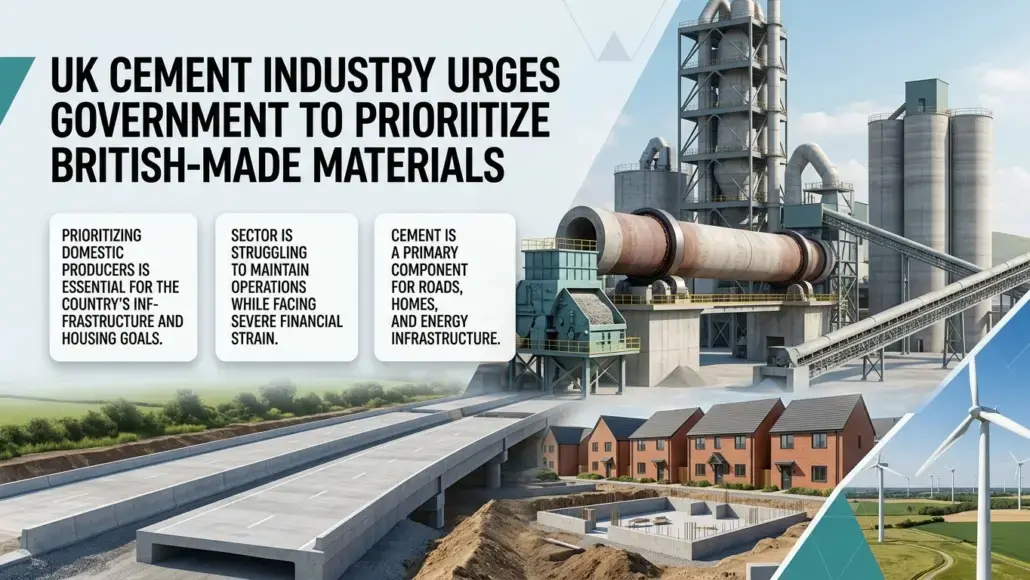


The UK cement industry has formally urged the government to prioritize British-made materials for use in public construction projects. During a parliamentary reception on Tuesday, June 30, the Mineral Products Association emphasized that domestic producers are essential for the country’s infrastructure and housing goals but are facing severe financial strain. As a primary component in concrete for roads, homes, and energy infrastructure, the sector is struggling to maintain its competitive edge against overseas manufacturers who benefit from lower energy costs and different carbon pricing regulations.
Rising Financial Pressures on Domestic Producers
The Mineral Products Association highlighted that the sector is currently excluded from the government’s Energy Intensive Industries compensation scheme. This exclusion means domestic producers face significantly higher electricity expenses. The group estimated that total energy and climate policy costs for the sector now reach approximately £82 million, a figure that has nearly doubled over the past decade. These costs include electricity network fees and carbon-related charges under the UK’s emissions trading systems. Despite these financial burdens, the UK cement industry has successfully achieved emission reductions of 63 per cent since 1990.
Henry Tufnell, the Labour MP for Mid and South Pembrokeshire, stated that cement is vital for delivering new homes, transport projects, and clean energy, and should be considered a component of long-term economic security. Martin Casey, senior director at the Mineral Products Association, argued that public spending should be utilized to support the domestic industry. Casey remarked: “We can’t build without cement, and with the government’s ambitious plans for housing and infrastructure, demand is only going to increase. Backing British producers supports jobs, investment and supply chain security.”
The industry is also seeking continued government support for carbon capture and storage technology, which could facilitate emission reductions of up to 75 per cent by 2035. However, the Mineral Products Association warned that gaps in the carbon border tax system could lead to “carbon leakage,” where emissions are moved overseas rather than reduced. Following new carbon rules in Europe, imports from outside the EU reached a ten-year high in March 2026. The group concluded that clearer policy is necessary to ensure domestic producers remain competitive while continuing to manage high energy costs and carbon pricing.