


























Construction sites are common targets for criminals. They contain various items that can be stolen and resold due to their high value and strong demand. The financial impact of stolen raw materials, frequently used power tools and mission-critical heavy equipment goes beyond the cost to replace them.
Unscheduled downtime and reputational damage from security breaches hurt bottom lines. Payouts from contractors’ equipment insurance claims can cover losses, but this means paying a higher premium in the future.
Most jobsites have some form of deterrence to reduce the risk of theft, but construction security can be complex and is highly prone to mismanagement. Here are the seven costliest mistakes site supervisors make.
1. Being Clueless About Weak Spots
Many superintendents adopt security measures without analyzing the jobsite’s weaknesses. No single system is right for every workplace, so barricading the area with fences, mounting multiple cameras and installing warning signs may do little to discourage malicious individuals.
Audit the construction site before doing anything. A thorough assessment can reveal weak points that criminals can exploit to trespass and steal prized construction assets. Think like a prowler and identify the least-risky way to steal as many goods as possible in the least amount of time without getting noticed. Some criminals are opportunistic, so imagine how they might try to steal when the opportunity arises.
Construction security budgets can be limited. Prioritize addressing the most glaring weaknesses to spend finite resources wisely.
2. Using Incorrect Fencing
Perimeter security serves as the primary layer of defense against outsiders. Fences come in various forms, and some types make more sense for certain applications than others.
Chain-link panels are the standard solution for perimeter security in construction. They are durable and provide clear visibility of the surroundings. Welded wire-mesh is lightweight and works well with anticlimb toppings, making it ideal for areas requiring fast fencing installation and high security. Safety plastic barriers come in orange or red to mark boundaries and warn pedestrians of hazards under different lighting conditions.
Regardless of the type of fence, pay attention to height to increase the risk of injury for intruders. Stability is essential, especially when barricading on slopy and muddy terrain and windy areas. Consider adding privacy screens to obscure equipment in storage and protect against dust.
3. Having No Perimeter Patrols
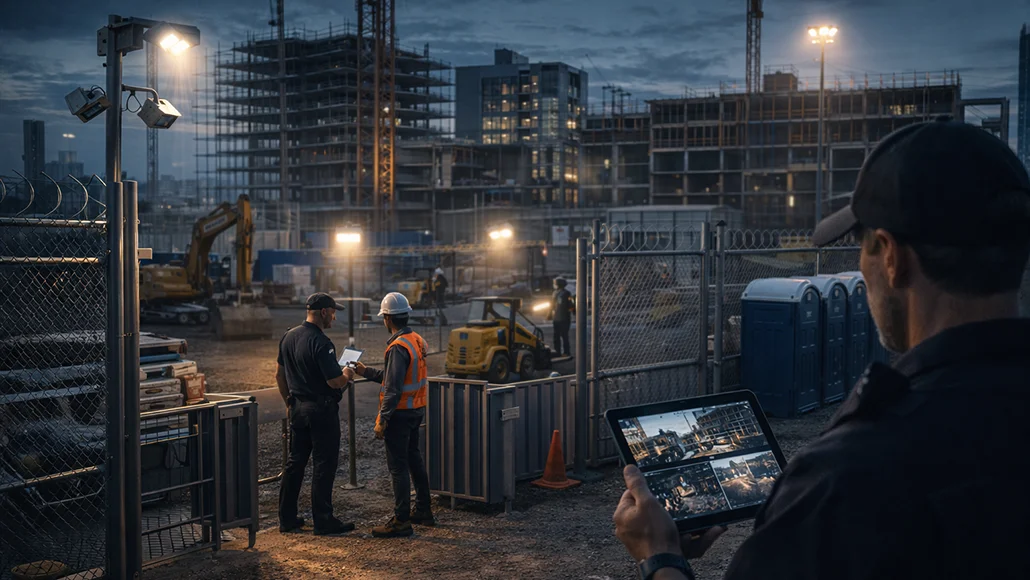
Visible perimeter cameras and signage explicitly warning intruders about them can scare some criminals, but not all. Roving security officers supplement these cameras well. Foot and vehicle patrols add more eyeballs on the ground and address any blind spots in the digital surveillance system.
Trained security personnel are attentive to detail and catch signs of intrusion even the most advanced cameras cannot detect. These professionals also contribute to inventory monitoring, as they ensure the removal only of approved assets and prevent unauthorized movement of supplies and equipment inside and outside the jobsite.
Observant prowlers can identify patterns and time the attack perfectly to avoid detection. Site patrols should be regular but unpredictable to be effective.
4. Not Controlling Access Points
Impregnable jobsites have defined access points. Tightly controlling traffic flow makes it easier to track who comes and goes and to contain perpetrators inside in the event of a security breach. Having separate designated entrances and exits for people and deliveries helps prevent anyone from sneaking in and out unnoticed.
Digital access systems streamline traffic screening and monitoring. Desirable features include automated gates, electronic ID badges with photo identification and real-time person tracking. Biometric scanning suits high-security areas.
Some access control systems are susceptible to damage due to typical construction site conditions. Look for rugged systems that withstand the elements, dust and other hazards to avoid risky downtime.
5. Installing a Basic Surveillance System
Many jobsites make the mistake of installing a surveillance system that only serves to record a crime, not prevent it. This reactive approach is often not enough to protect millions of dollars in assets. A basic system — typically consisting of standard cameras that record footage to an on-site recorder — is useful for reviewing what happened after a theft. However, it lacks the modern, proactive features needed to monitor an expansive site in real time and actively deter criminals.
For a modern jobsite, a surveillance system should include features like 4K cameras, cloud storage for remote access, night vision and motion detection. Smart alerts that send notifications to any internet-connected device are essential for 24/7 monitoring. Furthermore, systems powered by AI can automatically detect and flag risks, such as a person crossing a fence line or someone walking on-site without a hard hat.
To be most effective, the surveillance system should be integrated with the site’s digital access control to create a video log of everyone who enters and exits the site. Features like two-way audio, which allows an operator to speak directly to trespassers through loudspeakers, add another layer of active deterrence. Finally, always consider backup power solutions to ensure the cameras keep recording even if the primary electrical system is compromised.
6. Underutilizing Lighting Solutions
Proper lighting coverage matters. Dark areas serve as safe hiding spots for thieves who bide their time until security personnel finish patrolling. However, flooding the entire site with light can backfire. Intense illumination can interfere with nighttime construction work and cause enough glare to blind camera sensors, masking details in the footage.
Use lights strategically. The only places that should be bright nonstop are the access points and high-value storage areas. Motion-activated fixtures are enough in low-traffic areas. They can draw the attention of security personnel when they switch on, indicating that someone is in a place that should be deserted at a given time. An automated system can turn lights on and off at predetermined intervals to mimic site activity patterns or create the impression of activity.
Install lighting fixtures at varying heights to help eliminate shadows. Investing in backup power is essential to keep the jobsite illuminated even during outages. Many site supervisors gravitate toward solar-powered LEDs to get more light for less energy and to lessen dependence on the grid.
7. Tracking Assets Poorly
Theft can still occur even at secure and well-guarded construction sites because heists can be inside jobs. Full-time employees, independent contractors, trainees and subcontractors can be more dangerous than outsiders since they have credentials to enter and leave the jobsite and intimate knowledge of the team’s security protocols. Malicious actors can use this information to bypass security measures and successfully commit crimes.
Equipment tracking is crucial to prevent internal threats from stealing from the company. GPS monitoring for heavy equipment, RFID tags on high-value gear and QR codes on low-cost tools act as psychological deterrents. They aid in recovering stolen assets, which can lead to the identification and apprehension of the thief.
Smart inventory systems are better than manual checklists. A digital checkout mechanism for tools eases recordkeeping and enables more straightforward, regular inventory checks. Real-time location monitoring can reduce theft, and automated alerts immediately notify relevant stakeholders about any unauthorized movement of marked assets off-site.
Creating a Unified Security Plan
The most effective jobsite security strategies are multilayered. Physical perimeter security, access control, video and human surveillance, and asset tracking work hand in hand to create numerous roadblocks for criminals to pull a successful heist. Turning a construction site into a fortress can help avert theft-related losses that can far outweigh the cost of investing in advanced, layered security.