

















Key Takeaways:
- Transformative Efficiency: Bricklaying robots significantly accelerate masonry work, while 3D printing enables rapid, on-demand fabrication of complex structures and components, drastically cutting project timelines.
- Cost Reduction & Waste Minimization: Automation reduces labor costs and material waste through precise application and optimized design, making projects more economically viable and environmentally friendly.
- Unprecedented Design Flexibility: 3D printing liberates architects and engineers from traditional constraints, allowing for organic shapes, intricate geometries, and custom solutions that were previously impossible or cost-prohibitive.
- Enhanced Safety & Quality: Robotic systems remove human workers from hazardous tasks, improving site safety. Their precision ensures higher quality builds with consistent standards, minimizing errors and rework.
- Addressing Industry Challenges: These technologies offer powerful solutions to prevalent issues such as skilled labor shortages, the demand for sustainable building practices, and the need for rapid, scalable housing solutions.
The landscape of construction, long perceived as an industry resistant to rapid technological shifts, is currently undergoing a remarkable metamorphosis. At the forefront of this revolution are two groundbreaking technologies: bricklaying robots and 3D printing . These innovations are not merely incremental improvements but rather fundamental game-changers, reshaping how structures are conceived, designed, and erected. They promise faster builds, lower labor costs, reduced waste, and unprecedented design flexibility, collectively heralding a new era of structural construction innovation. As an expert with over 15 years immersed in the evolution of building practices, it’s clear that the convergence of these robotic and additive manufacturing approaches represents a pivotal moment, offering solutions to some of the industry’s most enduring challenges, from labor shortages to the imperative for greater sustainability.
The Automated Mason: Precision and Pace from Robotic Bricklaying
One of the most physically demanding and labor-intensive tasks in construction has historically been bricklaying. The art and craft of masonry, while vital, relies heavily on skilled human labor, which is becoming increasingly scarce globally. This is precisely where bricklaying robots step in, offering a compelling blend of speed, precision, and consistency that human hands, however skilled, simply cannot match over extended periods.
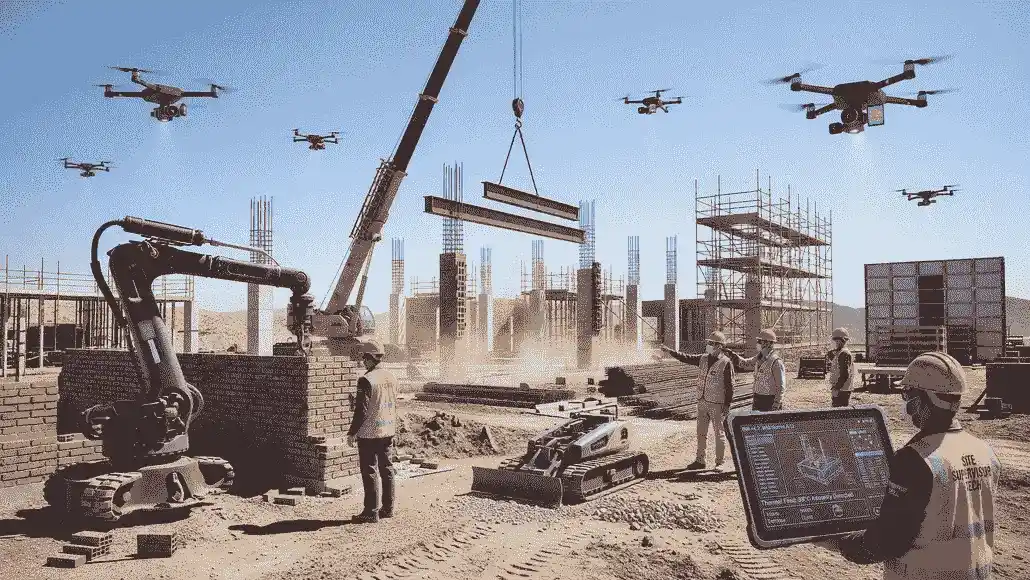
These sophisticated machines are equipped with advanced sensors, robotic arms, and specialized grippers capable of picking up bricks, applying mortar, and laying them with meticulous accuracy according to digital blueprints. Companies around the world are deploying these robotic bricklaying systems, demonstrating their capacity to lay hundreds, even thousands, of bricks per hour – a rate that dwarfs manual methods. The benefits extend far beyond sheer speed. The inherent precision of robotic bricklaying ensures perfectly aligned walls, consistent mortar joints, and reduced material waste from misplacement or errors. Furthermore, by automating this repetitive and often ergonomically challenging task, construction sites become safer, as workers are removed from hazardous environments and strenuous activities. This shift allows human teams to focus on supervision, quality control, and more complex, non-repetitive tasks, enhancing overall workforce efficiency and job satisfaction. The integration of these intelligent systems into traditional workflows is a prime example of how automated construction methods are evolving to augment, rather than entirely replace, human expertise.
The Architectural Revolution of Additive Manufacturing: 3D Printing Construction
Complementing the precision of robotic bricklayers is the transformative power of 3D printing construction . This additive manufacturing process involves building structures layer by layer from a digital design, fundamentally altering the limitations imposed by traditional formwork and casting. From small architectural components to entire multi-story buildings, 3D printing is demonstrating its remarkable versatility and potential.
The spectrum of 3D printing construction technologies is broad, encompassing various methods and materials. Large-scale gantry systems and robotic arms extrude concrete, cement mixtures, or specialized polymers to create walls, foundations, and even roofs. This capability allows for the fabrication of complex geometries and organic shapes that would be prohibitively expensive or structurally impossible with conventional techniques. Imagine walls with integrated insulation, custom channels for utilities, or intricate decorative elements produced seamlessly in a single printing process. The material efficiency is another critical advantage; by building layer by layer, waste is drastically reduced compared to subtractive manufacturing or formwork-intensive methods. Moreover, the speed of construction is significantly boosted, with some houses being printed in a matter of days. The rise of printed construction materials, including advanced concretes and geopolymers, is further expanding the possibilities, offering enhanced durability, insulation properties, and sustainability credentials. This innovation fosters greater design freedom and pushes the boundaries of what is structurally and aesthetically achievable in architecture.
A Synergistic Partnership: Unlocking Greater Potential
While individually impressive, the true revolutionary potential lies in the synergistic application of bricklaying robots and 3D printing . Imagine a construction site where a 3D printer rapidly fabricates complex structural cores or custom, curvilinear elements, while bricklaying robots simultaneously construct the conventional straight walls and infills with unmatched speed and accuracy. This collaborative approach allows for optimized construction workflows where each technology plays to its strengths.
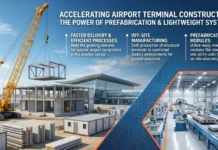
This combination paves the way for advanced robotic building systems that integrate various automated processes. For instance, a 3D printer could create intricate, insulated wall panels off-site, which are then rapidly assembled on-site with the assistance of automated cranes and even collaborative robots. Meanwhile, bricklaying robots could be tasked with cladding these structures or building internal partition walls. This modular construction technology benefits immensely from the precision and speed offered by both systems, leading to reduced construction timelines, predictable outcomes, and significantly lower labor requirements. The integration fosters a new paradigm of structural construction innovation , moving beyond purely manual or purely automated approaches to embrace a hybrid model that maximizes efficiency and creative potential. It’s about designing buildings that are not only stronger and more sustainable but also faster and more cost-effectively brought to life.
Beyond the Build: The Broader Impact on Construction
The ramifications of widespread adoption of bricklaying robots and 3D printing extend far beyond the immediate act of building. These technologies are powerful catalysts for addressing some of the construction industry’s most pressing challenges.
Firstly, they offer a viable solution to the global shortage of skilled labor. As fewer individuals enter traditional trades, automation steps in to bridge the gap, allowing for the continuation of critical construction projects. Secondly, they significantly enhance sustainability. Reduced material waste, optimized designs requiring less raw material, and the potential to utilize recycled or locally sourced printed construction materials contribute to a smaller environmental footprint. The ability to print on-demand also minimizes logistics and transportation costs. Thirdly, these automated construction methods democratize complex architectural designs. Previously reserved for high-budget projects, intricate facades and unique structural forms can now be realized more affordably and efficiently, fostering a new era of architectural expression. Furthermore, the rapid deployment capability of 3D printing, especially for emergency housing or disaster relief, underscores its humanitarian potential, providing scalable and quick shelter solutions.
Navigating the Path Forward: Challenges and Future Outlook
Despite the immense promise of bricklaying robots and 3D printing , their widespread adoption is not without hurdles. The initial capital investment for these sophisticated machines can be substantial, posing a barrier for smaller firms. Regulatory frameworks and building codes, often slow to adapt, need to evolve to accommodate novel construction techniques and materials. There’s also the essential task of workforce retraining, ensuring that construction professionals are equipped with the skills to operate, maintain, and manage these advanced robotic building systems .
However, the trajectory is undeniably upward. Research and development continue to push the boundaries of material science, robotic dexterity, and AI integration, making these technologies more efficient, affordable, and accessible. We can anticipate more autonomous construction sites, where humans work in harmony with intelligent machines. The future of construction will likely see an even deeper integration of digital design tools with automated fabrication processes, leading to highly optimized, sustainable, and resilient structures. The convergence of **bricklaying robots and 3D printing** is not merely a technological advancement; it is a cultural shift, ushering in an era where innovation, precision, and sustainability are the cornerstones of structural development.
In conclusion, the impact of bricklaying robots and 3D printing on the construction industry is profound and irreversible. From accelerating project timelines and drastically cutting costs to enhancing safety, minimizing waste, and unlocking unprecedented design freedom, these technologies are fundamentally redefining what is possible. As we navigate the complexities of their integration, it’s clear that these innovations are not just building structures; they are building the future of construction, one precisely placed brick and one meticulously printed layer at a time. The era of truly automated and intelligently crafted buildings is not a distant dream, but a rapidly unfolding reality, driven by the ingenuity of these pioneering automated construction methods.