






























The construction industry is notorious for producing excessive waste, from material consumption to energy use. As climate change worsens and demand for sustainability across industries continues to grow, the following notable improvements can help reduce waste and enhance eco-friendly practices at your construction site.
1. Strategic Planning
Worldwide, the construction and demolition industry’s waste accounts for between 20% and 50% of total waste generation, with an estimated 600 million tons from the U.S. alone as of 2020. With these numbers in mind, a critical first step in waste reduction is in the initial planning phase.
A Waste Management Plan (WMP) acts as a roadmap for each project, detailing how a team will use, store and dispose of materials. A comprehensive outline will include an initial audit of regular material use and waste production before you can set realistic sustainability goals to lower those levels. The plan should also include ways for workers to properly dispose of waste, including labeling what can be recycled and how to segregate and dispose of each material.
WMPs may also account for potential partnerships with waste disposal companies, including noting drop-off recycling sites or curbside pickup days with a trusted waste solution provider. Proper waste management strategies can eliminate litter and improper recycling throughout the project, improving the overall cleanliness and health of the site.
2. Source Reduction
Waste reduction during the preconstruction phase includes optimizing the building plan before sourcing materials. Integrated building information modeling (I-BIM) platforms combine 3D visualization with scheduling, cost and sustainability estimates to accurately generate data on what projects may need. You can reduce initial material sourcing by ordering more precise amounts, sizes and cuts without surplus or mistakes.
Meticulous planning models can also help you estimate energy consumption and the machinery needed to complete a project. Ultimately, proactive efforts can minimize excess and downtime, increasing sustainability while reducing project costs.
3. Smart Procurement and Delivery
Hand in hand with deliberate source reduction strategies, smart procurement also prioritizes using less and/or recyclable materials for shipping. You can look for providers who use sustainable shipping and packing methods, including fit-to-size packaging that minimizes excess space.
Just-in-time delivery ensures items arrive when you need them, rather than arriving too early and sitting in storage or too late and stalling the project. When materials arrive exactly when you need them, it reduces the risk of weather- or site-traffic-related damage while they sit unused, eliminating the need for replacement and reducing wasted, damaged excess.
4. Deconstruction Over Demolition
A significant change construction teams can make is to practice deconstruction in favor of traditional demolition. Where demolition reduces old structures to rubble to start from scratch, deconstruction is a more careful approach that prioritizes salvaging materials for reuse or recycling. Some of the most commonly salvageable items include doors, appliances, fixtures like doorknobs and handles or hardware in good condition that are easy to remove. These can be reused in the current project, on other rebuilds or can even be donated.
Other materials that may be reused in different ways on-site include scrap wood, concrete and brick for base materials or ground cover. If you can no longer feasibly use them, teams can look into proper recycling. For example, old wood may be turned into engineered wood rather than being discarded, reducing waste buildup and the demand for cutting down and sourcing raw wood.
5. Sustainable Materials
Besides reusing materials from the initial deconstruction, construction professionals can also opt to use more sustainable materials and items for the build and beyond. Bamboo and biocomposites are among the natural and renewable materials that decompose when disposed of rather than contribute to landfill waste.
Teams can also incorporate sustainable features into the project, investing in long-lasting items that ultimately save on rebuilding or maintenance costs and reduce energy consumption. Examples include installing LED fixtures that consume at least 75% less energy and have a lifespan up to 25 years longer than conventional incandescent bulbs, making building projects more sustainable in the long run. Construction projects may also consider incorporating green energy and smart-controlled devices, such as solar panels made from recycled materials and programmable thermostats, to minimize energy waste.
6. On-Site Waste Segregation
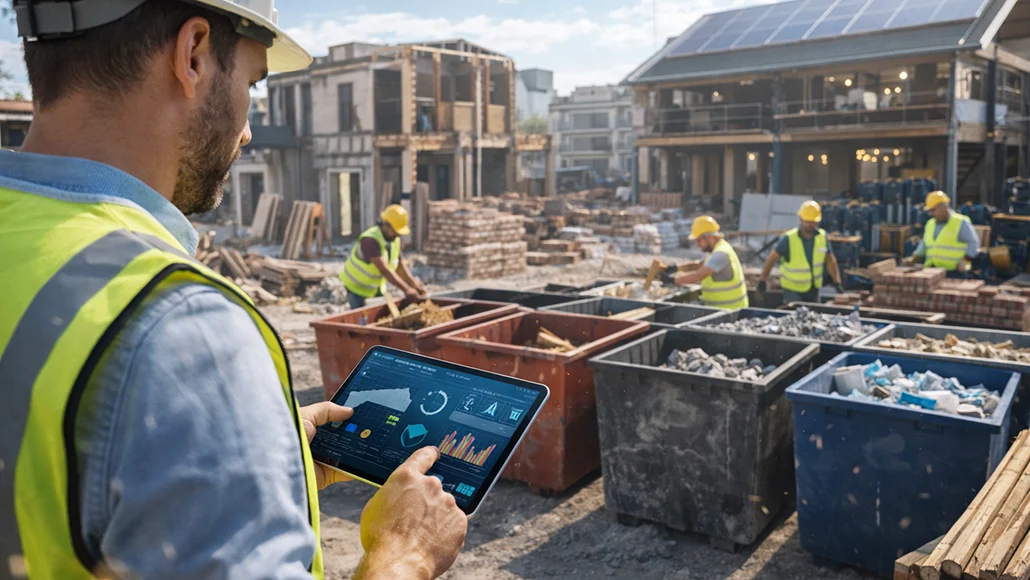
While on-site, construction teams should incorporate clearly defined and easy-to-follow waste segregation. Ideally outlined in the WMP before the project begins, each worker must know where and how to dispose of each material. Clear protocols and multi-lingual signage can significantly improve recycling rates and minimize improper disposal.
To avoid contamination or roadblocks in the recycling process, you can encourage strict guidelines and material separation, including different bins for wood, concrete, different metals and paper products. You can also designate a separate compost bin for leftover food scraps from lunches and snacks to reduce personal waste and avoid contaminating recyclables.
7. Crew Training and Incentivization
Each construction crew member should receive adequate training on the proper waste disposal and recycling practices. Where signs and clear instructions can help teams remember the protocols, incentivization can help maintain momentum and encourage members beyond disposal.
Consider offering reusable items on-site, like sturdy PPE, in favor of single-use alternatives. You can also encourage crew members to minimize their own waste by rewarding them for eliminating single-use items, such as bringing reusable water bottles and lunch containers, provided the site has adequate resources for refilling bottles and storing food.
Inventive systems can reinforce these habits, so consider planning for bonuses or other rewards that workers will truly aim to achieve. To further encourage accountability, incentives may be team-wide goals that everyone achieves.
Tracking Measurable Improvements
Waste reduction requires dedicated and intentional action from every member on a construction project. With a comprehensive WMP in place, you can track your goals and performance throughout the assignment with key metrics to ensure actual, tangible progress.
You may consider conducting frequent waste audits or spend tracking, and comparing the results with other projects to measure how much waste management practices improve costs and efficiency. Teams can track data on the volume of waste sent to landfills versus recycling centers. The data can identify areas that need improvement and can help keep teams incentivized to meet goals.
Reduce, Reuse, Revamp Construction Practices
Waste reduction is essential in construction projects due to the growing need for industry-wide sustainability. As one of the biggest waste contributors, construction has plenty of room to improve its eco-friendly practices to ensure a cleaner future.