































The global construction industry is currently standing at a critical crossroads where traditional linear models of production and consumption are being challenged by the urgent need for environmental stewardship. For decades, the sector has operated on a take-make-dispose philosophy, resulting in staggering amounts of waste and the rapid depletion of natural resources. However, the emergence of the circular economy in construction material reuse offers a profound shift in perspective, moving toward a closed-loop system where materials are kept in use for as long as possible. This paradigm shift is not merely about recycling or waste management; it is a fundamental redesign of how we conceive, build, and eventually disassemble our physical environment. By treating buildings as material banks rather than temporary structures, stakeholders can unlock significant economic value while drastically reducing the ecological footprint of the built environment.
The Foundational Pillars of Circular Construction Practices
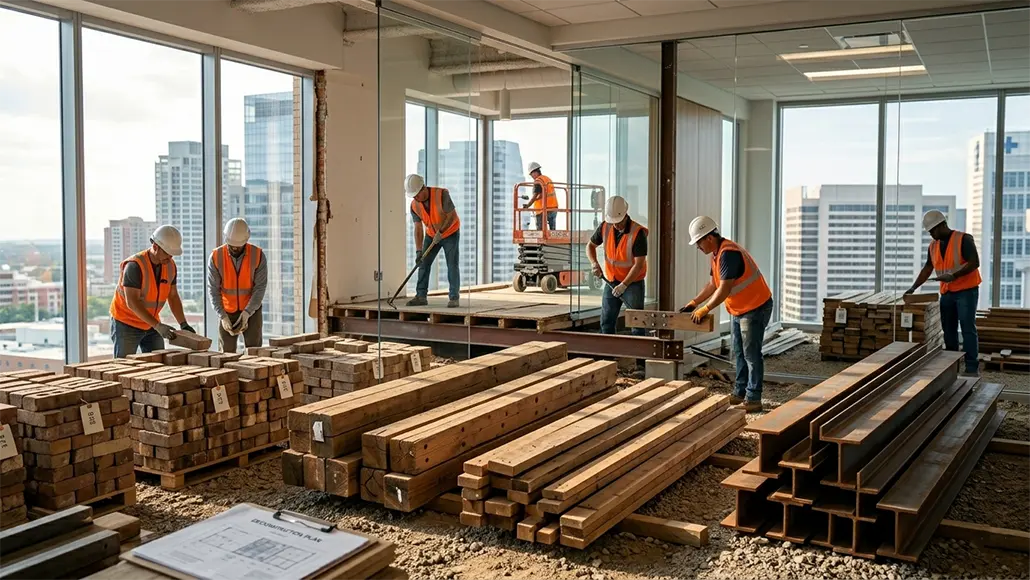
At the heart of this transition lies a set of circular construction practices that redefine the lifecycle of building components. Unlike traditional demolition, which often renders materials unusable or downgrades them into low-value fill, circularity emphasizes the preservation of quality. This begins during the architectural design phase, where “design for deconstruction” becomes a primary objective. Engineers and architects are now prioritizing the use of mechanical fasteners over adhesives, allowing components to be easily detached and relocated. This modularity ensures that when a building reaches the end of its functional life in one location, its parts ranging from structural steel beams to interior glass partitions can be harvested and redeployed in new projects without undergoing energy-intensive processing.
Furthermore, building material lifecycle management has become an essential tool for tracking the provenance and condition of components. Digital twins and material passports provide a comprehensive inventory of what a building is made of, how long its parts are expected to last, and how they can be safely removed. This transparency reduces the risk for future developers, who can confidently source high-quality “pre-loved” materials instead of relying solely on virgin resources. The integration of these digital tools ensures that the value of the material is maintained across multiple generations of use, fostering a more resilient and self-sustaining supply chain within the industry.
Strategic Construction Waste Reduction and the Role of Deconstruction
One of the most immediate benefits of adopting circular principles is the significant construction waste reduction that occurs when deconstruction is favored over demolition. Demolition is a destructive process that generates massive volumes of mixed waste, much of which ends up in landfills. In contrast, deconstruction is a meticulous process of systematically dismantling a structure to salvage materials. While deconstruction may require more labor and time upfront, the economic offsets provided by the sale of salvaged materials and the avoidance of high landfill tipping fees often make it a financially viable alternative.
The process of deconstruction and reuse also has profound social implications. It creates a demand for skilled labor and supports local economies through the establishment of material salvage yards and specialized refurbishment centers. These facilities take reclaimed timber, bricks, and metals, cleaning and certifying them for modern structural standards. By revitalizing these traditional materials, the industry can maintain architectural heritage while meeting modern performance requirements. This local loop minimizes the carbon emissions associated with transporting heavy construction materials across long distances, further enhancing the green building solutions that the modern market increasingly demands.
The Economic Case for Recycled Construction Materials
The shift toward recycled construction materials is driven by both environmental necessity and economic opportunity. As the cost of raw materials continues to fluctuate due to geopolitical instability and resource scarcity, the ability to harvest materials from the existing urban fabric provides a strategic advantage. Companies that master circular construction practices are often better insulated from supply chain shocks. Moreover, the growing implementation of carbon taxes and stricter environmental regulations means that reducing waste is no longer an optional ethical choice but a mandatory fiscal strategy.
Investors and developers are also recognizing that circular building design can enhance the long-term value of an asset. A building designed for flexibility can be repurposed more easily as market demands change, extending its lifespan and delaying the need for costly redevelopment. This adaptability is a core component of sustainable infrastructure, ensuring that the investments made today continue to serve society for decades to come. By reducing the total cost of ownership and maximizing the residual value of materials, circularity transforms construction into a more predictable and profitable enterprise.
Overcoming Barriers to Widespread Implementation
Despite the clear advantages, the full adoption of a circular economy in construction material reuse faces several hurdles. Technical challenges, such as ensuring the structural integrity of reclaimed components and harmonizing building codes across different jurisdictions, remain significant. There is also a cultural barrier; for many years, “new” was synonymous with “better.” Overcoming this stigma requires a concerted effort to demonstrate that reclaimed materials can meet, and often exceed, the performance specifications of their virgin counterparts.
Policy intervention plays a crucial role in leveling the playing field. Governments can incentivize circularity through procurement requirements that mandate a certain percentage of reused content in public works. Additionally, clarifying liability frameworks for reused materials can give insurers and contractors the confidence needed to move away from the linear status quo. As these frameworks mature, we are likely to see a surge in innovation, with new business models centered around “materials-as-a-service,” where manufacturers retain ownership of components and lease them to building owners, ensuring they are returned and refurbished at the end of their use.
Conclusion: Paving the Way for Sustainable Construction Methods
The transition to a circular economy is an essential evolution for an industry that consumes roughly half of the world’s extracted resources. By embracing sustainable construction methods and prioritizing material reuse, the sector can transform from a major polluter into a leader of the green transition. The journey toward circularity requires collaboration across the entire value chain from designers and manufacturers to contractors and policymakers. As we refine our ability to harvest the “urban mine,” the construction industry will play a pivotal role in creating a future where economic growth is decoupled from environmental degradation.