






















Close
DOMOTEX asia/CHINAFLOOR 2026
Friday, April 17, 2026
R+T Asia 2026

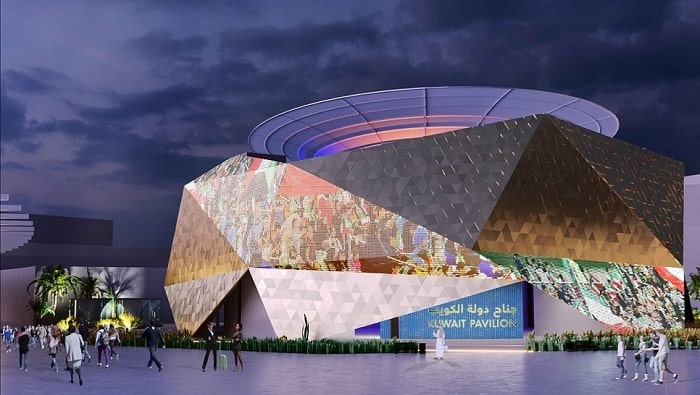
Expo 2020 Dubais Kuwait Pavilion design inspired by sand dunes

Note* - All images used are for editorial and illustrative purposes only and may not originate from the original news provider or associated company.

Subscribe

- Never miss a story with notifications

- Gain full access to our premium content

- Browse free from any location or device.

Media Packs

Expand Your Reach With Our Customized Solutions Empowering Your Campaigns To Maximize Your Reach & Drive Real Results!

– Access the Media Pack Now

– Book a Conference Call

Leave Message for Us to Get Back

Related stories

Gammon Deploys Low-Carbon Concrete in Hong Kong Project

A sustainability-focused construction approach is being implemented in Hong...

Low-Carbon Construction Materials for Sustainable Infrastructure

Transitioning to low-carbon building materials represents a pivotal shift in modern engineering, enabling the development of resilient and environmentally responsible infrastructure by significantly lowering the embodied carbon of large-scale projects.

Circular Economy in Construction for Material Reuse

Implementing circular economy principles in the construction sector offers a transformative path to minimize environmental impact by prioritizing the reuse of materials and optimizing the building lifecycle for long-term sustainability.
- Advertisement -

The design of Expo 2020 Dubai’s Kuwait Pavilion, which takes inspiration from sand dunes, has been revealed, with the 4,546m2 structure being located within the World Expo’s Sustainability District.

With the theme, “New Opportunities for Sustainability”, the pavilion will showcase Kuwait’s rich past and the sustainable future objectives, as well as economic diversity that will promote business innovation.

The Undersecretary, Ministry of Information and Commissioner General of Kuwait at EXPO 2020 Dubai, Munirah Al Huwaidi said: “The symbol of sustainability in the form of a water tower, lies at the centre of the pavilion, reflecting the State of Kuwait’s future vision towards sustainability and its utmost respect for the natural environment, the local climate, resources, and the extensive skills of its people.”

Al Huwaidi added: “Our choice of “sustainability” as a concept for participation, under the title “New Kuwait, New Opportunities for Sustainability”, stems from the vision of His Highness the Amir of the State of Kuwait, Sheikh Sabah Al-Ahmad Al-Jaber Al-Sabah, to rely on renewable energies, in-line with “New Kuwait Vision 2035” and the United Nation’s Sustainable Development Goals (SDGs).”

Speaking to Construction Week during the design revelation ceremony of the pavilion that was held at Jumeriah Emirates Towers, creative director of Cityneon, H K Kok, said: “The pavilion is inspired by the Water Towers, which is a symbol of sustainability. That helped develop a circular design, which is continuous just as the sustainability. The idea of the circle fits the plot nicely.”

“We wanted the pavilion to have a very distinctive look that is inspired by the iconic structures of the country. The Water Towers, the sun, and the sand inspired our architects to design the pavilion, as we wanted to make it different,” Kok told Construction Week.

Latest stories

Related stories

Gammon Deploys Low-Carbon Concrete in Hong Kong Project

A sustainability-focused construction approach is being implemented in Hong...

Low-Carbon Construction Materials for Sustainable Infrastructure

Transitioning to low-carbon building materials represents a pivotal shift in modern engineering, enabling the development of resilient and environmentally responsible infrastructure by significantly lowering the embodied carbon of large-scale projects.

Circular Economy in Construction for Material Reuse

Implementing circular economy principles in the construction sector offers a transformative path to minimize environmental impact by prioritizing the reuse of materials and optimizing the building lifecycle for long-term sustainability.

Effective Deconstruction Strategies in Construction Materials

The transition from traditional demolition to selective deconstruction represents a pivotal shift in how the industry handles end-of-life structures. By prioritizing the recovery of high-value components and materials, stakeholders can significantly reduce environmental impact while fostering a circular economy that values resource longevity over disposal.

Subscribe

- Never miss a story with notifications

- Gain full access to our premium content

- Browse free from any location or device.

Media Packs

Expand Your Reach With Our Customized Solutions Empowering Your Campaigns To Maximize Your Reach & Drive Real Results!

– Access the Media Pack Now

– Book a Conference Call

Leave Message for Us to Get Back

Translate »