
























Close
WORLD OF CONCRETE
Friday, December 19, 2025
JEC WORLD 2026

AI Looks To Cut Built-World Carbon Footprint By 50% By 2030

Note* - All images used are for editorial and illustrative purposes only and may not originate from the original news provider or associated company.

Subscribe

- Never miss a story with notifications

- Gain full access to our premium content

- Browse free from any location or device.

Media Packs

Expand Your Reach With Our Customized Solutions Empowering Your Campaigns To Maximize Your Reach & Drive Real Results!

– Access the Media Pack Now

– Book a Conference Call

Leave Message for Us to Get Back

Related stories

EU Unveil Rules to Encourage Low Carbon Construction Materials

The European Commission has unveiled a standardised calculation framework...

Jobsite Safety Innovations Reducing Risk in Concrete and Structural Work

Jobsite safety innovations represent a systematic approach to hazard elimination through equipment design, monitoring systems, and process improvements specifically targeting construction work’s most dangerous activities. From wearable technology detecting falls and environmental hazards to prevention-through-design methodologies embedding safety features into infrastructure, modern safety strategies work synergistically to protect workers from risks inherent in heavy machinery operation, material handling, and high-altitude construction. This comprehensive examination explores how innovative equipment, intelligent monitoring systems, and collaborative safety practices combine to create construction environments where worker protection and operational efficiency reinforce rather than contradict each other.

Digital Tools Transforming Concrete Planning and Execution

Digital platforms have fundamentally transformed how construction teams plan, coordinate, and execute concrete projects through integrated modeling, scheduling, and collaboration capabilities. Building Information Modeling, cloud-based project management systems, and real-time coordination tools enable designers, engineers, and construction teams to work seamlessly from project inception through completion. This examination explores how digital modeling systems improve accuracy, eliminate costly rework, and establish comprehensive communication networks connecting all project stakeholders. Advanced planning tools enable scenario modeling and constraint tracking, supporting data-driven decision-making that reduces risks while optimizing resource allocation throughout concrete construction lifecycle.
- Advertisement -
Achema Middleeast

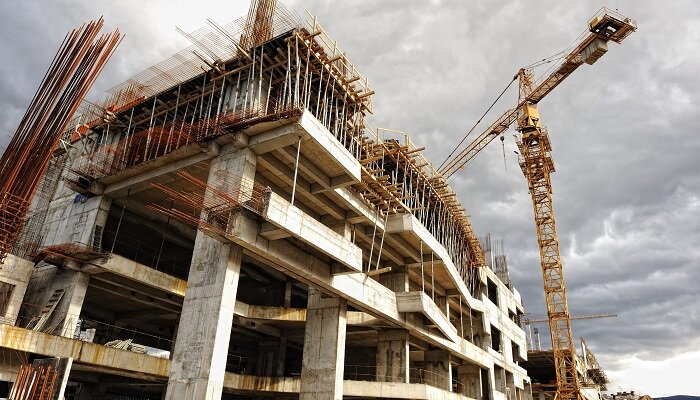
Pi Labs, which happens to be a global proptech venture capital firm, has gone on to launch Sustainably Intelligent: AI for a Greener Built World, which happens to be a research report that goes on to uncover new details pertaining to the impact artificial intelligence is going to have on decreasing the carbon impact within the built environment.

The report went ahead and found that 5.81 to 6.46 gigatonnes of CO2-e greenhouse gas- GHG emissions can indeed be avoided annually by 2030 with the sector-wide adoption of only four AI use cases. Pi Labs opines that this would go on to offset the total yearly carbon footprint of the United States, which happens to be the world’s second largest GHG emitter as per the 2022 figures.

After examination of 68 sustainability-oriented use cases pertaining to AI across the value chain, the following were selected so as to conduct the analysis with the use of proprietary as well as public data; decreasing the raw material inputs by way of generative design, safeguarding the construction rework with 3D AI analytics, decreasing the building energy intensity with AI-enabled smart building tech, and redirecting the demolition waste by way of AI-enabled waste material analysis.

The head of research at Pi Labs, Luke Graham, said that due to the built world already being quite behind as far as climate targets are concerned, they are indeed pleased to share that the findings of the report go on to indicate that AI is all set to have a transformative impact as far as carbon reductions are concerned.

As per the venture funding data coming from 2023, there already happens to be a significant investor interest within the AI driven green solutions that are aimed at the built environment, but there is indeed the potential to drive this figure to another level due to a clearer understanding of the positive climate impact as well as the growth potential of these technologies. The good news happens to be that the pace of AI innovation that has been achieved since the launch of ChatGPT in late 2022 can be very well put towards prominent climate change mitigation by 2030, and as always, the early adopters in the real estate world are all set to be advantageous to the most.

Achema Middleeast

Latest stories

Related stories

EU Unveil Rules to Encourage Low Carbon Construction Materials

The European Commission has unveiled a standardised calculation framework...

Jobsite Safety Innovations Reducing Risk in Concrete and Structural Work

Jobsite safety innovations represent a systematic approach to hazard elimination through equipment design, monitoring systems, and process improvements specifically targeting construction work’s most dangerous activities. From wearable technology detecting falls and environmental hazards to prevention-through-design methodologies embedding safety features into infrastructure, modern safety strategies work synergistically to protect workers from risks inherent in heavy machinery operation, material handling, and high-altitude construction. This comprehensive examination explores how innovative equipment, intelligent monitoring systems, and collaborative safety practices combine to create construction environments where worker protection and operational efficiency reinforce rather than contradict each other.

Digital Tools Transforming Concrete Planning and Execution

Digital platforms have fundamentally transformed how construction teams plan, coordinate, and execute concrete projects through integrated modeling, scheduling, and collaboration capabilities. Building Information Modeling, cloud-based project management systems, and real-time coordination tools enable designers, engineers, and construction teams to work seamlessly from project inception through completion. This examination explores how digital modeling systems improve accuracy, eliminate costly rework, and establish comprehensive communication networks connecting all project stakeholders. Advanced planning tools enable scenario modeling and constraint tracking, supporting data-driven decision-making that reduces risks while optimizing resource allocation throughout concrete construction lifecycle.

Real-Time Monitoring Technologies Improving Structural Outcomes

Real-time monitoring technologies transform how construction teams track concrete behavior during and after placement. By leveraging advanced sensor systems, engineers gain precise data on curing progress, temperature fluctuations, and stress development. This continuous visibility enables early detection of quality issues, optimized construction schedules, and superior long-term structural performance that extends building lifespan while reducing maintenance expenses.

Subscribe

- Never miss a story with notifications

- Gain full access to our premium content

- Browse free from any location or device.

Media Packs

Expand Your Reach With Our Customized Solutions Empowering Your Campaigns To Maximize Your Reach & Drive Real Results!

– Access the Media Pack Now

– Book a Conference Call

Leave Message for Us to Get Back

Translate »