

























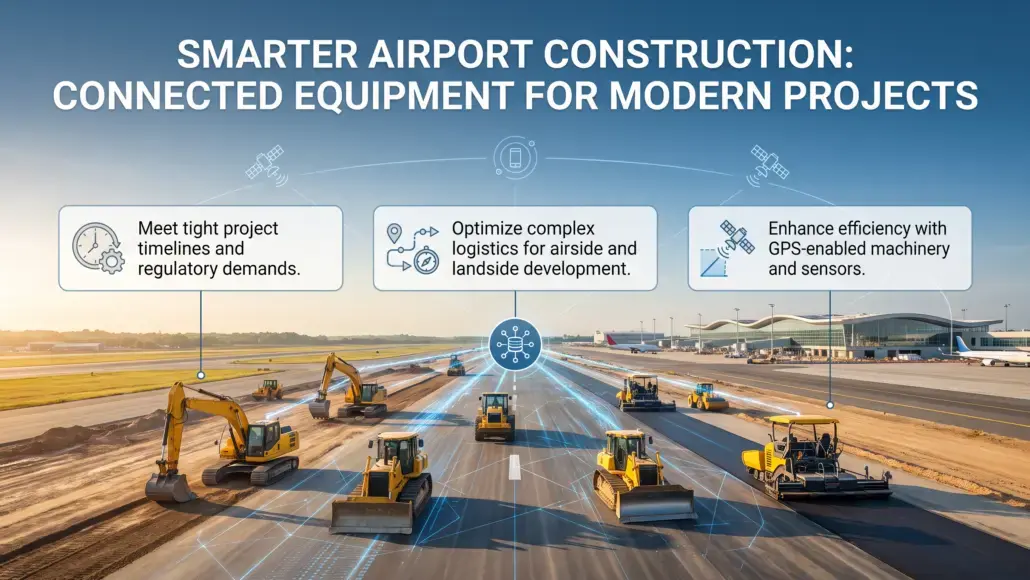


Airport infrastructure projects currently face unprecedented pressure to deliver high-capacity facilities within compressed timeframes and strict regulatory environments. The deployment of connected construction equipment represents a fundamental shift in how heavy civil engineering teams manage the complex logistics of airside and landside development. By integrating sensors, global positioning systems, and wireless communication modules into earthmoving and paving machinery, contractors can maintain a continuous flow of operational data. This technological integration allows for a level of oversight that was previously unattainable in the fragmented environment of a large scale aviation hub. The ability to monitor machine health, location, and performance in real time ensures that every piece of machinery contributes to the broader objective of meeting project milestones without unnecessary delays.
The scale of modern airport expansion requires a meticulous approach to asset management, particularly when dozens of specialized machines operate simultaneously across vast runways and terminal footprints. When connected construction equipment is utilized, the traditional barriers between site operations and project management offices dissolve. Data gathered from telematics systems provides granular insights into idling times, fuel consumption, and duty cycles, allowing for immediate adjustments to fleet allocation. This level of visibility is essential for maintaining the momentum of a project, as it identifies bottlenecks before they escalate into costly setbacks. The synchronization of machinery through digital networks ensures that the right equipment is always in the right place, performing at its peak capacity to drive the construction schedule forward.
Real Time Fleet Coordination and Operational Visibility
Effective management of a diverse machine fleet is critical for the success of airport earthworks and grading. Connected construction equipment provides project managers with a comprehensive dashboard of site activity, enabling them to observe the precise movements of bulldozers, excavators, and dump trucks. This visibility is not merely about tracking location; it involves understanding the load cycles and productivity rates of each individual unit. In the context of an airport project, where work often occurs in close proximity to active taxiways, the ability to monitor equipment boundaries and operational zones is vital for both safety and efficiency. The integration of geofencing technology ensures that machinery remains within designated work areas, preventing unauthorized incursions into restricted aviation zones while optimizing the travel paths of hauling units.
The data generated by these connected systems allows for the implementation of dynamic scheduling. If an excavator at the terminal foundation site experiences a decrease in productivity due to soil conditions, the management team can immediately reassign support assets to maintain the intended pace. This agility is a direct result of the continuous data stream provided by connected construction equipment. Additionally, the analysis of engine diagnostics and hydraulic performance enables a shift from reactive to proactive maintenance. By identifying early signs of component wear, maintenance teams can schedule repairs during planned downtime, such as overnight shifts when airside activity is reduced. This strategy minimizes the risk of sudden mechanical failures that could halt progress on critical path activities, ensuring that the project remains on track.
Telemetry and Data Synergy in Heavy Civil Engineering
The synergy between telemetry data and project management software creates a powerful tool for analyzing site performance. the technology serves as a mobile sensor network, capturing data points that reflect the physical reality of the construction site. This information is processed to generate heat maps of activity, highlighting areas where machine congestion might be slowing down progress. For airport projects involving extensive paving operations, the connectivity of asphalt finishers and rollers is particularly beneficial. These machines can communicate with one another to ensure uniform coverage and temperature control, which are essential for the durability of high stress runway surfaces. The digital record created by these machines provides a transparent account of the work performed, facilitating easier verification for quality control and progress payments.
In addition to operational metrics, the environmental impact of construction activities is increasingly scrutinized in the aviation sector. the technology allows contractors to monitor and report on carbon emissions and fuel efficiency with high accuracy. By analyzing idling patterns, operators can be trained to reduce unnecessary fuel consumption, contributing to the sustainability goals of the airport authority. The integration of this data into a centralized building information model enhances the digital twin of the project, providing a comprehensive historical record of how the infrastructure was built. This digital thread is invaluable for future maintenance and expansion efforts, as it contains detailed information about the methods and equipment used during the initial construction phase.
Automated Reporting and Site Performance Metrics
The transition to automated reporting through the technology significantly reduces the administrative burden on site supervisors. Instead of manually recording machine hours and production volumes, the systems generate daily reports that are instantly available to all stakeholders. This automation eliminates the risk of human error in data entry and provides a more accurate reflection of site progress. For airport projects where compliance with federal and international standards is mandatory, having a reliable digital audit trail is a significant advantage. The reports generated by connected systems can be used to demonstrate adherence to safety protocols and environmental regulations, providing peace of mind to both the contractor and the client.
Performance metrics derived from the technology also enable better benchmarking across different phases of the project. By comparing the productivity of various crews and machine configurations, project managers can identify best practices and apply them throughout the organization. This continuous improvement cycle is essential for staying competitive in the high stakes world of airport construction. The ability to quantify the impact of specific operational changes allows for data driven decision making, removing the guesswork from site management. As airport projects become increasingly complex, the reliance on these sophisticated data systems will only grow, making the adoption of connected technology a necessity for any firm looking to lead in this sector.
Enhancing Safety Protocols through Machine Connectivity
Safety is the primary concern in any airport construction environment, and the technology plays a central role in mitigating risks. Advanced collision avoidance systems, which rely on machine to machine communication, can alert operators to the presence of other machinery or ground personnel in their vicinity. This technology is especially important during night shifts or in poor weather conditions when visibility is compromised. The integration of cameras and radar sensors into the connected network provides a 360 degree view of the machine surroundings, reducing the likelihood of accidents. In the event of an emergency, the precise location data provided by the equipment can assist first responders in reaching the site quickly, potentially saving lives and minimizing damage to the infrastructure.
Beyond immediate physical safety, the monitoring of operator behavior contributes to a safer work culture. Systems can track instances of excessive speed, harsh braking, or improper machine handling, providing data for targeted safety training. This feedback loop encourages operators to adhere to best practices, reducing the overall risk profile of the project. The connectivity of the equipment also allows for remote lockdowns or speed limitations in specific zones, providing an additional layer of control for site managers. By fostering a technologically enhanced safety environment, contractors can ensure that the project is completed without major incidents, preserving the reputation of the firm and the trust of the airport stakeholders. The investment in the technology thus pays dividends not only in productivity but also in the fundamental security of the construction workforce.
Strategic Resource Allocation and Long Term Value
The long term value of the technology extends beyond the completion of a single airport project. The data accumulated over the course of a construction cycle provides a wealth of information that can be used for future bidding and planning. By understanding the true costs and productivity rates associated with various tasks, contractors can develop more accurate estimates for upcoming projects. this historical data serves as a foundation for strategic planning, allowing the firm to allocate its resources more effectively across its entire portfolio. The ability to demonstrate a track record of data driven success is also a powerful marketing tool when competing for high profile aviation contracts.
The integration of connected machinery into the broader digital ecosystem of the construction firm ensures that the benefits of the technology are felt at every level of the organization. From the mechanic who uses diagnostic data to order parts in advance to the executive who monitors project health through a corporate dashboard, the impact of connectivity is pervasive. As the construction industry continues to evolve, the distinction between physical labor and digital management will become increasingly blurred. The firms that embrace the technology will be well positioned to lead this change, delivering airport projects that are not only productive and safe but also built to the highest standards of modern engineering. The ongoing refinement of these systems promises even greater levels of efficiency and integration in the years to come, further cementing the role of technology in the future of airport infrastructure development.