




























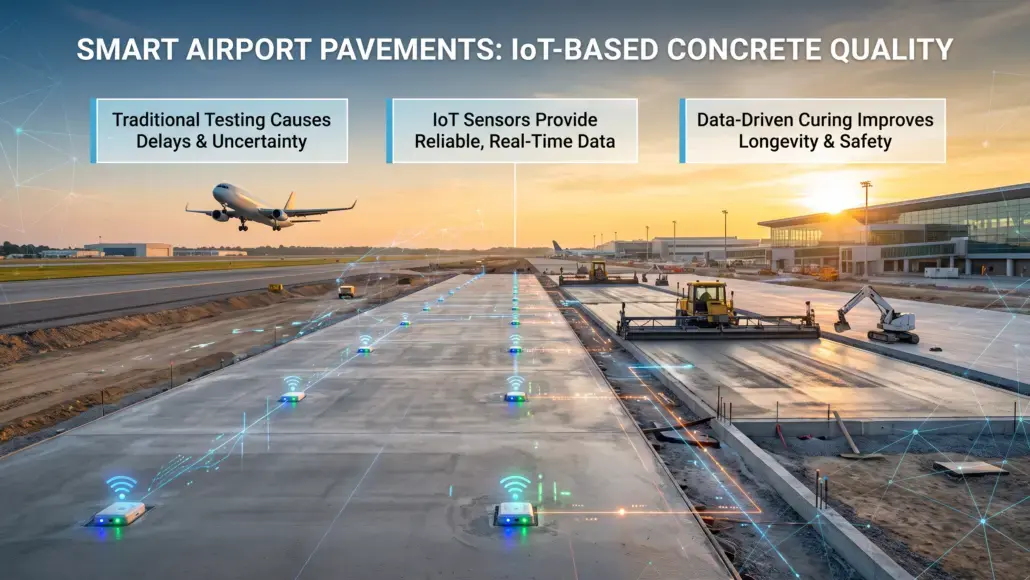


The structural integrity of airport pavements and terminal foundations is paramount to the safety and longevity of aviation infrastructure. Traditional methods of quality control for concrete, which rely heavily on manual sampling and destructive testing of cylinders, often introduce delays and uncertainties into the construction schedule. The emergence of IoT-based concrete monitoring has provided engineers with a more reliable and data driven approach to managing the curing process. By embedding wireless sensors directly into the concrete mix during the pour, contractors can capture continuous data on internal temperature and humidity. This information is transmitted in real time to a centralized platform, where sophisticated algorithms calculate the maturity and strength gain of the material. This technological advancement ensures that critical structural elements reach their required specifications before they are subjected to operational loads, significantly improving the overall quality of the airport facility.
Airport projects frequently involve the placement of massive concrete volumes, particularly for runways, taxiways, and apron areas that must withstand the enormous weight of modern commercial aircraft. The thermal management of these large pours is a significant challenge, as excessive heat generation during hydration can lead to thermal cracking and long term durability issues. IoT-based concrete monitoring allows for the precise tracking of temperature differentials within the mass concrete, enabling contractors to adjust their curing strategies on the fly. This level of control is essential for preventing structural defects that could compromise the safety of flight operations. The ability to verify the internal conditions of the concrete without waiting for lab results provides a significant advantage in maintaining the momentum of the construction schedule while adhering to the highest standards of engineering excellence.
Sensor Integration for Maturity Analysis
The core of IoT-based concrete monitoring is the use of sacrificial sensors that remain embedded in the structure for its entire lifecycle. These sensors are designed to withstand the harsh conditions of a concrete pour and provide accurate readings even in the most demanding environments. The maturity method, which correlates the temperature history of the concrete with its strength development, is the primary analytical framework used in these systems. By calibrating the sensors to the specific mix design used on the airport project, engineers can obtain a highly accurate estimation of the in-situ strength. This eliminates the need for frequent break tests of field cured cylinders, which often fail to represent the actual conditions of the structural element due to variations in size and ambient temperature.
In an airport construction setting, where time is a critical factor, the ability to know exactly when the concrete has reached the strength required for formwork removal or for the next phase of construction is invaluable. IoT-based concrete monitoring provides this information instantly, allowing for more efficient resource allocation and reduced downtime. The data also serves as a permanent record of the curing process, providing a high degree of transparency and accountability for all stakeholders. This digital record is an essential component of the quality assurance program, demonstrating that the construction meets the rigorous requirements set by aviation authorities and structural designers. The integration of these sensors into the broader project management framework ensures that quality is never sacrificed for speed.
Real Time Strength Gain Tracking and Schedule Optimization
The real time nature of the data provided by the technology enables project managers to optimize the construction sequence with a high degree of precision. Instead of relying on conservative estimates of strength gain, which often add unnecessary days to the schedule, teams can act on actual performance data. For airport paving projects, this means that the time between pouring a runway section and allowing construction traffic or opening it to flight operations can be minimized. The ability to accelerate the schedule without compromising structural integrity is a significant benefit in the competitive and time sensitive aviation sector. The continuous monitoring of strength gain also allows for the identification of any anomalies in the curing process, such as those caused by sudden changes in weather or variations in the concrete mix.
Beyond the immediate benefits to the schedule, the technology contributes to long term cost savings by reducing the likelihood of future repairs. By ensuring that the concrete cures under optimal conditions, the risk of early age cracking and other durability issues is significantly reduced. This leads to a more resilient infrastructure that requires less maintenance over its operational life. The investment in monitoring technology thus pays for itself many times over by extending the lifecycle of the airport assets and reducing the total cost of ownership. The data gathered during the construction phase also provides a valuable baseline for future structural health monitoring, allowing airport operators to track the performance of the concrete as it ages and is subjected to repeated aircraft loadings.
Thermal Gradient Control in Mass Pouring Operations
Mass concrete pours are a common feature of airport terminal foundations and heavy duty pavement sections. The internal heat generated during the hydration process can be substantial, and if the temperature difference between the core and the surface of the concrete exceeds certain limits, thermal cracking will occur. the technology is an essential tool for managing these thermal gradients, as it provides real time alerts when the temperature differentials approach critical thresholds. Contractors can then implement mitigation measures, such as applying insulation, using cooling pipes, or adjusting the curing environment, to keep the stresses within acceptable levels. This proactive approach to thermal management is critical for ensuring the long term structural quality of the airport infrastructure.
The precision offered by these IoT systems is far superior to traditional thermocouples, which are often difficult to install and maintain in a large scale construction environment. The wireless nature of the IoT sensors simplifies the installation process and reduces the risk of data loss due to cable damage. The centralized data platform allows engineers to monitor multiple pour locations simultaneously from a remote office, providing a comprehensive view of the site activity. This centralized oversight is particularly beneficial for large airport projects where work is distributed across a vast geographic area. The ability to manage complex thermal conditions with confidence is a key factor in the successful delivery of high quality concrete structures in the aviation industry.
Quality Assurance and Compliance Standards in Aviation
Aviation authorities maintain some of the most stringent quality standards in the construction industry, and demonstrating compliance is a major undertaking for any contractor. the technology provides a reliable and transparent method for documenting that every cubic meter of concrete meets the specified requirements. The automated data collection and reporting features of these systems ensure that the quality record is complete and accurate, reducing the risk of disputes and providing clear evidence of technical excellence. For airport projects funded by public agencies, this level of accountability is essential for maintaining public trust and ensuring that the infrastructure is built to last. The digital audit trail created by the sensors is also invaluable for future inspections and audits, as it provides a detailed history of the construction process.
The adoption of the technology is also driven by the increasing complexity of modern concrete mix designs, which often include various admixtures and supplementary cementitious materials. These complex mixes can exhibit different curing characteristics than traditional concrete, making real time monitoring even more important. By providing a direct window into the chemical and physical changes occurring within the concrete, IoT sensors allow engineers to verify that the specified mix is performing as intended. This ensures that the final product has the strength, durability, and resistance to environmental factors required for the demanding airport environment. The focus on quality and precision in concrete construction is a reflection of the broader commitment to excellence in aviation infrastructure development.
Enhancing Structural Resilience and Long Term Performance
The ultimate value of the technology lies in its contribution to the long term resilience and performance of airport structures. By providing the data needed to ensure optimal curing and structural integrity from the very beginning, these systems lay the foundation for a facility that can withstand the rigors of modern aviation for decades. The ability to monitor the structure as it settles and matures provides ongoing insights into its health, allowing for targeted maintenance and timely repairs. This data driven approach to asset management is essential for maximizing the value of the significant investments made in airport infrastructure. The digital records created during construction are a permanent asset that can be passed on to future generations of facility managers.
As the aviation industry continues to evolve, the demand for high quality and durable infrastructure will only increase. the technology is a key technology that will help the construction sector meet these challenges. By bridging the gap between design and execution, these systems ensure that the finished product is a true reflection of the engineering vision. The ongoing development of even more sophisticated sensors and analytical tools will further enhance the capabilities of these systems, providing even greater levels of control and insight. The future of airport construction is one where every element of the structure is connected and monitored, ensuring the highest standards of safety, quality, and performance. The commitment to using the best available technology is what sets the leading firms in the airport construction sector apart, and the technology is at the forefront of this technological revolution.