























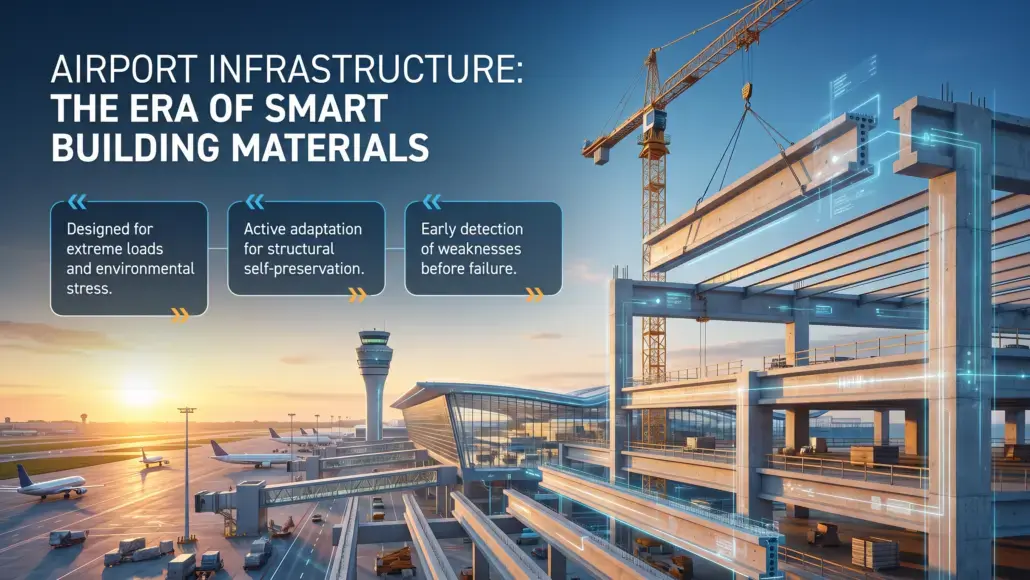


The evolution of aviation infrastructure demands a new generation of building components that can withstand extreme mechanical loads and diverse environmental stressors. The integration of smart construction materials into airport projects represents a significant leap forward in structural engineering, moving beyond static performance to active adaptation and self preservation. These materials are engineered to respond to their surroundings, identifying and mitigating structural weaknesses before they compromise the integrity of the facility. For airport authorities, the adoption of these advanced technologies is essential for building runways, terminals, and hangars that are more durable, easier to maintain, and more sustainable over their entire lifecycle. The transition toward intelligent material systems reflects a broader shift in the construction sector toward resilience and technical sophistication, ensuring that the next generation of airports is built to the highest possible standards.
Modern airport construction involves the use of specialized materials that must perform under the constant pressure of heavy aircraft movements and fluctuating climatic conditions. Conventional materials, while effective, often require significant maintenance and are susceptible to gradual degradation that can be difficult to detect. Smart construction materials address these challenges by incorporating sensing and reactive capabilities directly into the molecular or structural fabric of the building components. This allows for a more proactive approach to asset management, where the materials themselves provide data on their condition and even initiate repair processes when needed. The result is an infrastructure that is not only stronger but also more intelligent, providing a safer and more efficient environment for passengers and operators alike.
Self Healing Cementitious Composites and Pavement Longevity
One of the most promising applications of smart construction materials in the airport sector is the use of self healing concrete for runway and taxiway construction. This material contains encapsulated healing agents, such as specialized bacteria or chemical polymers, that are activated when a crack forms. As the crack develops, the capsules rupture, releasing the healing agent to seal the breach and restore the structural integrity of the pavement. This capability is particularly valuable for airport surfaces, where even minor cracks can lead to foreign object debris (FOD) issues or water infiltration that weakens the subbase. By automatically repairing small defects, self healing concrete significantly extends the service life of the pavement and reduces the need for frequent and disruptive maintenance closures.
The implementation of self healing materials requires a deep understanding of material science and careful integration into the construction workflow. Engineers must calibrate the concentration of healing agents to match the specific loading patterns and environmental conditions of the airport site. The resulting pavements are more resilient to the repeated stress cycles imposed by heavy commercial jets, maintaining their surface quality for much longer than traditional concrete. This increased durability translates into significant long term cost savings for airport operators, as the total cost of ownership is reduced through lower maintenance requirements and delayed reconstruction. The use of these smart construction materials demonstrates a commitment to operational continuity and safety in the demanding aviation environment.
Adaptive Envelopes and Thermal Efficiency in Terminal Design
The design of modern airport terminals is increasingly focused on energy efficiency and passenger comfort, and the technology play a central role in achieving these goals. Adaptive building envelopes, which use phase change materials (PCMs) or electrochromic glass, can adjust their thermal and optical properties in response to changing weather conditions and sun positions. For large terminal buildings with extensive glazing, the ability to modulate heat gain and light transmission is essential for reducing cooling loads and improving the indoor environment. These materials act as a dynamic barrier, absorbing or reflecting energy as needed to maintain a stable internal temperature without relying solely on mechanical HVAC systems.
The integration of the technology into the terminal facade also allows for more creative and functional architectural designs. Thin film solar cells can be integrated into the glass or cladding, turning the building envelope into a source of renewable energy. This contributes to the sustainability targets of the airport authority and reduces the overall carbon footprint of the facility. The data gathered from the adaptive systems can also be used to optimize the building performance in real time, providing insights into energy usage and thermal behavior. The use of these intelligent materials ensures that the airport terminal is not just a place of transit but a high performance structure that supports the broader environmental goals of the aviation industry.
High Performance Polymers and Advanced Pavement Design
Beyond concrete and steel, high performance polymers are becoming an essential component of the technology for airport infrastructure. These advanced materials are used in specialized coatings and sealants that protect surfaces from chemical spills, UV radiation, and mechanical abrasion. In hangar environments, where floors are subjected to jet fuel, hydraulic fluids, and heavy equipment traffic, the use of polymer based smart materials provides a durable and easy to clean surface. These coatings can also incorporate anti microbial properties to improve hygiene in terminal restrooms and food service areas, contributing to a better passenger experience. The versatility of polymers allows for the creation of tailored solutions for a wide range of airport applications.
In pavement engineering, polymer modified bitumens and advanced fiber reinforcements are used to create more flexible and crack resistant runway surfaces. These the technology are designed to absorb energy and redistribute stresses, reducing the likelihood of rutting and fatigue cracking. The inclusion of sensing fibers can also turn the pavement into a large scale sensor network, providing data on aircraft weights and taxiing speeds. this information is invaluable for both operational management and long term structural health monitoring. The ability to monitor the performance of the infrastructure in real time allows for more informed decision making and more efficient maintenance scheduling, ensuring that the airport remains safe and operational at all times.
Sustainable Lifecycle Performance and Environmental Impact
The adoption of the technology is closely linked to the growing emphasis on sustainability in the aviation sector. By extending the life of building components and reducing the need for maintenance, these materials minimize the consumption of natural resources and the generation of construction waste. Many smart materials are also designed to be more environmentally friendly in their production and disposal, using recycled content or biodegradable components. The long term durability of these materials ensures that the environmental impact of the construction phase is amortized over a much longer period, leading to a more sustainable infrastructure. The focus on lifecycle performance is a key driver for the adoption of intelligent materials in modern airport projects.
Additionally, the data provided by the technology allows for more accurate assessments of the environmental performance of the airport facility. By monitoring energy usage, material condition, and structural health, airport operators can identify areas for improvement and implement targeted sustainability initiatives. This data driven approach ensures that the airport can meet its environmental obligations while maintaining a high level of operational efficiency. The transition to a more sustainable aviation industry requires a holistic approach to design and construction, and the technology are a fundamental part of this vision. The investment in these advanced technologies is an investment in the future of the airport and the planet, demonstrating that technical excellence and environmental responsibility can go hand in hand.
Strategic Integration and Future Developments in Material Science
The successful implementation of the technology requires a strategic approach to design and procurement. Contractors and engineers must work closely with material scientists to select the most appropriate technologies for the specific needs of the airport project. This collaboration ensures that the materials are integrated directly into the structural and architectural design, maximizing their performance and value. As the field of material science continues to evolve, new and even more sophisticated smart materials will become available, providing even greater opportunities for innovation in airport construction. The ongoing development of nanotechnology and bio inspired materials promises to further enhance the capabilities of the next generation of building components.
The future of airport construction is one where the distinction between structure and system becomes increasingly blurred. the technology will not only provide the physical support for the facility but also the intelligence needed to manage it effectively. The ability to sense, respond, and adapt to the environment will be a standard feature of all major airport components, ensuring the highest levels of safety, efficiency, and sustainability. The commitment to using the best available technology is what will define the leading airports of the future, providing a resilient and high performance infrastructure that can meet the challenges of a rapidly changing world. The focus on technical precision and data integrity in the selection and use of these materials will remain a cornerstone of successful airport development for the foreseeable future.