


















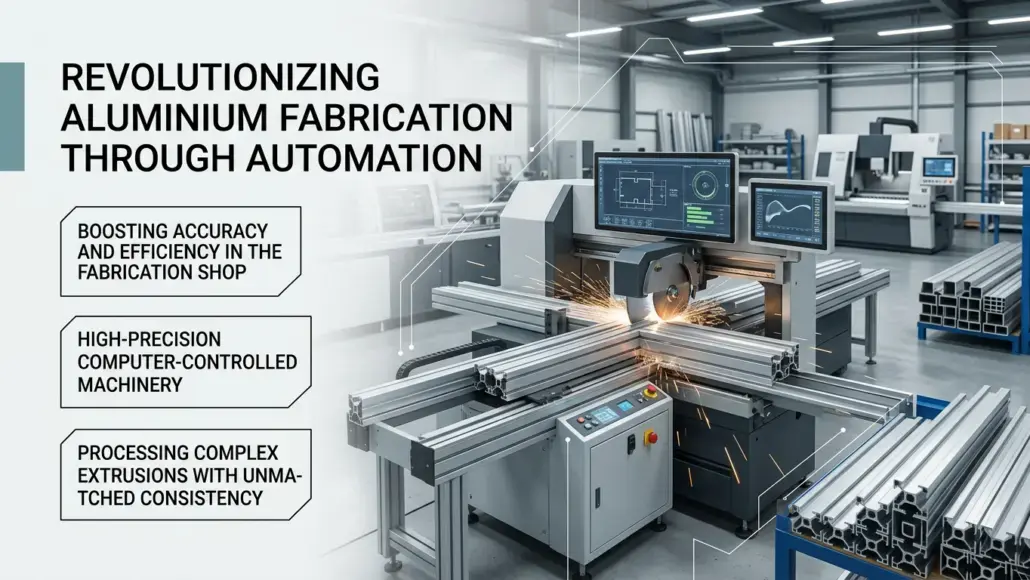

The manufacturing environment for architectural aluminium components is undergoing a rapid transformation, driven by the need for increased accuracy and efficiency in the fabrication shop. Central to this evolution is the implementation of automated aluminium cutting systems, which replace traditional manual sawing methods with high-precision, computer-controlled machinery. These systems are capable of processing complex extrusions with a degree of consistency that is impossible to replicate by hand, ensuring that every component meets the exacting tolerances required for modern facade and structural systems. By integrating advanced software with durable mechanical hardware, fabricators can now achieve dimensional control within fractions of a millimeter, reducing the risk of errors that can lead to costly delays and reworks during the site installation phase. The shift towards automation is not merely about speed; it is about the fundamental reliability of the building comrponents that form the skeleton of contemporary architecture.
The adoption of automated aluminium cutting technology also addresses the growing complexity of architectural designs. As architects move away from standard rectangular grids towards more organic and non-orthogonal forms, the demand for non-standard cutting angles and intricate profile preparations has increased. Automated systems, equipped with multi-axis cutting heads and sophisticated material handling capabilities, can easily manage these complex geometries. This flexibility allows for the creation of unique structural solutions that were previously difficult or expensive to fabricate. In the case of complex geometric structures like diagrids or tessellated skins, the precision of the cut determines the structural continuity of the entire assembly. A single misaligned component can trigger a cascading error that complicates the assembly of subsequent panels. By utilizing high-precision cutting, fabricators can ensure that the “geometric logic” of the architectural design is maintained from the computer screen to the physical building.
Additionally, the integration of these cutting systems into a digital workflow enables the direct transfer of data from BIM models to the factory floor, ensuring that the finished products are a perfect reflection of the design intent. This seamless connection between design and manufacturing is a key pillar of the modern construction industry’s drive towards greater productivity and quality. The use of cloud-based project management tools allows for real-time communication between the design team and the fabrication shop, ensuring that any changes to the digital model are immediately reflected in the machine instructions. This agile approach to manufacturing is essential for meeting the compressed timelines of contemporary construction projects, where the ability to rapidly iterate and produce customized components is a significant competitive advantage.
The impact of automated cutting also extends to the physical properties of the aluminium itself. Excessive heat during manual cutting can lead to localized changes in the material’s temper or surface finish. Automated systems often utilize specialized lubricants and cooling systems that maintain the material’s integrity throughout the cutting process. This is particularly important for high-strength alloys where the mechanical properties are highly sensitive to thermal exposure. By maintaining a cool and clean cut, automated systems ensure that the final components perform exactly as specified by the structural engineers, providing a level of reliability that is essential for life-safety applications. Additionally, the reduction in physical strain on the workforce leads to a safer and more productive environment, allowing skilled technicians to focus on high-value tasks like quality control and system optimization.
Enhancing Dimensional Accuracy and Repeatability
The primary advantage of automated aluminium cutting is the elimination of human error from the measuring and cutting process. Manual operations are inherently susceptible to variations caused by operator fatigue, parallax errors, and inconsistent clamping pressures. In contrast, automated systems utilize high-resolution encoders and precision ball screws to position the cutting head with extreme accuracy. This ensures that the length, angle, and orientation of every cut are identical across thousands of components. Such repeatability is essential for modular construction, where hundreds of identical panels or trusses must fit together perfectly. The reliability of automated aluminium cutting provides fabricators with the confidence that their products will meet the most stringent quality standards, regardless of the production volume.
Beyond simple linear cuts, modern automated systems are capable of performing complex machining operations such as drilling, milling, and notching within the same production cycle. This multi-functionality reduces the need for material handling between different machines, further decreasing the potential for damage and dimensional drift. By performing all critical fabrication steps in a single setup, the relationship between different features, such as the distance between a bolt hole and a mitered end, is maintained with absolute precision. This level of integration is vital for the successful implementation of robotic aluminium welding improving structural component consistency, where the accuracy of the fit-up determines the quality and strength of the final weldment. The synergy between high-precision cutting and advanced welding techniques allows for the creation of complex structural assemblies that are both light and incredibly strong.
Waste Reduction and Material Optimization
In addition to improving accuracy, automated aluminium cutting systems play a crucial role in optimizing material usage. Aluminium is a valuable resource, and the cost of waste can be significant in large-scale fabrication projects. Advanced nesting software, integrated with the cutting machinery, calculates the most efficient way to arrange different components on a standard length of extrusion. This minimizes the amount of “drop” or scrap material produced, leading to substantial cost savings and a lower environmental impact. The ability of automated systems to perform precise, narrow-kerf cuts also contributes to material conservation, particularly when dealing with expensive high-strength alloys.
The following list outlines the key operational benefits of implementing automated cutting solutions:
- Elimination of manual marking and measuring, significantly reducing labor costs and errors.
- Ability to execute complex 3D cuts and multi-angle miters with high precision.
- Real-time tracking of material usage and scrap rates for better inventory management.
- Improved worker safety by enclosing the cutting process and reducing manual handling.
- Seamless integration with ERP and BIM software for streamlined project management.
- Enhanced surface finish of the cut edges, reducing the need for secondary deburring or finishing.
Integration with Digital Fabrication Workflows
The true power of integrated building components is realized when it is fully integrated into a digital fabrication workflow. This process begins with the creation of a detailed 3D model, where every extrusion and connection is precisely defined. This model is then exported as a set of machine-readable instructions, which are used to drive the automated cutting and machining centers. This “direct-to-fab” approach eliminates the need for paper drawings and manual data entry, further reducing the risk of errors and ensuring that the fabrication team is always working from the most up-to-date design information. This digital continuity is especially important for large, fast-track projects where design changes may occur frequently.
Additionally, the data generated during the automated cutting process can be used for quality assurance and traceability. Every cut component can be labeled with a unique barcode or QR code that contains information about its project, material grade, and fabrication history. This allows for the easy identification of components during the assembly and installation phases, ensuring that the right part is used in the right location. It also provides a valuable record for future building maintenance and facility management. As the industry moves towards the use of digital twins, the information captured on the factory floor will become an integral part of the building’s permanent digital record, providing a level of transparency and accountability that was previously impossible.
Future Trends in Automated Fabrication
The future of precision engineering solutions will likely involve the increased use of artificial intelligence and machine learning to further optimize the fabrication process. AI algorithms can analyze historical production data to identify patterns and predict potential issues, such as tool wear or material variations. This allows for proactive maintenance and real-time adjustments to the cutting parameters, ensuring that the quality of the finished products remains consistent over time. Additionally, the development of more advanced sensor technologies, such as laser-based measuring and vision systems, will enable the machinery to automatically compensate for minor variations in the raw extrusions, such as slight bows or twists.
As the construction industry continues to embrace the principles of Industry 4.0, the role of automated fabrication will only become more central. The integration of cutting, welding, and assembly into a single, highly automated production line will allow for the rapid manufacture of customized architectural components at a cost that is competitive with mass-produced alternatives. This “mass customization” capability will provide architects with greater creative freedom while ensuring that the resulting buildings are more efficient, more durable, and more sustainable. The ongoing commitment to precision and automation in the aluminium sector is a key driver of this transformation, providing the foundation for the high-performance structures of the future.
The broader economic benefits of automation in the aluminium sector should also be noted. While the capital investment in high-end cutting machinery can be substantial, the return on investment is often realized through reduced labor costs, lower scrap rates, and the ability to take on more complex and higher-value projects. In a globalized market, the ability to compete on both quality and price is essential for the survival and growth of fabrication businesses. Automation provides the means to achieve this balance, allowing companies to scale their operations without a proportional increase in overhead. As the technology continues to mature, we can expect to see the adoption of automated cutting systems even among smaller fabrication shops, further democratizing the access to high-precision architectural components.
The transition to advanced manufacturing techniques represents a significant step forward for the architectural fabrication industry. By combining high-precision machinery with advanced software and digital workflows, fabricators can now deliver products that meet the highest standards of accuracy and reliability. This technology not only improves the efficiency of the shop floor but also enhances the overall quality and performance of the building envelope. As architectural designs continue to evolve, the ability to manufacture complex components with speed and precision will remain a critical competitive advantage. The commitment to technical excellence in the fabrication sector ensures that aluminium will continue to be a primary material for the buildings of tomorrow, providing a perfect blend of innovation and performance. The synergy between human expertise and machine precision is what will ultimately drive the next wave of architectural innovation, resulting in buildings that are more beautiful, more functional, and more sustainable than ever before.