



















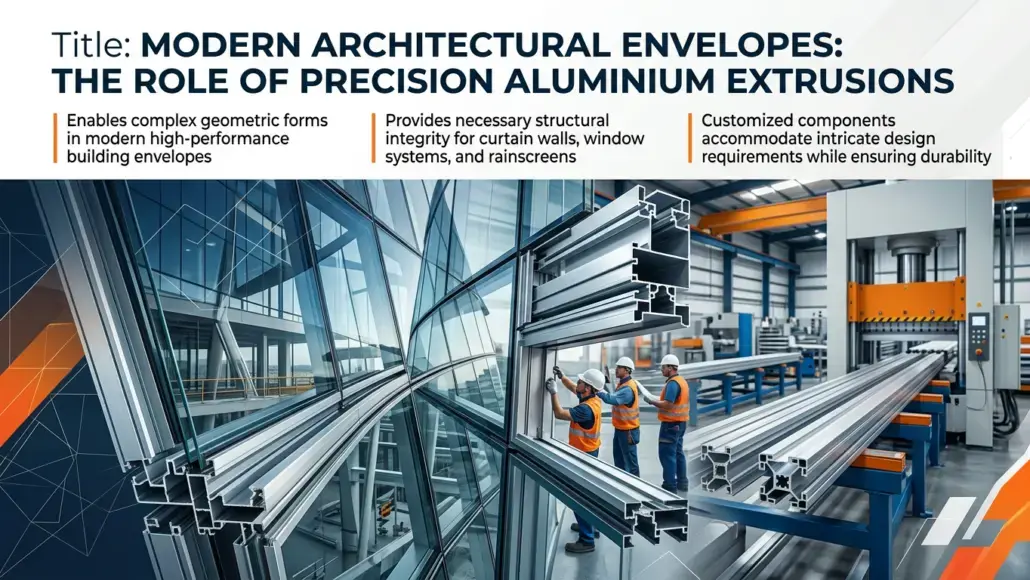

The evolution of modern architecture is increasingly dependent on the ability to integrate complex geometric forms with high-performance building envelopes. At the heart of this integration lies the specialized manufacturing of aluminium profiles, specifically the application of precision aluminium extrusions. These components serve as the skeleton for curtain walls, window systems, and rainscreens, providing the necessary structural integrity while accommodating the intricate requirements of thermal insulation and moisture management. By achieving tighter tolerances through advanced extrusion dies and controlled cooling processes, manufacturers are now able to produce profiles that allow for a degree of assembly precision previously unattainable in large-scale construction. This level of accuracy is essential when dealing with unitized facade systems, where individual panels must fit together with minimal gaps to ensure air and water tightness across the entire building surfacce.
The demand for high-performance facades has driven a shift towards more complex profiles that can incorporate multiple functions within a single extrusion. Modern precision aluminium extrusions are designed to house thermal breaks, gaskets, and specialized hardware, all while maintaining the structural strength required to resist wind loads and dead loads. The precision inherent in these extrusions ensures that every component aligns perfectly, reducing the risk of air leakage or water infiltration that can plague less precisely manufactured systems. Additionally, the use of high-strength alloys in the extrusion process allows for thinner profiles without sacrificing structural performance, enabling architects to achieve the slim sightlines that are characteristic of contemporary building design. This balance of aesthetics and engineering is only possible through the rigorous control of the extrusion process, from the selection of the billet to the final stretching and aging of the profiles.
Technical Precision in Extrusion Die Design and Manufacturing
The foundation of high-quality aluminium profiles rests upon the sophistication of die design. Engineering teams must account for the fluid dynamics of molten aluminium as it is forced through the die at high pressures. Precision aluminium extrusions require dies that are manufactured using electrical discharge machining or advanced milling techniques to ensure that the profile geometry remains consistent throughout a production run. Even slight deviations in the die orifice can lead to dimensional inaccuracies that complicate the assembly of facade systems on-site. Therefore, die maintenance and the use of hard-wearing coatings are critical to maintaining the necessary tolerances over thousands of meters of extruded material.
The material science behind the aluminium alloys used also plays a significant role in the final product. Alloys such as 6063 or 6061 are commonly selected for their excellent extrudability and finishing characteristics. However, achieving precision aluminium extrusions requires more than just the right alloy; it necessitates precise control over the quenching process. Rapid cooling of the profile as it exits the die is essential for locking in the metallurgical properties and ensuring dimensional stability. If the cooling is uneven, the profile may warp or twist, making it impossible to integrate into a modular facade system without significant remedial work. Advanced quenching systems, such as air-mist or water-spray setups, are used to achieve the uniform temperature reduction needed for high-tolerance profiles.
Integration of Thermal and Structural Functions
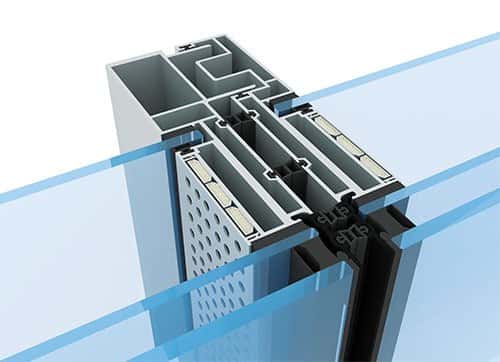
A primary challenge in facade design is the management of thermal bridging, particularly in metallic systems. Precision aluminium extrusions are now engineered to facilitate the insertion of polyamide thermal breaks, which effectively decouple the exterior and interior faces of the profile. The precision of the “cavity” designed for these thermal breaks is vital; if the fit is too loose, the structural integrity of the composite profile is compromised. If it is too tight, the insertion process may damage the thermal strip or cause the aluminium profile to bow. By maintaining strict dimensional control, manufacturers ensure that the resulting thermal performance meets the stringent requirements of modern building codes while preserving the structural capacity of the frame.
The structural role of these extrusions cannot be overstated. In many curtain wall systems, the aluminium profiles are the primary load-bearing elements. integrated building components must be capable of transferring these loads through a series of connections to the building structure. The accuracy of the joinery, whether mitered or square-cut, depends entirely on the dimensional consistency of the extruded profile. When profiles are consistently sized, the fabrication of corner joints and intermediate transoms becomes more efficient, leading to a more durable and weather-resistant facade. This precision also extends to the internal drainage channels that are often integrated into the profiles to manage moisture, ensuring that water is directed away from the building interior as intended.
Enhancing On-Site Assembly Through Modular Coordination
The trend towards off-site manufacturing and pre-fabrication has further increased the reliance on high-precision components. In unitized facade systems, panels are assembled in a factory environment where high-performance components are used to create a frame that holds the glazing and insulation. These panels are then transported to the site and hung on the building structure. For this system to work, the tolerance stack-up must be carefully managed. The precision of each extrusion contributes to the overall accuracy of the panel, ensuring that when they are installed, they align perfectly with adjacent units. This reduces the need for on-site adjustments, which are costly and time-consuming, and helps maintain the project schedule.
Additionally, the integration of finish options like powder coating technology improving aluminium façade finish durability must be considered during the design of the extrusion. The surface quality of the profile is a direct result of the extrusion process. A smooth, defect-free surface is essential for the adhesion of coatings, whether they are anodic or organic. precision engineering solutions minimize surface defects such as die lines or pick-up, resulting in a superior final finish that contributes to the overall aesthetic and longevity of the building facade. This synergy between the extrusion process and finishing technology is what allows for the creation of high-end architectural systems that stand the test of time in varied environmental conditions.
The following list highlights the key benefits of utilizing precision profiles in facade engineering:
- Improved dimensional consistency across large production runs for modular assembly.
- Enhanced ability to integrate high-performance thermal breaks without losing structural rigidity.
- Reduced need for manual shimming or adjustment during the on-site installation phase.
- Superior surface quality that facilitates high-quality architectural finishes and coatings.
- Ability to design thinner, more complex profiles that meet modern aesthetic demands.
- Increased resistance to air and water infiltration through tighter jointing and sealing.
Future Directions in Aluminium Extrusion Technology
As the construction industry moves towards more sustainable practices, the role of advanced manufacturing techniques continues to evolve. The use of recycled aluminium content is becoming more prevalent, posing new challenges for maintaining precision due to potential variations in material properties. However, advancements in extrusion technology, such as real-time monitoring of temperature and pressure during the extrusion cycle, are helping manufacturers maintain high standards of accuracy even with varied raw materials. Additionally, the integration of digital twins and BIM (Building Information Modeling) allows for the precise geometry of extrusions to be mapped into the building design early on, ensuring that every component is optimized for its specific location and function.
The development of new alloys with improved strength-to-weight ratios will also influence the design of future extrusions. These materials will allow for even more ambitious architectural designs, where the facade serves not just as a skin but as an active participant in the building’s energy management system. specialized architectural systems will be at the forefront of this shift, providing the platform for integrated sensors, automated shading systems, and high-efficiency glazing. The continued focus on precision and integration will ensure that aluminium remains a preferred material for building envelopes, offering a combination of durability, flexibility, and performance that is difficult to match with other materials.
The high-quality structural elements used in today’s construction market are a testament to the advancements in manufacturing technology. By focusing on the minute details of profile design and production, manufacturers are enabling the construction of buildings that are more efficient, more durable, and more visually striking. The integration of these components into complex facade systems represents the pinnacle of modern engineering, where material science, mechanical design, and architectural vision converge to create the high-performance structures of the future. The commitment to maintaining these high standards of precision is what will drive the next generation of building envelope innovation, ensuring that facades continue to protect and enhance the built environment for decades to come.