




















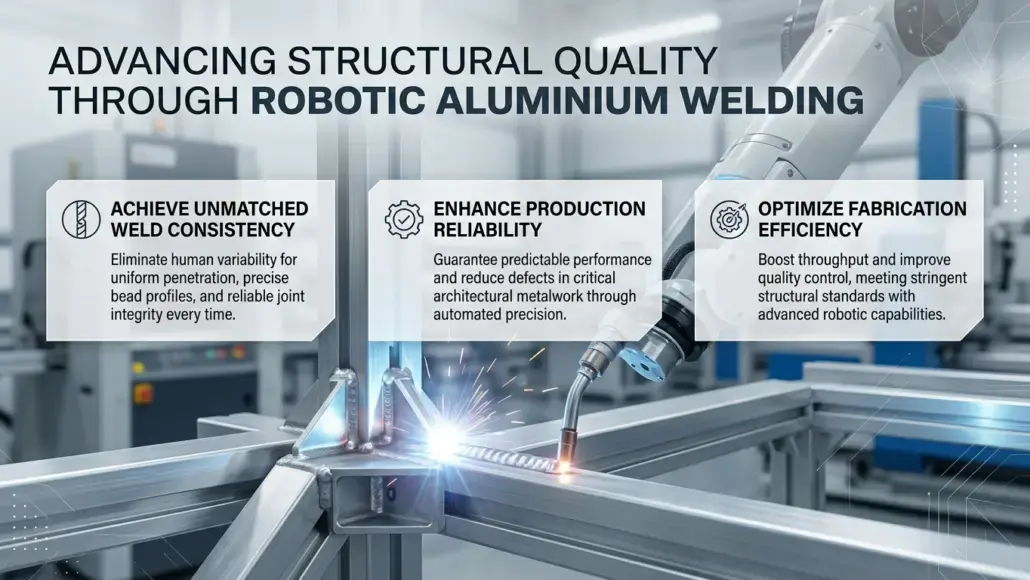

The integration of advanced robotics into the fabrication of structural aluminium components has marked a significant shift in how the construction industry approaches quality and consistency. While manual welding has been a staple of architectural metalwork for decades, the inherent variability of human performance often leads to inconsistencies in weld penetration, bead profile, and overall joint integrity. The implementation of robotic aluminium welding addresses these challenges by providing a level of precision and repeatability that is unattainable through manual methods. By utilizing programmable robotic arms equipped with sophisticated sensors and power sources, fabricators can ensure that every weld is executed with identical parameters, resulting in structural assemblies that meet the most stringent safety and performance standards. This transition to automation is particularly vital for complex architectural structures where the reliability of every individual connection is critical to the stability of the entire system.
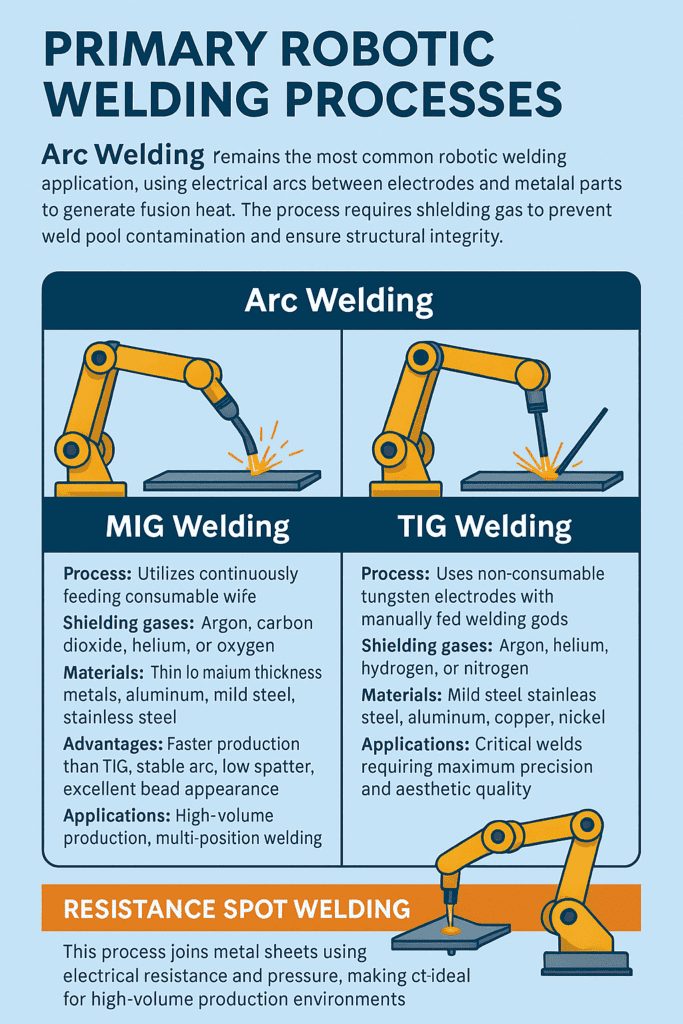
Welding aluminium presents unique technical challenges compared to steel, primarily due to its high thermal conductivity and the rapid formation of a tenacious oxide layer on its surface. These factors require precise control of the heat input and the shielding gas environment to prevent defects such as porosity, cracking, and lack of fusion. Robotic aluminium welding systems are designed to manage these variables with extreme accuracy. Through the use of pulsed-current power sources and advanced wire-feeding mechanisms, robots can deliver a stable and consistent arc, even across varying joint geometries. The ability of the robotic system to maintain a constant torch angle and travel speed ensures a uniform heat-affected zone (HAZ), which is essential for preserving the mechanical properties of the high-strength alloys used in modern construction.
Precision Control and Defect Minimization
The primary advantage of robotic aluminium welding is the ability to maintain perfect control over the welding variables. In a manual process, the welder must constantly adjust the torch position and travel speed to compensate for variations in the joint fit-up or material thickness. These adjustments, while necessary, can lead to localized inconsistencies in the weld quality. Robotic systems, however, utilize integrated laser-based seam tracking and vision systems to monitor the joint in real-time. These sensors allow the robot to automatically adjust its path and parameters to account for minor deviations, ensuring that the weld bead is perfectly centered and consistently sized along the entire length of the joint. This level of control significantly reduces the occurrence of defects, leading to a much higher first-pass yield and reducing the need for expensive and time-consuming rework.
Additionally, the consistency of robotic aluminium welding extends to the metallurgical properties of the joint. Because the robot follows a precise and repeatable thermal cycle, the resulting microstructure of the weld metal and the heat-affected zone is highly predictable. This predictability is a key requirement for structural engineers, who must rely on consistent material properties when calculating the load-bearing capacity of a structural assembly. In high-performance applications such as long-span trusses or seismic-resistant frames, the reliability of the welds is paramount. By eliminating the “human factor” from the welding process, robotics provides a level of quality assurance that is essential for the successful delivery of complex, safety-critical architectural projects.
The management of residual stresses and distortion is another area where robotic systems excel. Aluminium has a high coefficient of thermal expansion, which can lead to significant warping of the structural components during the welding process if the heat input is not carefully managed. Robotic systems can be programmed to follow a specific welding sequence that distributes the thermal load more evenly across the assembly, minimizing the overall distortion. This is particularly important for large, thin-walled components typical of facade panels or architectural screens. By maintaining the dimensional integrity of the component, robotic welding ensures that the final assembly will fit perfectly with adjacent units, reducing the need for on-site adjustments and ensuring a high-quality aesthetic finish.
Additionally, the use of advanced sensing technology allows for the detection of subsurface defects that might be invisible to the naked eye. Some robotic systems are now integrated with non-destructive testing (NDT) sensors, such as ultrasonic or eddy-current probes, which can inspect the weld as it is being made. This “in-process inspection” capability provides immediate feedback to the operator, allowing for any issues to be addressed before the component leaves the welding cell. This level of quality control is a significant advancement over traditional post-weld inspection methods, as it allows for the identification and correction of defects in real-time, further enhancing the reliability and efficiency of the fabrication process. The commitment to zero-defect manufacturing is a key driver for the adoption of these sophisticated robotic systems in the high-end architectural sector.
Enhancing Productivity and Safety in the Shop
While the quality benefits are substantial, the impact of robotic aluminium welding on fabrication shop productivity is equally significant. Robots can operate continuously without fatigue, and they are capable of welding at much higher speeds than a human operator. This increased throughput allows fabricators to meet the demanding schedules of large-scale construction projects without compromising on quality. Additionally, the use of multiple robots in a coordinated cell can further accelerate the assembly process, where one robot handles the components while another performs the welding. This level of synchronization is highly compatible with the use of automated aluminium cutting improving fabrication dimensional control, where the high-precision components provided by the cutting machinery facilitate a perfect fit-up for the welding robots.
The safety implications of robotic welding are also a major consideration for modern fabrication businesses. Welding exposes workers to intense ultraviolet radiation, hazardous fumes, and high temperatures. By delegating the welding task to a robot, these risks are significantly mitigated. The robotic cell can be enclosed in a protective environment with dedicated fume extraction systems, protecting the shop personnel from the health hazards associated with aluminium welding. This allows the workforce to transition from physically demanding manual labor to higher-value roles such as robotic programming, system maintenance, and quality inspection. This shift not only improves the overall safety of the workplace but also contributes to the development of a more skilled and technologically proficient workforce.
Quality Assurance and Digital Traceability
In the modern construction environment, the ability to provide detailed documentation of every fabrication step is increasingly important. high-performance components systems are inherently “data-rich,” as they monitor and record every parameter of the welding process in real-time. This data can be used to create a “digital birth certificate” for every structural component, providing a permanent record of the weld current, voltage, travel speed, and shielding gas flow. Should any issues arise during the building’s service life, this information can be used to trace the problem back to its source and to verify the integrity of similar components across the project. This level of traceability is a key requirement for projects that utilize digital twins or other advanced building management systems.
The following list summarizes the primary technical and operational advantages of robotic welding systems:
- Superior repeatability of weld bead geometry and penetration across all joints.
- Real-time monitoring and adjustment of welding parameters via integrated sensors.
- Significant reduction in welding defects such as porosity, spatter, and undercut.
- Higher travel speeds and continuous operation for increased shop throughput.
- Improved worker safety by isolating the welding process from the human workforce.
- Comprehensive digital records for every weld, enhancing project-wide traceability.
- Ability to weld complex 3D paths that are difficult or impossible for manual operators.
Future Directions in Automated Welding Technology
The future of precision engineering solutions lies in the increased integration of artificial intelligence and advanced material science. We are already seeing the development of “self-learning” robots that can analyze the results of previous welds and automatically optimize their parameters for future operations. This capability will be especially important as the industry moves towards the use of more diverse and challenging aluminium alloys, such as those with higher recycled content. Additionally, the development of collaborative robots, or “cobots,” is providing new opportunities for human-robot collaboration in the fabrication shop. These systems are designed to work safely alongside humans, allowing for a more flexible and adaptive approach to small-batch or highly customized fabrication. The use of augmented reality (AR) is also emerging as a tool for programming and monitoring robotic cells, allowing technicians to visualize the welding path and parameters in a 3D environment, further reducing the time and effort required for system setup.
The broader environmental impact of robotic welding should also be considered. By reducing material waste and energy consumption through optimized welding parameters and higher first-pass yields, robotics contributes to the sustainability of the fabrication process. The ability to manufacture high-performance structural components with a lower carbon footprint is a major advantage in an industry that is increasingly focused on environmental responsibility. As the demand for green building certifications grows, the choice of fabrication technology will become an increasingly important factor in the selection of project partners. advanced manufacturing techniques provides a pathway to a more sustainable and efficient manufacturing future, where the goals of economic growth and environmental stewardship are mutually reinforcing. The ongoing investment in these technologies is a clear indication of the industry’s commitment to creating a more resilient and responsible built environment.
As the construction industry continues to embrace the principles of digital manufacturing, the role of robotic welding will only become more central. The ability to produce high-quality, consistent structural components with speed and precision is a fundamental requirement for the high-performance buildings of the future. The synergy between advanced robotic systems, high-precision cutting technology, and durable digital workflows will continue to drive innovation in the aluminium sector, resulting in structures that are more efficient, more durable, and more sustainable. The ongoing commitment to technical excellence in the welding sector ensures that aluminium will continue to be a primary material for the architectural landmarks of tomorrow, providing a perfect blend of structural integrity and aesthetic freedom.
The transition to specialized architectural systems represents a critical evolution in the architectural fabrication industry. By combining the precision of modern robotics with the deep technical knowledge of material science and welding engineering, fabricators can now deliver structural components that are more reliable and consistent than ever before. This technology not only improves the efficiency of the production line but also enhances the overall safety and performance of the built environment. As architectural designs continue to push the boundaries of what is possible, the ability to manufacture complex, high-performance structural systems with absolute confidence will remain a critical competitive advantage. The commitment to innovation and quality in the robotic welding sector ensures that the buildings of the future will be as strong and durable as they are beautiful.