



















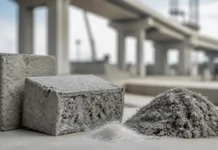



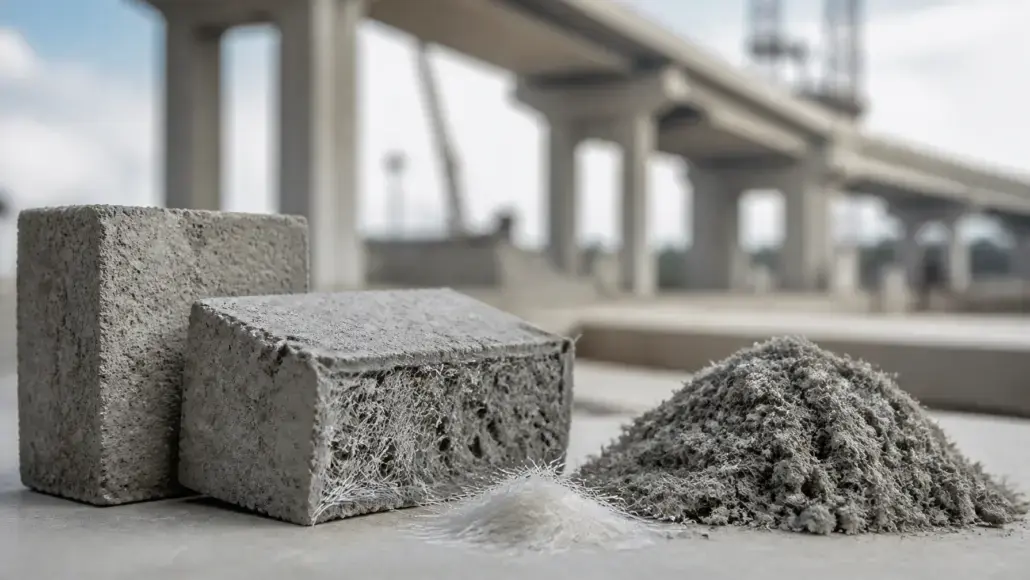

Fibre-reinforced geopolymer concrete is extending the capability envelope of low-carbon structural materials by combining clinker-free binder chemistry with dispersed fibre reinforcement. Conventional concrete, whatever its binder, carries two inherent weaknesses: low tensile strength and brittle failure with little warning. Fibres address both, bridging microcracks, arresting crack propagation and carrying load after the matrix has cracked. When those fibres are added to a geopolymer binder rather than a Portland one, the result is a structural material that reduces embodied carbon while improving the performance characteristics that govern durability and resilience in demanding applications.
Why Fibres and Geopolymer Chemistry Complement Each Other
The mechanical logic of fibre reinforcement operates identically across binder types: randomly distributed fibres transfer stress across cracks through bond friction, converting a single brittle crack into a distributed field of narrow cracks and sustaining residual load capacity after first cracking. What differs in geopolymer matrices is the environment those fibres sit in. The denser, less alkaline pore solution of an aluminosilicate gel modifies fibre-matrix bond behaviour and, for some fibre types, changes long-term chemical attack rates compared with the highly alkaline Portland pore solution.
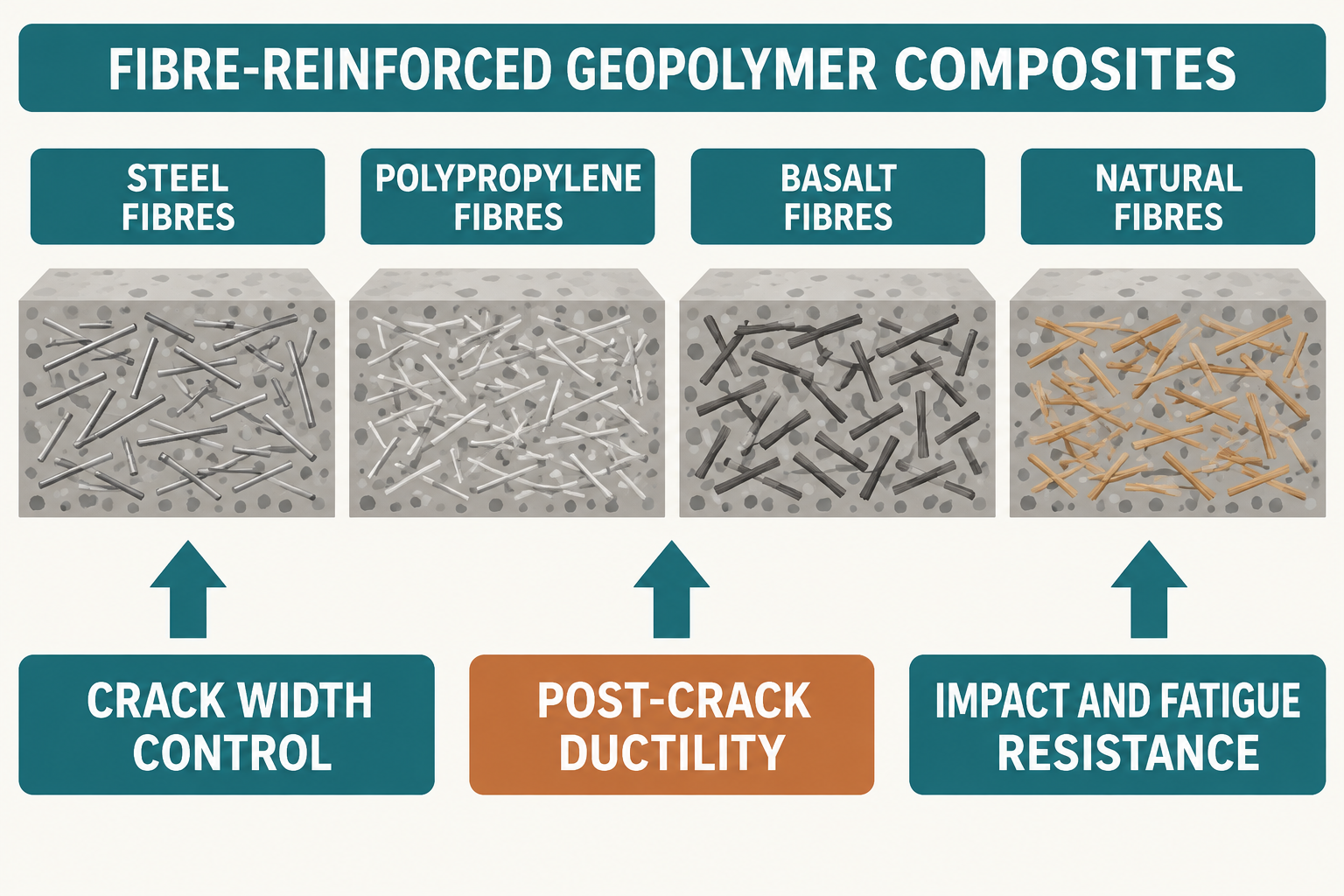
Steel fibres, the workhorse of industrial and structural fibre concrete, develop strong mechanical anchorage in the geopolymer matrix and deliver the post-crack toughness that drives their use in floor slabs, tunnel linings and precast elements. Glass and basalt fibres offer high tensile strength with good chemical stability, and basalt in particular has shown strong bond performance in geopolymer composites across multiple published test programmes. Polypropylene fibres melt and soften at fire temperatures, providing spalling mitigation in high-strength sections, while natural fibres such as coir, sisal and bamboo processing residues attract interest for low-cost, low-carbon applications in housing construction, provided durability against moisture cycling is managed through treatment.
Hybrid reinforcement has emerged as the most practical formulation approach. Combining a small dosage of stiff macro fibres, typically steel, with a lower dosage of thin polypropylene or basalt microfibres addresses different crack scales simultaneously: macro fibres control cracking under structural load while microfibres arrest early-age plastic and drying shrinkage cracking. Published hybrid geopolymer studies report improved flexural toughness, reduced shrinkage cracking and better impact energy absorption than either fibre type alone at equivalent total dosage.
Mechanical Performance in Structural Terms
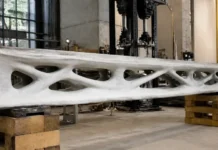
Compressive strength of fibre-reinforced geopolymer concrete typically shows modest gains over the unreinforced matrix, usually in the range of a few to fifteen per cent depending on fibre type and volume, because fibres do not fundamentally alter matrix strength. The decisive improvements appear in the properties that govern serviceability and failure behaviour. Flexural strength and splitting tensile strength rise substantially with fibre addition, and more importantly, the load-deflection curve changes character from brittle drop-off to sustained post-peak capacity, the signature of a ductile composite.
Quantified benefits from published testing give specification engineers a usable picture. Flexural toughness indices commonly improve by a factor of several compared with plain geopolymer mixes. Impact resistance, measured by repeated drop-weight tests, often increases by multiples rather than percentages. Shrinkage crack width and area reduce markedly with microfibre addition, which matters directly for water-retaining structures and slabs on grade. Fatigue performance under cyclic loading, relevant to pavements and bridge decks, shows improved life at equivalent stress ratios in steel fibre geopolymer studies.
Design methodology is maturing alongside the data. Fibre concrete design frameworks based on residual flexural strength, such as the approaches used in Model Code style documents, transfer to geopolymer composites provided residual strength values are measured for the specific mix.
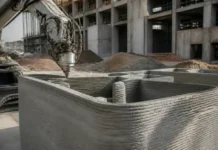
Testing methods for the composite combine fibre concrete and geopolymer practice. Notched beam bending tests to determine residual flexural strengths, drop-weight impact tests and plate or round-panel tests for fibre efficiency all transfer from established fibre concrete standards, while matrix strength, shrinkage and durability testing follows geopolymer protocols. Interpretation requires attention to fibre orientation effects, since flowed or extruded placement can align fibres anisotropically, and casting method should match the intended production process when preparing test specimens. Suppliers publishing orientation-sensitive data alongside batch records make specification review materially easier for approving engineers. Structural applications to date concentrate on elements where fibre concrete design is already accepted practice: industrial floor slabs, segmental tunnel linings, precast facade panels, pipe products and piled foundations. Reinforced flexural members combining conventional rebar with fibre addition follow established hybrid design logic and expand the application range further.
Application Areas Driving Adoption
Demand for fibre-reinforced geopolymer composites concentrates where carbon targets, durability exposure and mechanical demand intersect, and commercial activity now clusters in a defined set of applications:
- Industrial floor slabs on ground, where steel fibre design is established practice and warehouse carbon commitments drive binder substitution.
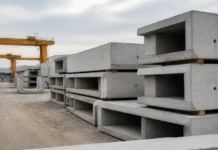
- Precast pipes, panels and segments, where repeat moulds amortise mix development and toughness improves handling durability.
- Tunnel segment trials, where chloride resistance, fire spalling control and impact toughness address lining requirements together.
- Marine components, where fibre crack control and geopolymer chloride resistance combine to extend service life models.
Industrial flooring offers the entry point: slabs on ground already accept steel fibre design, joint demands are severe, and clients with warehouse carbon commitments have commissioned geopolymer fibre slabs commercially. Precast producers follow a similar logic, adding fibres to geopolymer panel, pipe and segment production where repeat moulds amortise mix development and where impact or handling loads benefit from toughness.
Tunnel and underground construction represents the most technically demanding structural application. Segmental linings demand high early strength for TBM handling, tight dimensional tolerance, impact resistance during transport and erection, and long service life in potentially aggressive ground. Steel and basalt fibre geopolymer segment research has progressed through full-scale casting trials, and the combination addresses chloride ingress and carbonation resistance simultaneously with mechanical toughness. Fire performance completes the case, given tunnel fire scenarios and the proven ability of polypropylene fibres to limit explosive spalling in high-strength sections.
Marine and coastal structures present the durability-led variant of the same argument. Fibre addition controls the crack widths that permit chloride ingress, while the geopolymer matrix already resists chloride transport; together the two mechanisms extend the service life model for seawalls, bridge substructures and harbour works. Teams considering the binder chemistry behind these durability claims will find the underlying science set out in fly ash geopolymer concrete for sustainable structural engineering, which details how coal combustion ash replaces clinker in structural mixes.
Infrastructure resilience applications, including blast and seismic retrofit considerations, remain mostly at research and pilot stage, but the improved energy absorption and crack control of the fibre-reinforced composite class maps naturally onto protective design requirements. As codes extend fibre concrete design provisions and geopolymer standardisation matures, the overlap between the two frameworks will define how far these composites spread through mainstream structural work.
Mix Design, Placement and Quality Control Practice
Fibre addition changes geopolymer mix design in predictable ways. Fibre volume fraction, typically between one and two per cent for steel macro fibres and below half a per cent for microfibres, increases paste demand and reduces workability, so water content, activator dosage and superplasticiser must be rebalanced. Balling and clustering of fibres at higher dosages requires mixing sequence adjustments, generally adding fibres at a controlled rate after the matrix has been homogenised. Pumping distance and element geometry set the practical dosage ceiling, and experienced fibre concrete contractors will recognise the constraints immediately.
Placement and finishing practice carries over from conventional fibre concrete with geopolymer-specific cautions. Internal vibration remains compatible, though excessive vibration can cause fibre segregation. Screeding and power floating of industrial slabs follows standard fibre practice, and activator handling requires the site controls that any geopolymer placement demands: personal protective equipment, contained batching and immediate washdown procedures. Quality control adds fibre dosage verification and, for structural elements, residual flexural strength testing on notched beam specimens to confirm the post-crack performance the design assumes.
Cost positioning depends on what the fibres replace. In slabs and linings where fibre reinforcement substitutes for conventional mesh or reduces section thickness, the reinforcement saving can offset activator costs and deliver competitive element pricing alongside the carbon benefit. In applications where fibres supplement rebar, the premium buys durability and resilience that clients increasingly value explicitly. Life cycle costing, rather than first-cost comparison, is becoming the deciding framework, particularly for infrastructure owners carrying maintenance liabilities across multi-decade service periods.
Fibre-reinforced geopolymer concrete stands at the intersection of two established technologies, each with its own evidence base, and the combination strengthens both. The binder cuts embodied carbon and improves chemical durability; the fibres deliver crack control, ductility and impact performance that plain concrete cannot match. Structural applications already span industrial floors, precast products and trial tunnel segments, and the published mechanical data supports specification through performance-based provisions. As standardisation catches up, this composite class is positioned to become a default option for structural elements where carbon, durability and mechanical demand must be solved together.