















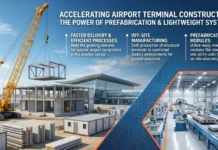



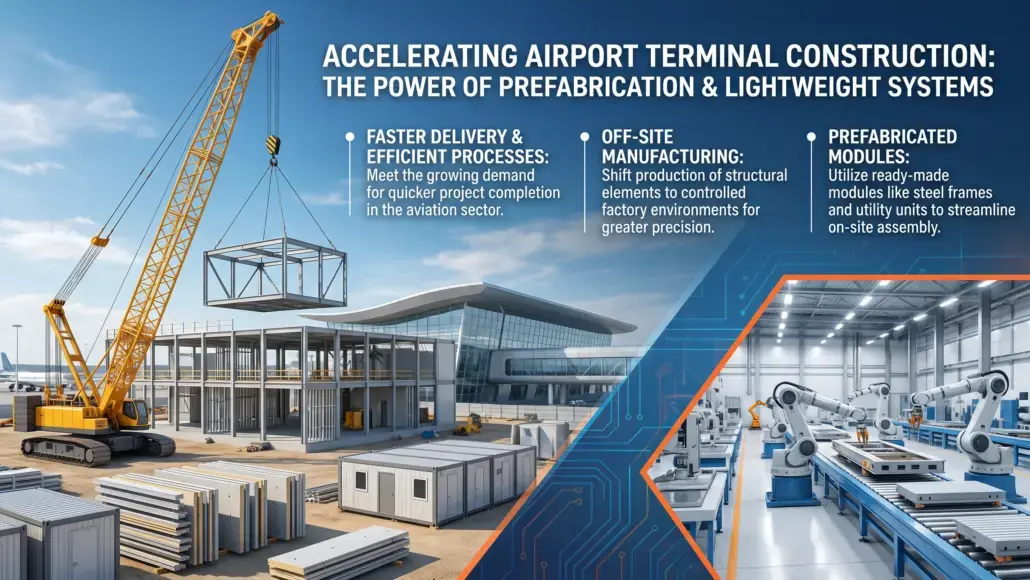


The demand for faster delivery times and more efficient construction processes in the aviation sector has led to a significant interest in lightweight structural systems. One of the most effective ways to improve terminal construction efficiency is through the use of prefabricated modules and off-site manufacturing. By shifting the production of structural elements, such as steel frames, wall panels, and utility modules, to a controlled factory environment, developers can achieve much higher levels of quality control and precision. These components are then transported to the site for rapid assembly, significantly reducing the overall construction timeline and minimizing the disruption to ongoing airport operations. The use of lightweight materials, such as high-strength steel and engineered timber, makes these modules easier to transport and handle, further increasing the speed of the build. The engineering of these systems requires a high degree of coordination, as every component must be designed for a perfect fit and a seamless connection. This often involves the use of advanced 3D modeling and laser-scanning technology to ensure that the site foundations and the prefabricated modules are perfectly aligned. By adopting a modular approach, airport developers can also achieve significant reductions in site waste and noise, making the construction process more environmentally friendly and less intrusive for passengers. The ability to assemble a large-scale terminal in a fraction of the time required for traditional methods is a key advantage in the competitive aviation market. As the industry continues to evolve, the integration of prefabricated lightweight structural systems will remain a top priority for developers seeking to optimize their construction workflows. The ongoing development of new materials and manufacturing techniques will further enhance the potential for rapid terminal assembly.
Composite Materials Enhancing Structural Performance
The use of composite materials is a key driver in the development of lightweight structural systems for modern airport terminals. These materials, which combine two or more constituent substances to create a product with superior properties, offer a high strength-to-weight ratio that is ideal for large-span structures. Fiber-reinforced polymers (FRPs) and advanced carbon fiber composites are increasingly being used for secondary structural elements, such as roof panels, facade systems, and architectural features. These materials are not only exceptionally light but also highly resistant to corrosion and fatigue, making them ideal for the harsh environmental conditions often found at airports. The engineering of composite structures requires a deep understanding of material science and advanced simulation tools to predict their behavior under various loads. By replacing heavy steel or concrete elements with composite alternatives, developers can significantly reduce the overall mass of the building without compromising its structural integrity. This reduction in weight allows for longer spans and more creative architectural forms, enhancing the aesthetic appeal of the terminal. Additionally, the use of composites can improve the thermal and acoustic performance of the building, contributing to a more comfortable environment for passengers. The manufacturing process for composite materials also allows for a high degree of customization, enabling architects to create unique and complex shapes that would be difficult or impossible to achieve with traditional materials. As the cost of these advanced materials continues to fall, their adoption in large-scale infrastructure projects is expected to grow, providing new opportunities for innovation in lightweight structural systems. The integration of composites into the broader structural frame represents a significant advancement in terminal construction technology.
Reducing Foundation Loads and Soil Stabilization Costs
One of the most significant advantages of engineering systems is the reduction in foundation loads, which can lead to substantial savings in construction costs and time. Traditional heavy concrete and steel buildings exert immense pressure on the soil, often requiring expensive and time-consuming foundation treatments such as deep piling or extensive soil stabilization. By utilizing lightweight materials and innovative design strategies, developers can significantly decrease the total weight of the terminal, allowing for simpler and more cost-effective foundation solutions. This is particularly valuable at airports where the ground conditions are poor, such as those located on reclaimed land or near coastal areas. The reduced mass of the building also makes it less susceptible to the effects of differential settlement, improving the long-term durability of the infrastructure. From a construction perspective, the smaller foundations require less excavation, less concrete, and fewer man-hours, accelerating the initial stages of the build. The engineering of these lightweight systems requires a holistic approach, where the structural frame and the foundation are designed in tandem to optimize the overall performance of the building. By minimizing the weight at every level, from the roof to the ground floor, planners can achieve a highly efficient and economical design. The use of advanced geotechnical modeling tools allows engineers to precisely predict the interaction between the lightweight structure and the soil, ensuring the safety and stability of the terminal. This focus on load reduction is a key feature of sustainable airport development, as it minimizes the use of raw materials and reduces the environmental impact of the construction process. As terminals become larger and more complex, the ability to manage foundation loads through lightweight design will remain a critical factor in project success.
Sustainability Benefits of Low-Mass Building Materials
Sustainability is a core priority for the modern aviation industry, and the adoption of engineering systems offers significant environmental benefits. Low-mass building materials, such as high-strength steel, engineered wood, and advanced composites, require less energy to produce and transport than traditional heavy materials like concrete and standard steel. This reduction in embodied carbon is a key factor in achieving green building certifications and meeting international climate goals. Additionally, the use of lightweight systems facilitates more efficient building envelopes, which can improve the thermal performance of the terminal and reduce the demand for heating and cooling. The ability to create large-span structures with minimal material also allows for better use of natural light, further reducing energy consumption and creating a more pleasant environment for passengers. The modular nature of many lightweight systems also makes the terminal easier to deconstruct and recycle at the end of its life, contributing to a circular economy in the construction sector. By prioritizing materials with low environmental impact, airport developers can create a facility that is both structurally advanced and ecologically responsible. The integration of sustainable practices into the selection and engineering of structural systems is a hallmark of modern terminal design. The focus on sustainability also extends to the construction process, where the use of lightweight modules reduces the need for heavy machinery and lowers site-related emissions. Ultimately, the successful delivery of a green terminal depends on a comprehensive strategy that considers the entire lifecycle of the materials, from extraction to disposal. As the industry moves toward a carbon-neutral future, the role of engineering systems in enabling sustainable infrastructure will only become more prominent. The ongoing research into new bio-based and recycled materials will further enhance the environmental profile of these systems.
Engineering for Seismic and Wind Resilience in Lightweight Frames
Engineering engineering systems for large-scale terminals requires a rigorous focus on resilience, particularly in terms of seismic and wind performance. While lightweight structures offer many advantages, their reduced mass can make them more sensitive to dynamic forces if not properly designed. To ensure the safety and stability of the building, engineers employ a variety of advanced strategies, including the use of high-ductility connections, specialized damping systems, and aerodynamic roof forms. In seismic zones, the flexibility of lightweight steel or timber frames can be an advantage, allowing the building to absorb and dissipate energy without suffering catastrophic failure. The structural design must incorporate lateral load-resisting systems, such as braced frames or shear walls, to maintain the integrity of the terminal during an earthquake. Wind performance is another critical consideration, particularly for the large, expansive roofs typical of airport terminals. The engineering of the building envelope must account for the high suction forces generated by wind, necessitating the use of specialized cladding systems and reinforced connections. The use of wind tunnel testing and computational fluid dynamics (CFD) allows engineers to visualize and analyze the wind loads on the structure, ensuring a safe and efficient design. By prioritizing resilience, developers create a secure environment that can withstand the most extreme environmental conditions. The focus on engineering excellence also extends to the maintenance of the structure, ensuring that all components remain in peak condition over the life of the building. The integration of these safety measures into the lightweight frame reflects the high standards of modern aviation infrastructure. As terminals become lighter and more technologically advanced, the need for sophisticated engineering to manage dynamic loads will only increase.
Cost-Efficiency and Lifecycle Benefits of Lightweight Design
The shift toward engineering systems is not only driven by environmental and technical factors but also by the significant cost-efficiency and lifecycle benefits they offer. By reducing the volume of materials required and accelerating the construction timeline, developers can achieve substantial savings in both capital and operational expenditure. The lower weight of the building leads to smaller foundations and less structural support, while the use of prefabricated modules reduces site labor costs and minimizes the risk of expensive delays. In the long term, the high durability and corrosion resistance of many lightweight materials, such as advanced composites and high-performance steel, lead to lower maintenance costs and a longer building lifespan. Additionally, the flexibility of lightweight systems allows for easier renovations and expansions, ensuring that the terminal can adapt to changing passenger volumes and technological requirements without needing major structural modifications. This adaptability is a key factor in the economic viability of the facility, providing a higher return on investment for airport owners. The integration of energy-efficient building envelopes also leads to significant savings in utility bills over the life of the building. By taking a comprehensive view of the costs and benefits, developers can make more informed decisions about the selection of structural systems. The focus on efficiency and performance is a hallmark of modern aviation infrastructure, where every component is optimized to deliver the best possible results. As the industry continues to grow, the role of lightweight design in creating high-performance, cost-effective terminals will only become more prominent. The ongoing evolution of design software and construction technology will further enhance the ability of engineers to deliver these sophisticated structures on time and within budget.