

























Commercial buildings have traditionally been evaluated through metrics such as construction cost, occupancy rates, operational efficiency, and long-term asset value. While these factors remain essential, the modern built environment is increasingly being measured by another criterion: its impact on the people who occupy it.
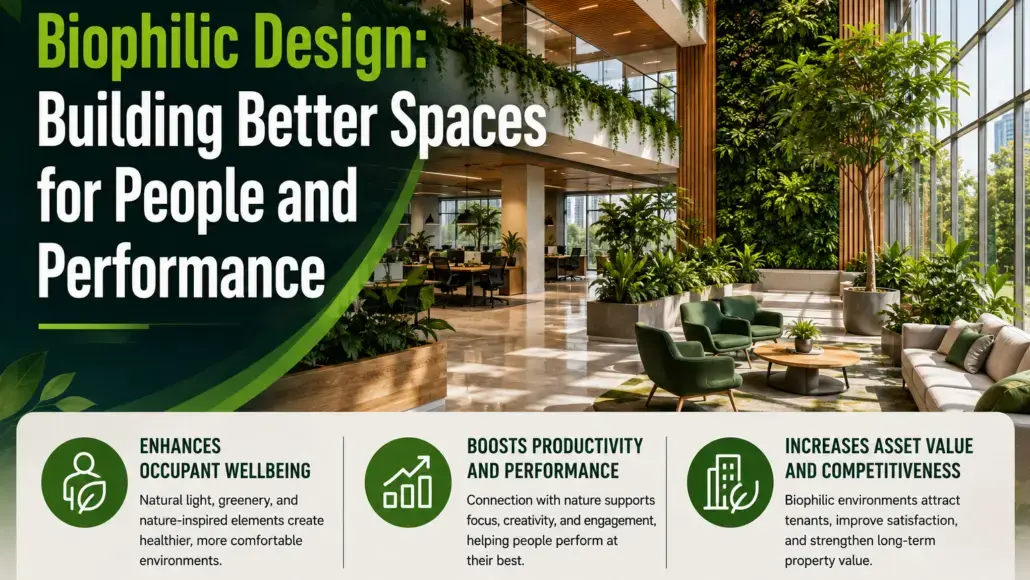
As organizations compete to attract talent, improve employee wellbeing, and create productive work environments, developers and designers are rethinking how buildings influence human experience. This shift is bringing renewed attention to Biophilic Design, an approach that integrates natural elements into the built environment to enhance both occupant outcomes and building performance.
What was once viewed primarily as an architectural preference is now being recognized as a strategic design principle with implications for commercial real estate, workplace effectiveness, and long-term asset value.
Beyond Aesthetics: Understanding Biophilic Design
A common misconception is that Biophilic Design simply involves adding plants or greenery to a building. In reality, the concept extends much further.
Biophilic Design focuses on strengthening the connection between people and nature through elements such as natural light, vegetation, water features, organic materials, outdoor views, and spatial layouts inspired by natural environments.
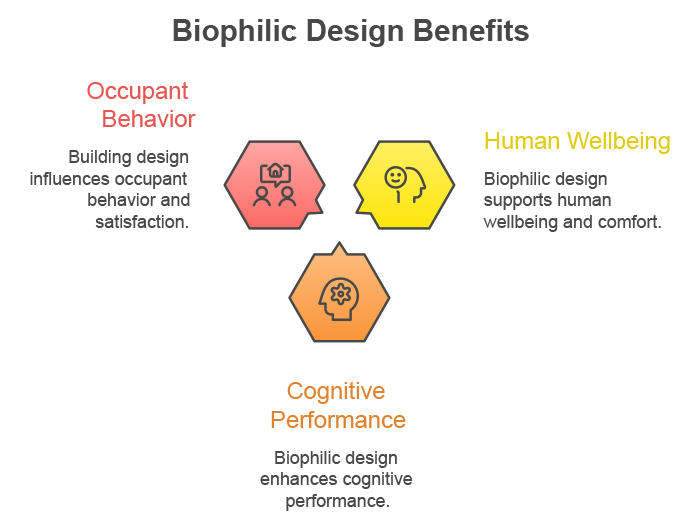
The objective is not merely visual enhancement. Instead, the goal is to create environments that support human wellbeing, cognitive performance, and overall comfort.
As research into workplace environments continues to evolve, organizations are increasingly recognizing that building design can directly influence occupant behavior and satisfaction.
Commercial Buildings Are Being Evaluated Differently
The role of commercial buildings is changing. Offices, mixed-use developments, healthcare facilities, educational campuses, and hospitality projects are no longer judged solely by location and functionality.
Occupants now expect environments that contribute positively to their daily experience. At the same time, employers are seeking workplaces that support collaboration, productivity, and employee retention.
This shift is creating new performance expectations for commercial assets.
Biophilic Design is emerging as one response to these changing demands by helping developers create spaces that are both operationally effective and people-focused.
The result is a broader understanding of building performance that extends beyond energy consumption and maintenance metrics.
Improving Occupant Wellbeing Through Design
Occupant wellbeing has become a major consideration in commercial construction.
Long hours spent in enclosed environments can contribute to stress, fatigue, and reduced engagement. By incorporating natural elements into building design, organizations aim to create healthier indoor environments that support physical and psychological wellbeing.
Natural daylight, access to outdoor views, interior vegetation, and nature-inspired materials can contribute to a more comfortable and engaging workplace experience.
As employee wellbeing becomes increasingly linked to organizational performance, Biophilic Design is gaining attention as a practical strategy for improving occupant outcomes.
The Link Between Design and Productivity
One of the most compelling aspects of Biophilic Design is its potential impact on productivity.
Organizations invest heavily in technology, training, and workplace programs designed to improve performance. However, the physical environment itself can also influence how effectively people work.
Commercial spaces that provide access to natural light, comfortable environments, and visual connections to nature may help support focus, creativity, and engagement.
While productivity is influenced by numerous factors, building design is increasingly being recognized as one component of a broader performance strategy.
For employers seeking competitive advantage, the workplace environment is becoming an important business consideration rather than simply a facilities issue.
Enhancing Asset Value in Commercial Real Estate
The benefits of Biophilic Design extend beyond occupant experience. Commercial property owners are increasingly evaluating how building features influence asset competitiveness and long-term value.
Buildings that offer healthier, more attractive environments may improve tenant satisfaction and occupancy performance. As market expectations evolve, these qualities can contribute to stronger asset positioning within competitive real estate markets.
Developers are therefore viewing biophilic features not only as design enhancements but also as investments that may support long-term commercial objectives.
This perspective is encouraging greater integration of nature-focused design principles into both new developments and renovation projects.
Sustainability and Building Performance Are Converging
Sustainability remains a major priority across the construction sector. However, the definition of sustainable building performance continues to expand.
Historically, sustainability discussions focused primarily on energy efficiency, emissions reduction, and resource management. While these objectives remain critical, attention is increasingly shifting toward human-centered performance outcomes as well.
Biophilic Design aligns naturally with this broader perspective because it addresses both environmental and occupant considerations.
Features such as daylight optimization, natural ventilation strategies, and green spaces can contribute to sustainability goals while simultaneously improving user experience.
This convergence is making biophilic principles increasingly relevant within modern commercial construction.
Designing for the Future Workplace
The future of work is influencing how commercial buildings are planned and constructed.
Hybrid work models, evolving employee expectations, and increased emphasis on workplace quality are encouraging organizations to rethink the purpose of physical office environments.
To remain relevant, commercial buildings must offer experiences that employees cannot easily replicate elsewhere.
Biophilic Design supports this objective by creating more engaging, comfortable, and human-centered environments. As businesses seek to attract employees back into shared spaces, workplace quality is becoming a key differentiator.
Developers and occupiers alike are recognizing that building design can play a meaningful role in shaping workplace culture and performance.
Challenges and Practical Considerations
Despite growing interest, implementing Biophilic Design is not without challenges.
Project teams must balance design aspirations with budget constraints, maintenance requirements, and operational objectives. Natural elements often require careful planning to ensure they deliver long-term value without creating unnecessary complexity.
Other considerations include:
- Space availability
- Maintenance requirements
- Climate conditions
- Integration with building systems
- Long-term operational costs
Successful implementation requires collaboration among architects, engineers, developers, and facility managers to ensure that biophilic features support broader project goals.
A Competitive Advantage in Modern Construction
The growing popularity of Biophilic Design reflects a broader transformation within the construction industry. Buildings are increasingly expected to deliver measurable value beyond their physical function.
Developers, investors, and occupiers are looking for assets capable of supporting wellbeing, productivity, sustainability, and long-term performance simultaneously.
As frequently discussed across industry platforms such as World Construction Today, the most successful commercial projects are increasingly those that balance technical performance with human experience.
Biophilic Design represents an important step toward achieving this balance.
Conclusion
Commercial construction is evolving beyond traditional measures of success. While structural performance, efficiency, and sustainability remain essential, attention is increasingly focused on how buildings influence the people who use them.
Biophilic Design is helping reshape this conversation by demonstrating that nature-inspired environments can contribute to healthier workplaces, improved productivity, stronger tenant appeal, and enhanced asset value.
As commercial buildings continue to evolve, integrating natural elements into design strategies is becoming less of a design trend and more of a business decision. For developers and building owners seeking long-term performance advantages, Biophilic Design is emerging as an increasingly valuable tool in the future of commercial construction.