

























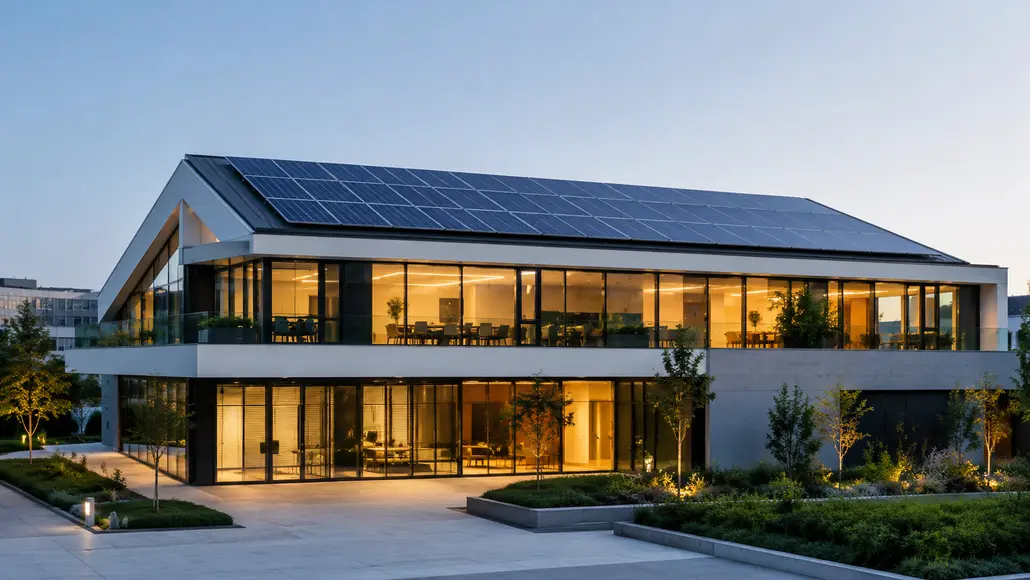


The global construction landscape is undergoing a silent but powerful revolution, centered on the imperative of energy efficiency. In my fifteen years as a construction professional, I have seen the conversation shift from efficiency being a “value-add” to it becoming a non-negotiable regulatory and ethical requirement. Energy efficient buildings are no longer just about adding a few solar panels to the roof; they represent a holistic rethinking of the building’s envelope, systems, and lifecycle. This transformation is driven by the urgent need to combat climate change, rising energy costs, and a growing awareness of the impact of our indoor environments on human health and productivity. We are moving toward a future where buildings are not just consumers of energy, but active participants in the energy grid, often producing more than they consume.
At the core of this transformation is the concept of a high-performance building envelope. Traditionally, we relied on mechanical systems to “brute force” the interior temperature, pumping in heat or cool air to compensate for leaky walls and thin windows. Today, we prioritize the thermal integrity of the structure itself. Through advanced insulation, high-performance glazing, and meticulous attention to airtightness, we are creating buildings that require very little energy to maintain comfort. This “fabric-first” approach is the cornerstone of energy efficient buildings, ensuring that the savings are baked into the very DNA of the structure for the life of the building.
The Science of Passive House and Net Zero Design
One of the most influential frameworks in this field is the Passive House standard. This rigorous methodology focuses on five key principles: continuous insulation, thermal bridge-free design, airtight construction, high-performance windows, and heat recovery ventilation. By adhering to these standards, we can create buildings that use up to ninety percent less energy for heating and cooling than conventional structures. As a builder, seeing the simplicity and effectiveness of these principles in action is truly remarkable. It proves that we don’t necessarily need complex, expensive gadgets to achieve world-class efficiency; we just need to build with greater care and precision.
High-Performance Glazing and Smart Windows
Windows have traditionally been the weakest link in a building’s thermal envelope, but advanced material science has turned them into high-tech assets. We now use triple-pane units filled with inert gases like argon or krypton, featuring low-emissivity coatings that reflect heat while allowing light to pass through. Even more exciting is the rise of smart glazing, which can change its tint in response to sunlight intensity or an electrical charge. These energy efficient buildings can now actively manage their solar heat gain, reducing the load on cooling systems during the hottest parts of the day while maintaining a clear view for occupants.
Advanced Insulation and Phase-Change Materials
The materials we use to insulate our buildings have also seen significant innovation. Beyond traditional mineral wool or fiberglass, we are now using bio-based insulations like hempcrete or cellulose, which have the added benefit of sequestering carbon. Furthermore, the integration of phase-change materials (PCMs) into wall assemblies is a game-changer. These materials act as thermal batteries, absorbing excess heat during the day and releasing it as the temperature drops at night. This helps to level out temperature fluctuations and reduces the frequency with which heating and cooling systems need to cycle on and off, further enhancing the overall efficiency of the building.
Intelligent Building Management Systems (IBMS)
The digital transformation of the construction industry has provided us with the tools to manage building systems with unprecedented granularity. Intelligent Building Management Systems (IBMS) use a network of sensors and actuators to monitor occupancy, light levels, and air quality in real-time. By using machine learning algorithms, these systems can learn the patterns of a building’s occupants and adjust lighting and HVAC settings accordingly. For example, if a conference room is unoccupied, the system can automatically dim the lights and reduce the airflow, ensuring that energy is never wasted on empty spaces.
The Role of Renewable Energy Integration
While reducing demand is the first priority, energy efficient buildings also maximize the use of onsite renewable energy. Solar photovoltaics have become a standard feature, but we are now seeing the rise of Building-Integrated Photovoltaics (BIPV), where the solar cells are actually part of the building’s facade or roof tiles. This allows for a more seamless aesthetic and increases the total area available for energy generation. When paired with onsite battery storage, these buildings can store excess energy during the day and use it at night, moving us closer to the goal of true net-zero or even energy-positive urban environments.
Health, Comfort, and Indoor Air Quality
Efficiency is often discussed in terms of kilowatt-hours, but its impact on human well-being is equally profound. Energy efficient buildings typically have superior indoor air quality due to the use of Energy Recovery Ventilators (ERVs) that provide a constant stream of fresh, filtered air while recovering heat from the exhaust stream. This reduces the concentration of CO2 and volatile organic compounds (VOCs), leading to better sleep, improved cognitive function, and lower rates of respiratory issues for the building’s occupants. In this sense, building for efficiency is also building for health.
Economic Vitality and Lifecycle Value
From a financial perspective, the case for energy efficient buildings has never been stronger. While the initial capital expenditure may be slightly higher typically in the range of three to five percent the return on investment is rapid and sustained. Lower utility bills, reduced maintenance costs, and higher property values make these buildings highly attractive to investors and tenants alike. Furthermore, as carbon taxes and stricter energy codes become the norm, “green” buildings are increasingly viewed as lower-risk assets that are “future-proofed” against changing regulations.
Overcoming Challenges and Scaling Up
The primary challenge in scaling up energy efficient construction is not a lack of technology, but a need for broader education and a shift in industry mindset. Contractors and developers must move away from focusing solely on the “first cost” and start considering the “total cost of ownership.” Additionally, the workforce needs to be upskilled to handle the precision required for airtight construction and the installation of complex mechanical systems. However, as the benefits become more apparent and the costs of technology continue to fall, these barriers are quickly being dismantled.
The transformation of the construction industry toward energy efficiency is a fundamental shift that is redefining our relationship with the built environment. By combining ancient principles of passive design with the latest in material science and digital intelligence, we are creating buildings that are more resilient, healthy, and sustainable. As an industry, we have a unique responsibility to lead the way in this transition, ensuring that every structure we build contributes to a more efficient and prosperous future for all. The era of the energy-wasting building is coming to an end, and in its place, we are crafting a new generation of high-performance architecture that respects both the planet and its people.