































The global construction industry stands at a significant crossroads where the traditional linear model of “take, make, dispose” is no longer viable. For decades, the end-of-life phase of a building was synonymous with demolition a process characterized by heavy machinery, rapid destruction, and the creation of vast quantities of mixed waste destined for landfills. However, the rise of deconstruction strategies is fundamentally altering this narrative. Unlike demolition, deconstruction is a surgical approach to dismantling buildings that prioritizes the preservation of material integrity. This shift is not merely an environmental preference but a strategic necessity for an industry grappling with resource scarcity, rising disposal costs, and increasingly stringent carbon regulations. By treating existing structures as “material banks,” the sector can unlock significant economic and ecological value that was previously pulverized and discarded.
The Economic and Environmental Imperative for Selective Dismantling
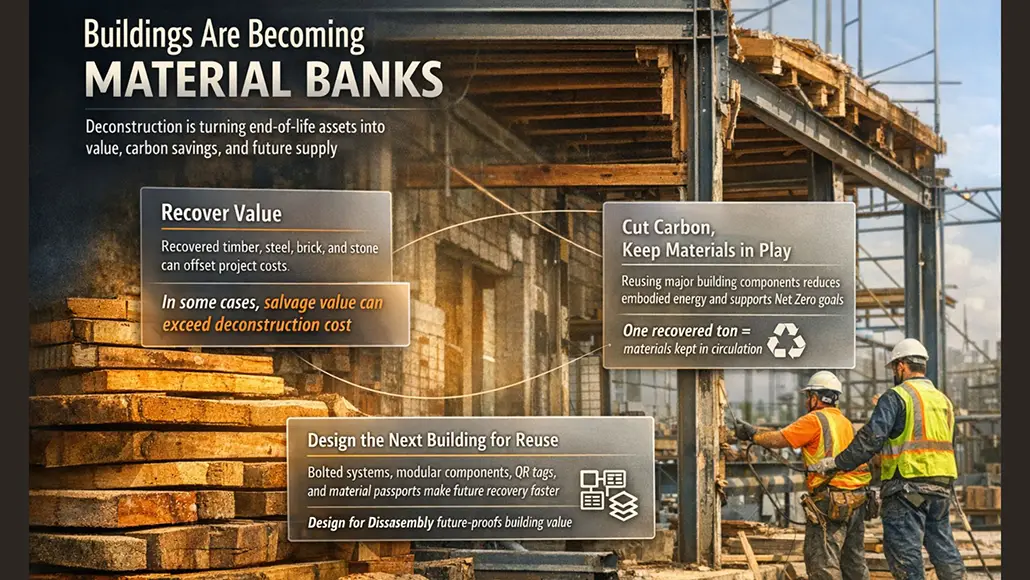
The shift toward deconstruction is driven by a complex interplay of market forces and environmental stewardship. In many jurisdictions, the cost of landfilling construction and demolition waste has skyrocketed, making the labor-intensive process of deconstruction more financially competitive. When a building is demolished, the resulting rubble often has little to no resale value because it is contaminated with various materials. Conversely, deconstruction allows for the extraction of high-value items such as structural timber, architectural steel, and intact masonry units. These materials can often be sold at a premium to developers seeking the aesthetic or low-carbon benefits of reclaimed products. Furthermore, the carbon footprint of construction is heavily weighted toward the extraction and manufacturing of new materials. Reusing a single ton of steel or concrete through deconstruction can save a significant amount of embodied energy, contributing directly to a project’s Net Zero targets.
Analyzing the Methodology of Resource Recovery
A successful deconstruction strategy begins long before the first tool touches a structure. It requires a comprehensive pre-deconstruction audit to identify which components are suitable for reuse versus recycling. This audit catalogs the types of materials present, their condition, and the potential hazardous substances that might complicate recovery efforts. During the actual process, the sequence of removal is critical. Soft stripping the removal of non-structural elements like windows, doors, and interior finishes usually occurs first. This is followed by the more complex task of dismantling structural systems. The goal is to maximize the purity of the material streams. For instance, separating clean timber from treated wood ensures that the former can be reused in furniture or structural applications, while the latter is handled appropriately. This level of precision requires a skilled workforce that understands building assembly in reverse, highlighting a growing need for specialized training within the labor market.
The Financial Valuation of Salvaged Assets
Beyond simple waste diversion, the financial logic of deconstruction is rooted in asset recovery. Reclaimed heavy timbers, particularly from older growth trees, possess a structural density and aesthetic appeal that new lumber cannot match. Similarly, vintage bricks and historical stone veneers command high prices in the luxury residential and commercial markets. By cataloging these assets early in the deconstruction phase, developers can often offset a portion of the labor costs associated with the dismantling process. In some cases, the value of the recovered materials can exceed the cost of the deconstruction itself, transforming a liability into a profitable enterprise. This requires a shift in accounting practices, where buildings are viewed as standing inventories of valuable commodities rather than depreciating assets destined for destruction.
Integrating Circularity into the Design Phase
The long-term success of deconstruction depends on “Design for Disassembly” or DfD. While current efforts focus on salvaging materials from legacy buildings, the next generation of construction must be built with their eventual dismantling in mind. This involves using mechanical fasteners like bolts and screws instead of permanent adhesives or welded joints. It also means utilizing standardized component sizes and modular systems that can be easily unplugged and relocated. When architects and engineers prioritize DfD, they are essentially future-proofing the building’s value. A structure designed for deconstruction is a lower-risk investment because its components remain liquid assets that can be recovered and resold at the end of the building’s specific utility. This approach shifts the perception of a building from a static entity to a temporary assembly of valuable resources.
Advanced Material Identification and Tagging
To facilitate DfD, the industry is increasingly turning to advanced identification technologies. QR codes and RFID tags embedded in structural components can provide future deconstruction teams with immediate access to material specifications, manufacturer data, and assembly instructions. This digital transparency eliminates the guesswork often associated with salvaging older buildings. When a contractor knows exactly what grade of steel is in a beam or whether a composite panel contains hazardous binders, they can make faster, safer, and more profitable recovery decisions. This convergence of digital twin technology and physical material management is the cornerstone of a truly circular construction ecosystem.
Overcoming Market Barriers and Logistics Challenges
Despite the clear benefits, several hurdles remain that prevent deconstruction from becoming the default industry standard. The most prominent of these is time. Deconstruction can take significantly longer than traditional demolition, and in the world of real estate development, time is a high-cost variable. To mitigate this, developers must integrate deconstruction into the early stages of the project timeline, allowing for the necessary duration without delaying subsequent construction phases. Logistics also pose a challenge; salvaged materials require storage, grading, and certification before they can be reintegrated into new projects. Without a robust secondary market and digital platforms to track material inventory, many recovered items languish in warehouses. The development of “digital material passports” blockchain-based records of a material’s origin, composition, and history is a promising solution that provides the transparency and trust needed for widespread adoption of reclaimed materials.
The Role of Policy and Regulatory Frameworks
Government intervention is often the catalyst for shifting industry behavior toward deconstruction. Many cities are now implementing ordinances that mandate a minimum percentage of material recovery for large-scale projects. Some offer tax incentives for developers who opt for deconstruction over demolition, acknowledging the social and environmental benefits of reduced waste. Furthermore, updating building codes to allow for the use of certified reclaimed structural materials is essential. Currently, some engineers are hesitant to specify salvaged steel or wood due to liability concerns. Establishing national standards for the testing and grading of recovered components would provide the professional confidence necessary to scale these practices. As policy landscapes evolve, the construction sector must stay ahead of the curve by developing the internal expertise and partnerships required to navigate these new requirements effectively.
Urban Mining and the Future of Cities
The concept of “urban mining” views our cities as vast, accessible mines for high-grade materials. In dense urban environments where new resource extraction is impossible, deconstruction provides a local source of supply. This reduces the carbon emissions associated with transporting heavy materials over long distances and helps insulate the local construction market from global supply chain disruptions. As we move toward 2030 and beyond, the ability to “mine” existing structures for the materials needed for new development will become a core competency for any major construction firm. This requires a rethinking of the urban fabric, not as a collection of permanent monuments, but as a dynamic and shifting repository of the resources needed to build the future.
Future Outlook and the Path to True Circularity
The future of construction materials is undoubtedly circular, and deconstruction is the mechanism that makes this circularity possible. As technology advances, we can expect to see more automated tools, such as robotic dismantling systems, that can reduce the labor costs associated with the process. Additionally, the rise of “as-a-service” business models, where manufacturers retain ownership of materials and lease them to building owners, will further incentivize deconstruction. In this scenario, the manufacturer is responsible for the recovery and refurbishment of their products, ensuring that nothing goes to waste. The transformation of the construction site from a waste generator to a resource recovery hub is well underway. For industry leaders, the task is to embrace these deconstruction strategies now, ensuring they are positioned to thrive in an economy that increasingly demands sustainability, transparency, and resource efficiency.