


























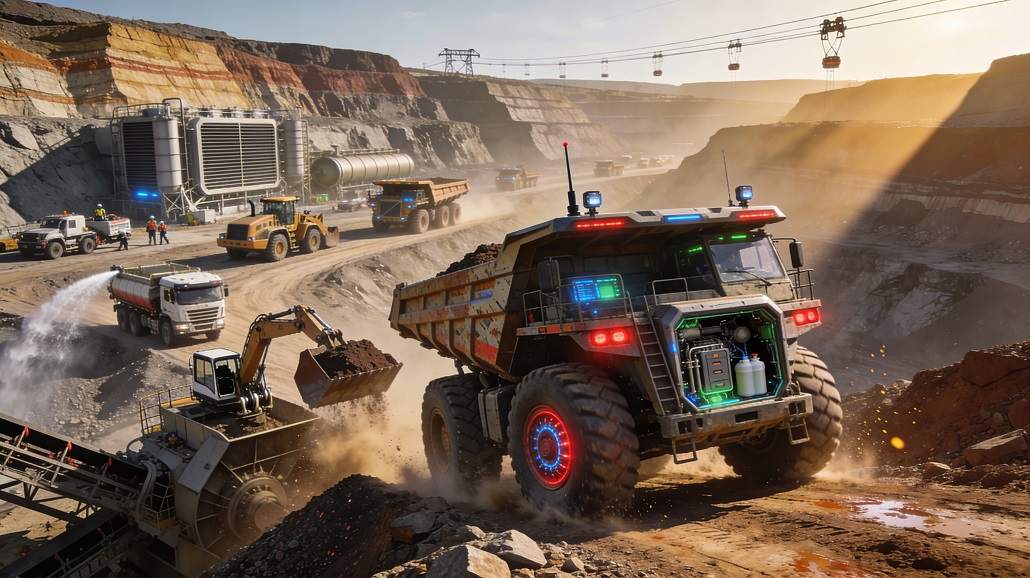


The sheer scale of modern mining operations requires a level of logistical coordination and mechanical power that is unparalleled in any other industry. Central to this massive undertaking are heavy-duty vehicles, the titans of the earth-moving world that ensure the consistent flow of raw materials from deep within the earth to processing facilities. These machines are far more than just large trucks; they are sophisticated mobile platforms engineered to operate in the most hostile environments on the planet. From the freezing tundras of the north to the scorching deserts of the south, these vehicles must maintain peak performance while carrying payloads that can exceed several hundred tons. The evolution of these machines has been driven by a relentless pursuit of productivity, reliability, and economic efficiency, transforming the way mining logistics are managed on a global scale.
To understand the importance of these vehicles, one must first appreciate the environment in which they operate. A typical mining site is a labyrinth of steep haul roads, abrasive rocky surfaces, and extreme dust or mud. In such conditions, a standard commercial vehicle would fail within hours. Heavy-duty vehicles are built from the ground up to thrive in this chaos. Their frames are fabricated from high-strength alloy steel, their cooling systems are oversized to handle extreme heat, and their filtration systems are designed to keep the most microscopic dust particles out of the sensitive engine components. This “over-engineering” is a necessity, as the cost of a single vehicle breakdown can reach tens of thousands of dollars per hour in lost productivity.
The Engineering Excellence of Modern Haul Trucks
In the hierarchy of mining equipment, haul trucks sit at the very top. These gargantuan machines are the primary workhorses of open-pit mining, responsible for moving millions of tons of overburden and ore every year. The design of a modern haul truck is a masterclass in heavy engineering, featuring reinforced chassis, advanced suspension systems, and tires that stand several meters tall. These tires themselves are marvels of technology, designed to support weights of over 600 tons while resisting the punctures and heat buildup that occur on rocky haul roads. The integration of high-precision telematics allows mine operators to monitor every aspect of the truck’s performance, from tire pressure to the temperature of the wheel motors.
The capacity of these trucks has grown exponentially over the last few decades. Today’s ultra-class haul trucks can carry up to 400 metric tons in a single trip. This massive capacity is essential for maintaining the economic viability of low-grade ore mines, where the profit margin depends on moving huge volumes of material as cheaply as possible. To support these loads, the trucks utilize advanced hydraulic systems that can dump a full load in under 30 seconds. The precision of these systems ensures that the material is placed exactly where it is needed, whether it is being fed into a primary crusher or being used to build a massive tailings dam. This level of control is what makes the modern haul truck an indispensable asset in the world of mining logistics.
Powering the Giants: Advanced Diesel Engines and Hybrid Tech
The heart of these massive machines is the engine. Modern mining transport vehicles rely on high-output diesel engines that are designed to provide maximum torque at low revolutions, allowing them to climb steep haul roads while fully loaded. These engines have undergone significant advancements to meet stringent emission standards without sacrificing the raw power required for mining operations. Innovations such as high-pressure common-rail fuel injection and two-stage turbocharging have improved fuel efficiency and reduced the thermal load on the engine components. However, the most significant shift in recent years has been the move toward alternative drive systems that reduce the reliance on traditional diesel-only power.
Specifically, the industry is seeing a transition toward diesel-electric drive systems. In this setup, the diesel engine does not drive the wheels directly. Instead, it acts as a high-capacity generator to power electric motors located in the wheel hubs. This provides several advantages: it eliminates the need for a complex mechanical transmission, it provides superior torque control at low speeds, and it allows for regenerative braking. When a truck descends a hill, the electric motors act as generators, slowing the vehicle down while feeding power back into the system or a resistor grid. This reduces the wear on the mechanical brakes and provides a more controlled descent on slippery roads. These “hybrid” heavy-duty vehicles are the bridge between today’s diesel-powered fleets and the fully electric mining sites of the future.
Off Highway Trucks and Specialized Site Mobility Solutions
While the massive haul trucks dominate the primary pits, a variety of off highway trucks and specialized site mobility solutions handle the secondary tasks that keep a mine running. These include water trucks for dust suppression, service vehicles for on-site maintenance, and specialized trailers for transporting heavy machinery like excavators and dozers. The maneuverability and versatility of these smaller heavy-duty vehicles are crucial for navigating the ever-changing landscape of an active mining site. These vehicles often feature articulated steering or all-wheel drive systems to ensure they can reach the most remote corners of the lease area.
Site mobility solutions also encompass the infrastructure that supports these vehicles. In a modern mine, this includes automated fueling stations, specialized wash bays that use recycled water to remove corrosive materials, and modular maintenance facilities that can be moved as the pit expands. By ensuring that all vehicles can move safely and efficiently across the site, operators can minimize the risk of accidents and maintain a steady pace of production. The coordination of these diverse vehicle types is a significant challenge, requiring a centralized management system that can track everything from a 400-ton truck to a 1-ton service pickup.
Optimizing Mining Logistics through Fleet Management
The efficiency of a mining operation is not just about the power of individual machines but about how they work together. Modern mining logistics rely on sophisticated fleet management systems that use GPS and real-time data to coordinate the movement of all heavy-duty vehicles on the site. These systems can dynamically assign trucks to different shovels based on current wait times, ore grade requirements, and haul road conditions. If a shovel breaks down, the system instantly reroutes the approaching trucks to another loading point, ensuring that no machine is sitting idle. This level of optimization is essential for maximizing the return on investment for expensive mining transport vehicles.
Furthermore, fleet management systems provide invaluable data on driver behavior and vehicle performance. By analyzing this data, managers can identify patterns that lead to excessive fuel consumption or premature component wear. For example, if a certain driver consistently brakes too hard or takes corners too fast, the system can flag this for additional training. Similarly, the system can track the “rolling resistance” of the haul roads; if the trucks are slowing down due to poor road conditions, the system can automatically dispatch a grader to the area. This proactive approach to mining logistics ensures that the entire site operates as a single, high-efficiency machine.
Reliability and Maintenance in Harsh Mining Environments
Operating heavy-duty vehicles in a mining environment is a constant battle against the elements. The combination of extreme temperatures, abrasive dust, and 24/7 operation puts an incredible strain on every mechanical system. Therefore, reliability and maintenance are the primary concerns for any fleet manager. Predictive maintenance techniques, supported by onboard sensors and AI analysis, have revolutionized this area. Instead of waiting for a part to fail, sensors can detect the subtle changes in vibration or temperature that indicate an impending failure. This allows the maintenance team to schedule a repair during a natural break in production, preventing a catastrophic and expensive breakdown in the middle of a haul road.
The design of modern off highway trucks also prioritizes “serviceability.” Major components are designed to be easily accessible, and many systems are modular, allowing for quick “plug-and-play” replacements. For instance, a faulty hydraulic pump can be swapped out in a fraction of the time it would take to repair it on the machine. This focus on minimizing “mean time to repair” is what allows mining companies to achieve uptime rates of over 90%, even in the most demanding conditions. In the world of heavy-duty vehicles, the best machine is the one that stays out of the workshop and on the haul road.
The Future of Site Mobility: Automation and Electrification
The future of heavy-duty vehicles in the mining sector is being defined by two major trends: automation and electrification. Autonomous haulage systems (AHS) are already being used in major mines around the world, where fleets of driverless trucks operate with incredible precision. These systems eliminate the variability of human drivers, leading to more consistent cycle times and lower fuel consumption. Furthermore, they allow for “hot changes” where the truck keeps running while the shift changes and eliminate the need for costly on-site accommodation for large numbers of drivers. As the technology matures, we will see these autonomous systems spread to smaller off highway trucks and specialized service vehicles.
Electrification is the other major frontier. The push for carbon reduction is driving the development of fully electric heavy-duty vehicles. While the energy requirements of a 400-ton truck are immense, the use of trolley-assist systems and high-capacity battery packs is making this a reality. These electric trucks offer zero tailpipe emissions, significantly lower maintenance costs, and better performance on steep climbs. The transition to an all-electric fleet will require a significant investment in on-site power generation and charging infrastructure, but the long-term economic and environmental benefits are undeniable. The role of site mobility solutions will continue to evolve, with the heavy-duty vehicles of tomorrow being cleaner, smarter, and more efficient than ever before.