
























Saturday, April 4, 2026
2026 Mining Türkiye Exhibitor List

JCB LOADALL 514-56 TELEHANDLER

Note* - All images used are for editorial and illustrative purposes only and may not originate from the original news provider or associated company.

Subscribe

- Never miss a story with notifications

- Gain full access to our premium content

- Browse free from any location or device.

Media Packs

Expand Your Reach With Our Customized Solutions Empowering Your Campaigns To Maximize Your Reach & Drive Real Results!

– Access the Media Pack Now

– Book a Conference Call

– Leave Message for Us to Get Back

Related stories

Komatsu HD785 Shows Equipment Durability Across Climates

The HD785 by Komatsu is demonstrating equipment durability across...

Hitachi and Rototilt Strengthen OEM Partnership in Europe

Rototilt has formalised a new Rototilt OEM Agreement with...

Self-Driving Construction Machinery on Modern Job Sites

Self-driving construction machinery is revolutionizing modern job sites, ushering in an era of unprecedented efficiency, enhanced safety, and remarkable precision. This article explores how autonomous equipment, from grading and hauling to sophisticated mapping, is not merely a technological advancement but a fundamental shift in how construction projects are executed, promising a future where productivity soars and human risk diminishes. We delve into the technological backbone enabling these intelligent machines and examine their profound impact on project timelines, operational costs, and the evolving role of the human workforce.
- Advertisement -

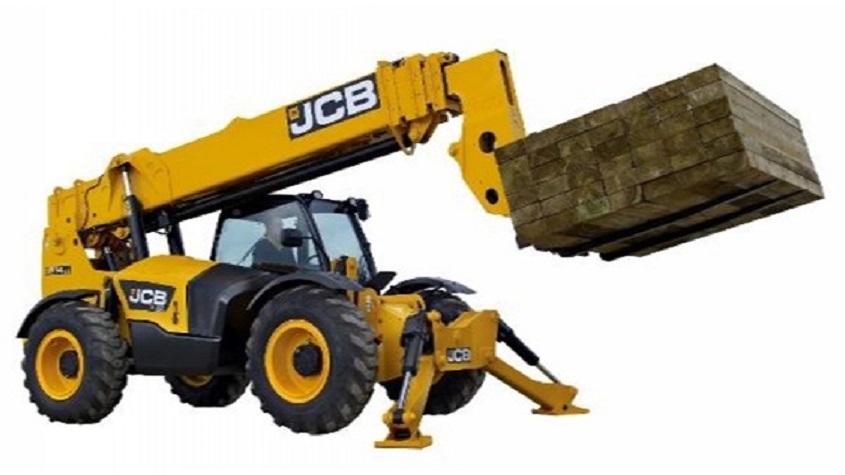
JCB’s 514-56 Loadall telehandler, a 109-horsepower Tier 4-Interim unit, is part of a series aimed squarely at American rental customers.

JCB’s 514-56 Loadall telehandler, a 109-horsepower Tier 4-Interim unit, is part of a series aimed squarely at American rental customers.

It features a 56-foot reach and 14,000 pounds of lift capacity, along with a beefed-up boom, larger chains, and a compact wheelbase for manueverability, all key considerations for the rental industry, according to product manager Edward Lovatt. “It is a high-boom machine, because Americans want to look up and under the boom while working,” Lovatt says.

Designed for pick-and-place operations, the 514-56 also has heavier-than-standard tires, with a 20-ply rating, and there is a solid tire option available. The very first unit (pictured above) will reach the Port of Savannah, near JCB’s U.S. headquarters, in a couple of weeks. Lovatt said rental customers such as Sunbelt and United Rentals are targets. Other units in the series will include the 506-36 (with a 36-foot reach) on the small end, as well as the 507, 510, and 512.


Achema Middleeast

Latest stories

Related stories

Komatsu HD785 Shows Equipment Durability Across Climates

The HD785 by Komatsu is demonstrating equipment durability across...

Hitachi and Rototilt Strengthen OEM Partnership in Europe

Rototilt has formalised a new Rototilt OEM Agreement with...

Self-Driving Construction Machinery on Modern Job Sites

Self-driving construction machinery is revolutionizing modern job sites, ushering in an era of unprecedented efficiency, enhanced safety, and remarkable precision. This article explores how autonomous equipment, from grading and hauling to sophisticated mapping, is not merely a technological advancement but a fundamental shift in how construction projects are executed, promising a future where productivity soars and human risk diminishes. We delve into the technological backbone enabling these intelligent machines and examine their profound impact on project timelines, operational costs, and the evolving role of the human workforce.

Human-Robot Collaboration for Safer Construction Work

Human-robot collaboration is rapidly emerging as a transformative force in the construction industry, moving beyond mere automation to create symbiotic partnerships between humans and machines. This innovative approach is significantly enhancing safety by mitigating risks associated with hazardous tasks, providing real-time monitoring, and offering ergonomic support. Simultaneously, it boosts workforce efficiency by automating repetitive tasks, improving precision, and optimizing material handling. As construction sites evolve, human-robot collaboration in construction is not just a technological advancement but a strategic imperative, fostering a more productive, secure, and sustainable future for the industry.

Subscribe

- Never miss a story with notifications

- Gain full access to our premium content

- Browse free from any location or device.

Media Packs

Expand Your Reach With Our Customized Solutions Empowering Your Campaigns To Maximize Your Reach & Drive Real Results!

– Access the Media Pack Now

– Book a Conference Call

– Leave Message for Us to Get Back

Translate »