



























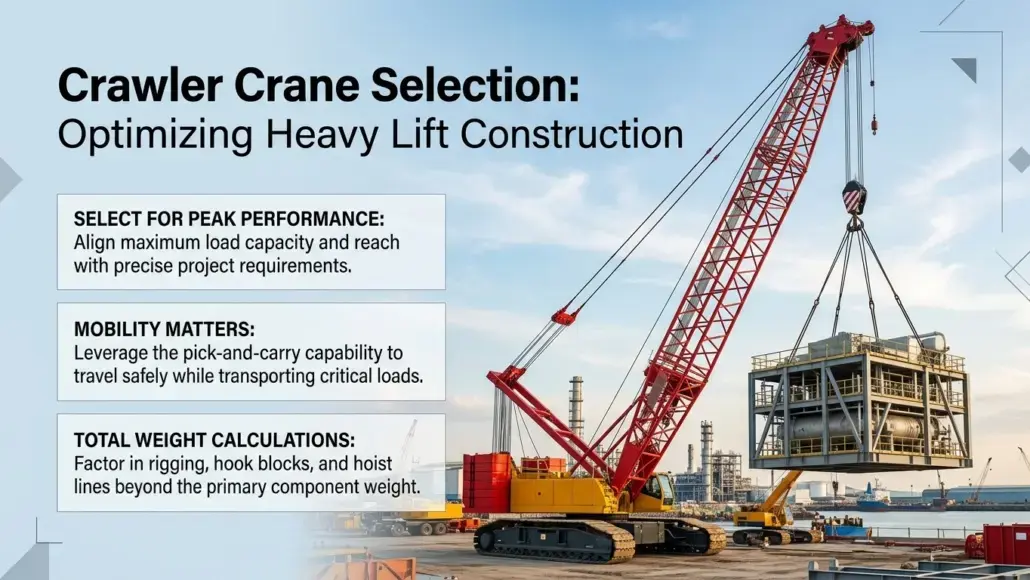

The success of any heavy lift operation depends on the precise selection of a crawler crane that matches the project’s maximum load and reach requirements. Crawler cranes are valued for their exceptional lifting capacity and their ability to travel with a load, a capability known as pick-and-carry. However, determining the correct crane size involves more than just looking at the peak weight of the heaviest component. Engineers must account for the weight of the rigging, the hook block, and the potential for wind loads, all of which reduce the net capacity of the crane. Additionally, the radius at which the load must be placed is a critical factor, as the crane’s capacity diminishes rapidly as the boom is lowered and the radius increases. A thorough review of the manufacturer’s load charts is essential for ensuring that crawler crane selection optimizing heavy lift construction projects is based on a safe and realistic evaluation of the task.
Ground conditions are perhaps the most critical site-specific factor in crawler crane operations. Unlike wheeled cranes that rely on outriggers, crawler cranes distribute their weight over two large tracks, or crawlers. While this provides lower ground bearing pressure, the total weight of the crane plus the load can still exceed the capacity of the soil. Before a crane is mobilized, a geotechnical survey must be conducted to ensure the ground can support the intense loads. In many cases, specialized crane mats or temporary soil stabilization measures are required to create a safe working platform. If the ground is not properly prepared, the crane can settle unevenly, leading to a loss of level that can cause a catastrophic tip-over or structural failure of the boom.
The logistical challenges of transporting and assembling a crawler crane must also be factored into the selection process. Larger cranes require dozens of truckloads to move and can take several days to assemble using an auxiliary crane. Project managers must evaluate the access roads to the site, the space available for assembly, and the proximity of overhead obstructions like power lines. If a site is too cramped to accommodate a large crawler crane, it may be necessary to use a smaller crane with a more complex boom configuration or to redesign the lifts to use lighter components. Balancing the lifting requirements with the physical constraints of the site is a fundamental part of the planning process.
Boom Configurations and Specialized Lifting Attachments
Crawler cranes offer a high degree of flexibility through various boom and jib configurations. A standard main boom is suitable for many tasks, but projects involving tall structures or long reaches often require the addition of a luffing jib. A luffing jib allows the operator to change the angle of the jib independently of the main boom, providing greater versatility in placing loads over obstructions or into tight spaces. For extremely heavy lifts at long radii, a derrick attachment with additional counterweight can be used to significantly enhance the crane’s capacity. Selecting the right combination of boom and jib is vital for ensuring that crawler crane selection optimizing heavy lift construction projects meets the technical demands of the work.
The choice of counterweight also plays a significant role in the crane’s performance. Many modern crawler cranes feature modular counterweight systems that can be adjusted based on the specific requirements of the lift. Using the minimum required counterweight reduces the ground bearing pressure and the stress on the crane’s structure during travel. However, for maximum capacity lifts, the full counterweight package is necessary. Some advanced cranes feature variable position counterweights that can be moved closer to or further from the center of rotation, optimizing the crane’s stability throughout the lift cycle. This technical sophistication allows for more efficient lifting operations and can reduce the overall footprint of the crane on the site.
Rigging selection is another component that must be integrated into the crane selection process. For heavy or awkward loads, specialized spreader bars, slings, and shackles are required to ensure the load is balanced and secure. The weight of these components must be subtracted from the crane’s rated capacity. In some cases, the height of the rigging can also limit the maximum lift height of the crane, requiring a longer boom than initially anticipated. Working closely with rigging specialists during the planning phase ensures that the crane and the rigging are perfectly matched for the task, minimizing the risk of incidents during the actual lift.
Operational Safety and Wind Speed Limitations
Safety is the primary concern in any heavy lift operation, and crawler cranes are equipped with sophisticated load moment indicators (LMI) to assist the operator. The LMI provides real-time data on the weight of the load, the radius of the boom, and the percentage of the crane’s capacity being utilized. If the crane approaches its safety limit, the system will provide visual and audible warnings and can automatically disable functions that would increase the risk of tipping. These systems are essential for preventing accidents, but they do not replace the need for an experienced and well-trained operator. The operator must have a deep understanding of the crane’s behavior, especially when traveling with a load or working in tight proximity to other equipment.
Wind speed is a major limiting factor for crane operations, particularly those involving large surface area loads or long booms. Every crane has a maximum rated wind speed for different configurations, and exceeding these limits can lead to structural failure or a loss of control. Site managers must monitor weather conditions constantly and be prepared to halt operations if the wind exceeds safe levels. In some cases, it may be necessary to lower the boom or secure the crane if a storm is approaching. Developing a comprehensive wind management plan, including the use of on-site anemometers, is a vital part of ensuring that crawler crane selection optimizing heavy lift construction projects is supported by a safe operational environment.
Communication between the crane operator, the signal person, and the rigging crew is essential for a safe lift. In many heavy lift projects, the operator may not have a clear view of the load at all times, making them entirely dependent on the instructions provided by the signal person. Using clear, standardized hand signals or dedicated radio channels ensures that everyone involved in the lift is synchronized. Pre-lift meetings, often called “tool-box talks,” are a standard practice where the entire team reviews the lift plan, identifies potential hazards, and confirms their roles. This focus on communication and planning is what separates a successful heavy lift from a dangerous one.
Maintenance and Inspection of Critical Components
Maintaining a crawler crane in top working condition requires a rigorous and documented inspection program. The wire ropes, sheaves, and hook blocks are subject to intense wear and must be inspected daily for signs of damage or fatigue. The structural integrity of the boom sections and the crawler frames must also be checked regularly for cracks or corrosion. Given the extreme loads these cranes carry, even a small defect can lead to a catastrophic failure. Most manufacturers provide detailed checklists and service intervals that must be followed to ensure the crane remains certified for use.
The hydraulic and engine systems also require regular attention. Crawler cranes rely on high-pressure hydraulics to power the winches, the swing mechanism, and the travel motors. Any leak or contamination in the hydraulic system can lead to a loss of control or a failure of a critical function. Regular fluid analysis and filter changes are essential for protecting these expensive components. The engine must also be maintained to ensure it can provide consistent power throughout the long hours often required for heavy lift projects. By investing in a comprehensive maintenance program, construction firms can ensure that crawler crane selection optimizing heavy lift construction projects results in a reliable and productive asset.
Telematics and remote monitoring are becoming increasingly common in the crane industry, allowing fleet managers to track machine health and usage from a central office. These systems can alert maintenance teams to potential issues before they cause a breakdown, allowing for more efficient scheduling of repairs. By monitoring metrics such as load cycles and engine hours, managers can also gain insights into how the crane is being utilized and identify areas for improvement. This data-driven approach to maintenance ensures that the crane fleet remains a profitable part of the business and that every machine is ready to perform when a heavy lift is required.
Future Trends in Heavy Lift Technology and Automation
The crawler crane industry is seeing a move toward greater automation and the integration of digital tools. Building Information Modeling (BIM) is being used to simulate heavy lifts in a virtual environment, allowing engineers to identify potential conflicts and optimize the crane’s position before any equipment arrives on site. This virtual planning reduces the risk of errors and ensures that the lift is executed as efficiently as possible. Some manufacturers are also developing remote-control systems that allow the operator to control the crane from a distance, providing a better view of the load and improving safety in hazardous environments.
Environmental regulations are also influencing the design of new crawler cranes. Manufacturers are introducing engines that meet the latest emission standards and are exploring the use of hybrid and electric drive systems for smaller models. While fully electric heavy-lift cranes are still in the development stage, the trend toward cleaner and quieter equipment is clear. As these technologies mature, they will offer construction companies new ways to meet their sustainability goals while maintaining the high level of performance required for heavy lift projects. By staying at the forefront of these technological advancements, firms can ensure that their heavy lift capabilities remain competitive in an evolving market.
Finally, the role of data in crane management will continue to grow. The ability to analyze historical lift data allows for more accurate bidding and better resource allocation. By understanding the performance of different crane models across various project types, companies can refine their crawler crane selection optimizing heavy lift construction projects strategies. This focus on continuous improvement and the adoption of new technologies will ensure that the crawler crane remains an indispensable tool for the most challenging construction projects of the future. The integration of technical expertise, data-driven planning, and rigorous safety protocols is the key to success in the demanding world of heavy lift construction.
