




























Construction schedules are built around sequencing. Crews, deliveries, inspections, equipment access and material staging all have to happen in the right order. Yet debris removal is still often treated as something to solve after work begins.
That can be a costly mistake.
On renovation, demolition and smaller commercial projects, waste handling affects site access, labor productivity, safety, neighbor relations and the pace at which crews can move from one phase to the next. Treating debris logistics as part of preconstruction planning can eliminate avoidable interruptions and keep the site working as intended.
Start With Site Access, Not Container Size
The first question should not be, “What size dumpster do we need?” It should be, “Where can a container be placed without interfering with the project?”
A roll-off container needs a workable delivery path, sufficient clearance and a stable placement area. It also needs to remain accessible for pickup or exchange after the site becomes more congested.
That sounds simple, but site conditions can change quickly. Material deliveries begin arriving. Temporary fencing goes up. Subcontractors fill parking areas. Scaffolding, lifts and trailers take over open space. A container that was easy to deliver on day one may become difficult to remove two weeks later.
The best time to choose the container location is during preconstruction, when access can be coordinated with the rest of the logistics plan.
Match Capacity to the Work Sequence
Container sizing should follow the expected debris stream and project sequence rather than a generic rule of thumb.
A small interior renovation may generate bulky material without much weight. Roofing, masonry and demolition debris may fill a container very differently. A project can also move through several waste profiles as work progresses.
The goal is not simply to choose the largest container available. An oversized container may consume valuable site space, while an undersized container can create unnecessary swaps and interruptions.
For contractors working in northern Illinois and southeast Wisconsin, a construction dumpster rental provider that offers multiple container sizes can help match capacity to the actual scope and site constraints. The most useful conversation is often about the project schedule, debris type and available placement area, not just total square footage.
Plan for Debris Streams Before Demolition Starts
Waste is easier to manage when the team knows what is coming.
Before demolition begins, identify the major material streams likely to leave the site. These may include wood, drywall, fixtures, packaging, flooring, roofing materials, cabinetry and general construction debris.
Heavy materials deserve special attention. Concrete, brick, dirt and similar dense debris can create weight issues long before a container appears visually full. Local disposal rules and hauling restrictions may also affect how these materials should be handled.
Separating unusual or restricted materials from ordinary construction debris before they reach the container can prevent delays, contamination charges and rejected loads.
Build Pickup and Swap Timing Into the Schedule
A full container is not just a waste-management issue. It can become a production issue.
Once debris begins accumulating outside the container, crews may have to handle material twice. Walkways can narrow, staging areas become cluttered and workers lose time moving debris around instead of removing it.
For active projects, the superintendent or project manager should have a clear trigger for requesting service. That trigger might be based on fill level, completion of a demolition phase or an upcoming delivery that requires the container area to be cleared.
The important point is to make the decision before the container becomes an obstacle.
On longer projects, planned exchanges can be incorporated into the schedule just like material deliveries. A container can be swapped after demolition, for example, before framing or finish work begins generating a different debris stream.
Protect the Site Around the Container
Container placement affects more than logistics.
Driveways, pavement, curbs, landscaping and adjacent property can all be exposed during delivery and pickup. Residential renovation sites are especially sensitive because the work is taking place around an occupied home rather than on a dedicated construction site.
Before delivery, the team should confirm the intended placement surface and identify anything that requires protection. The driver should also have clear instructions about where the container belongs and any access limitations.
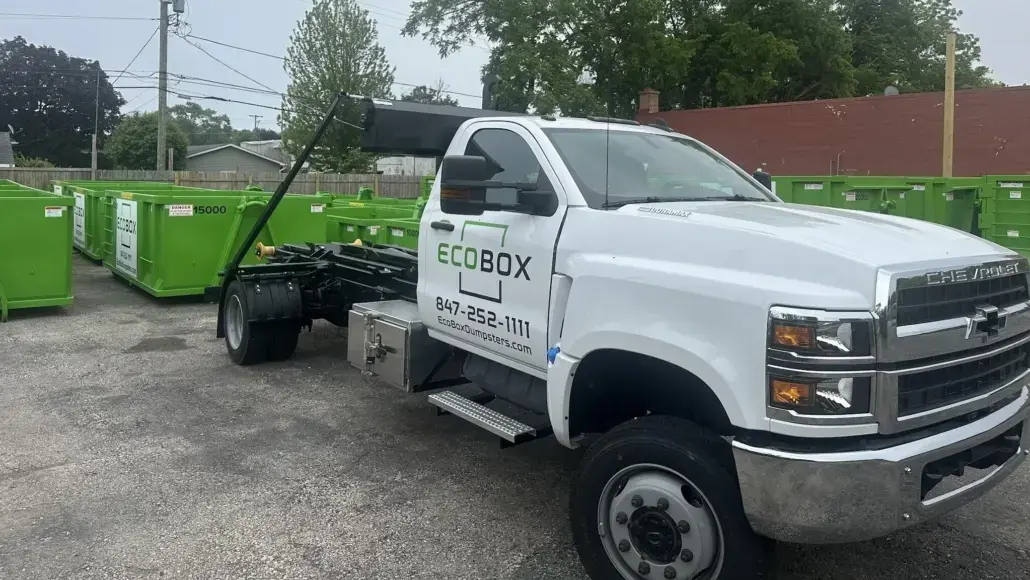
EcoBox Dumpsters, which serves northern Illinois and southeast Wisconsin, uses compact delivery equipment and driveway-protection practices designed for sites where space and property protection matter. For contractors, the broader lesson is that the hauling equipment itself should be considered when evaluating a waste partner, not just the price of the container.
Keep Debris Out of the Work Path
Good housekeeping is a basic construction principle, but the waste plan determines whether it is practical.
A container located too far from the work area encourages temporary debris piles. A container placed too close can interfere with equipment movement or create a bottleneck. The ideal location minimizes handling without compromising access.
The same principle applies inside the building. Crews should know how debris will travel from the work area to the container. On larger renovations, that may mean designated paths, carts, chutes or temporary protection through occupied spaces.
Every extra handling step consumes labor. A well-planned waste route reduces those steps.
Coordinate With Neighbors, Property Managers and Occupants
Construction logistics do not stop at the property line.
In dense neighborhoods, multifamily properties and commercial sites, container placement can affect parking, loading zones, building access and neighboring properties. Local permits or property-management rules may also dictate where a container can sit and how long it can remain.
These issues are easier to address before the project starts.
For occupied buildings, communicate the plan to property managers, tenants or homeowners. They should know where the container will be, whether access will change and when pickups are expected. Clear communication can prevent a routine service event from becoming an operational surprise.
Treat the Waste Provider Like a Logistics Partner
The best waste plan is not simply a purchase order for a dumpster. It is a service plan.
Contractors should confirm service-area coverage, container sizes, acceptable materials, weight allowances, access requirements, rental periods, pickup procedures and what happens when a project needs an unexpected exchange.
Responsiveness also matters. Construction schedules change. Demolition can move faster than expected, or a crew may uncover additional work that produces more debris than anticipated.
A provider that understands construction operations can help adjust service without forcing the site team to redesign its logistics plan each time conditions change.
Make Waste Planning Part of the Preconstruction Checklist
Debris removal is rarely the largest line item on a construction budget, but poor debris logistics can affect many larger ones.
When waste handling is planned early, the contractor can preserve access, reduce double handling, protect the property, maintain cleaner work areas and coordinate service around the construction schedule.
That is why debris logistics belongs beside staging, deliveries, temporary facilities and equipment access in the preconstruction plan.
The container may be temporary. Its effect on the jobsite is not.