

























Close
WORLD OF CONCRETE
Friday, December 19, 2025
JEC WORLD 2026

The Role of AI In The Success of The Construction Projects

Note* - All images used are for editorial and illustrative purposes only and may not originate from the original news provider or associated company.

Subscribe

- Never miss a story with notifications

- Gain full access to our premium content

- Browse free from any location or device.

Media Packs

Expand Your Reach With Our Customized Solutions Empowering Your Campaigns To Maximize Your Reach & Drive Real Results!

– Access the Media Pack Now

– Book a Conference Call

Leave Message for Us to Get Back

Related stories

How To Choose Trailer GPS Units That Actually Work for UK Fleets

You know the drill. A trailer van goes missing...

Emerging Technologies Set to Transform Concrete and Structural Construction

Advanced technologies including self-healing concrete, 3D-printed structures, smart sensors, ultra-high-performance materials, and artificial intelligence-powered design and planning systems are poised to fundamentally reshape construction practices. These innovations promise enhanced durability, reduced waste, accelerated project delivery, improved safety, and optimized resource utilization. Understanding adoption readiness, practical implementation approaches, and realistic timelines enables construction professionals to prepare for technological transformation while maintaining focus on delivering high-quality facilities that serve stakeholders' needs.

Improving Construction Efficiency Without Compromising Quality

Achieving construction efficiency requires process-focused improvements that enhance productivity while maintaining or improving quality standards. Through workflow optimization, enhanced coordination mechanisms, quality management practices, and strategic technology integration, construction organizations deliver projects faster and more cost-effectively without sacrificing structural integrity or compliance. Balancing speed with excellence transforms construction management from a trade-off exercise into a synergistic approach where efficiency and quality reinforce one another.
- Advertisement -
Achema Middleeast

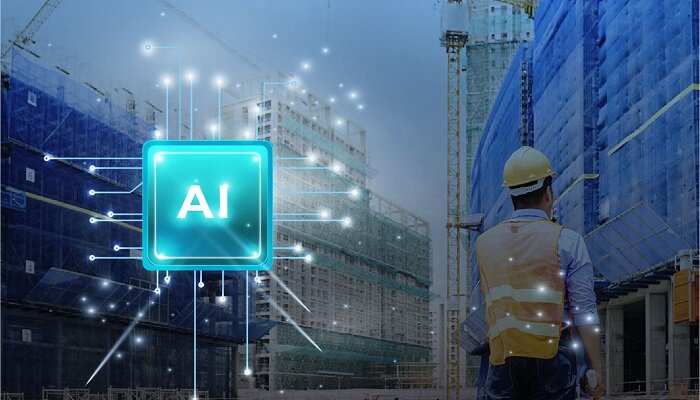
Construction projects are intricate endeavors that demand the consistent and prompt analysis of vast datasets. This challenge is pervasive across various projects, and the existing construction data management model needs to be updated. Data collection and sharing is a cumbersome process, and the sheer volume of data makes efficient utilization daunting. This is where artificial intelligence (AI) helps, heralding a future where AI simplifies data collection, management, and utilization, revolutionizing the construction industry by eliminating the need for laborious manual data sorting.

Here is a breakdown of how AI is set to reshape construction data management as we know it:

Enhanced Scheduling and Coordination of Logistics: Delays are a common issue in construction, with as much as 70 percent of projects experiencing setbacks, as revealed by a 2021 KPMG survey. AI technology removes the guesswork from coordination, bolstering construction data management. This enables better planning and project control, reducing conflicts and surprises that can lead to delays. AI also identifies opportunities to streamline logistics, including equipment rentals and purchases, and predicts and mitigates labor, equipment, and availability risks. AI complements human roles, facilitating more accurate project outcomes.

Revolutionizing Problem Solving: AI excels at interpreting vast data and using it to make informed decisions. It analyzes weather conditions, costs, safety records, and material usage to address complex construction challenges. AI understands these challenges, predicts and prevents errors through machine learning algorithms, optimizes resource allocation, and improves project scheduling accuracy. AI identifies patterns and provides actionable insights, accelerating problem resolution and reducing the risk of costly, ineffective solutions.

Proactive Recommendations: AI learns from human input and training, going beyond problem-solving to help companies address impending issues. It collaborates with construction firms to navigate through time-consuming data, using machine learning and historical analysis to forecast potential project delays or cost overruns, enabling preemptive actions. It also optimizes resource allocation based on past project patterns, ensuring projects start correctly.

Reducing Waste: The construction industry is notorious for wasting time, equipment, money, and materials. AI can assist in addressing these wasteful practices by identifying patterns and suggesting innovative solutions. It serves as a quality control tool, accurately accounting for excessive materials, equipment, and labor usage, providing cost-effective and resource-efficient solutions contributing to a more sustainable industry.

Eliminating Manual Inefficiencies: Construction data management can be overwhelming, with manual tasks consuming significant time. AI will eventually automate and streamline monotonous, time-consuming tasks like scheduling, logistics, surveillance, and material procurement, reducing the likelihood of human errors and improving project timelines.

Notifying Stakeholders of Changes: Stakeholder communication is vital in construction projects, and AI simplifies this by automatically sending notifications regarding updates or changes. AI processes various data points and swiftly summarizes and conveys them into messages, ensuring stakeholders stay informed and valuable input is received promptly.

Achema Middleeast

Latest stories

Related stories

How To Choose Trailer GPS Units That Actually Work for UK Fleets

You know the drill. A trailer van goes missing...

Emerging Technologies Set to Transform Concrete and Structural Construction

Advanced technologies including self-healing concrete, 3D-printed structures, smart sensors, ultra-high-performance materials, and artificial intelligence-powered design and planning systems are poised to fundamentally reshape construction practices. These innovations promise enhanced durability, reduced waste, accelerated project delivery, improved safety, and optimized resource utilization. Understanding adoption readiness, practical implementation approaches, and realistic timelines enables construction professionals to prepare for technological transformation while maintaining focus on delivering high-quality facilities that serve stakeholders' needs.

Improving Construction Efficiency Without Compromising Quality

Achieving construction efficiency requires process-focused improvements that enhance productivity while maintaining or improving quality standards. Through workflow optimization, enhanced coordination mechanisms, quality management practices, and strategic technology integration, construction organizations deliver projects faster and more cost-effectively without sacrificing structural integrity or compliance. Balancing speed with excellence transforms construction management from a trade-off exercise into a synergistic approach where efficiency and quality reinforce one another.

Training Strategies for Operating Advanced Construction Equipment

Modern construction equipment demands operator skills that extend far beyond basic machinery operation. Comprehensive training programs combining classroom instruction, simulator practice, and hands-on field experience prepare operators to safely and efficiently manage increasingly sophisticated equipment. Through structured certification approaches, ongoing skill development, and commitment to continuous learning, construction organizations develop operator competency that enhances project safety, productivity, and equipment longevity.

Subscribe

- Never miss a story with notifications

- Gain full access to our premium content

- Browse free from any location or device.

Media Packs

Expand Your Reach With Our Customized Solutions Empowering Your Campaigns To Maximize Your Reach & Drive Real Results!

– Access the Media Pack Now

– Book a Conference Call

Leave Message for Us to Get Back

Translate »