





















Close
WORLD OF CONCRETE
Friday, December 19, 2025
JEC WORLD 2026

Skanska invests in land in Krakow, Poland, for PLN 86 M, about SEK 210 M

Note* - All images used are for editorial and illustrative purposes only and may not originate from the original news provider or associated company.

Subscribe

- Never miss a story with notifications

- Gain full access to our premium content

- Browse free from any location or device.

Media Packs

Expand Your Reach With Our Customized Solutions Empowering Your Campaigns To Maximize Your Reach & Drive Real Results!

– Access the Media Pack Now

– Book a Conference Call

Leave Message for Us to Get Back

Related stories

Lifecycle Focused Construction Practices for Sustainable Infrastructure

Sustainable infrastructure development requires extending construction thinking beyond initial project completion to encompass the entire building lifecycle spanning decades of operation, maintenance, and eventual decommissioning. By integrating lifecycle cost analysis, selecting durable materials, designing for operational efficiency, planning for maintenance accessibility, and anticipating end-of-life material recovery, construction professionals create assets that deliver long-term value while minimizing environmental impact. This holistic approach transforms infrastructure from cost centers requiring perpetual maintenance into resilient assets that serve communities sustainably across generations.

Improving Construction Efficiency Without Compromising Quality

Achieving construction efficiency requires process-focused improvements that enhance productivity while maintaining or improving quality standards. Through workflow optimization, enhanced coordination mechanisms, quality management practices, and strategic technology integration, construction organizations deliver projects faster and more cost-effectively without sacrificing structural integrity or compliance. Balancing speed with excellence transforms construction management from a trade-off exercise into a synergistic approach where efficiency and quality reinforce one another.

Training Strategies for Operating Advanced Construction Equipment

Modern construction equipment demands operator skills that extend far beyond basic machinery operation. Comprehensive training programs combining classroom instruction, simulator practice, and hands-on field experience prepare operators to safely and efficiently manage increasingly sophisticated equipment. Through structured certification approaches, ongoing skill development, and commitment to continuous learning, construction organizations develop operator competency that enhances project safety, productivity, and equipment longevity.
- Advertisement -
Achema Middleeast

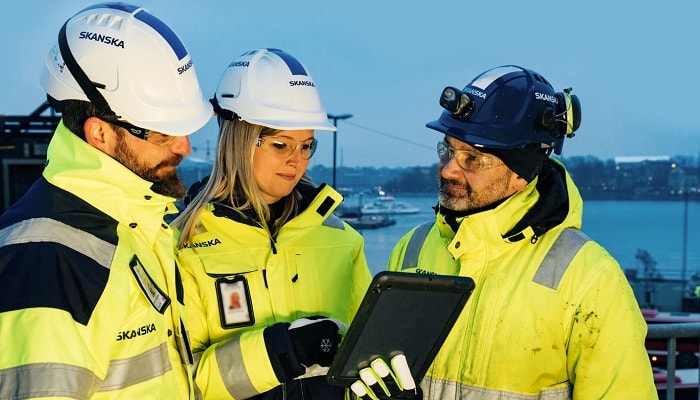
Skanska has acquired about 16,000 square meters of land in Krakow, Poland, from VGP Nieruchomości sp. z o.o. The total investment amounts to PLN 86 M, about SEK 210 M.

The plot of land that will be dedicated to the new office development is located at Aleja Pokoju 3 which is one of the arteries connecting Krakow’s center with other districts. The land is situated near Grzegórzeckie Roundabout, one of the most important transportation hubs in Krakow. The estimated potential of gross leasable area is around 45,000 square meters.

Currently, Skanska is building its third office development in Krakow – the multi-stage High5ive project that will ultimately consist of five buildings and offer approx. 70,000 square meters of leasable space.

Skanska is one of the leading development and construction companies in Europe. Outside the Nordics the company has European operations in building construction and civil engineering in Poland, Czech Republic & Slovakia and UK. Skanska develops commercial properties in select home markets in Poland, Czech Republic, Romania and Hungary, while the residential development is active in Prague and Warsaw. Skanska also offers services in public private partnerships. In 2017, Skanska had sales of SEK 37 billion and about 16,000 employees in its European operations.

Achema Middleeast

Latest stories

Related stories

Lifecycle Focused Construction Practices for Sustainable Infrastructure

Sustainable infrastructure development requires extending construction thinking beyond initial project completion to encompass the entire building lifecycle spanning decades of operation, maintenance, and eventual decommissioning. By integrating lifecycle cost analysis, selecting durable materials, designing for operational efficiency, planning for maintenance accessibility, and anticipating end-of-life material recovery, construction professionals create assets that deliver long-term value while minimizing environmental impact. This holistic approach transforms infrastructure from cost centers requiring perpetual maintenance into resilient assets that serve communities sustainably across generations.

Improving Construction Efficiency Without Compromising Quality

Achieving construction efficiency requires process-focused improvements that enhance productivity while maintaining or improving quality standards. Through workflow optimization, enhanced coordination mechanisms, quality management practices, and strategic technology integration, construction organizations deliver projects faster and more cost-effectively without sacrificing structural integrity or compliance. Balancing speed with excellence transforms construction management from a trade-off exercise into a synergistic approach where efficiency and quality reinforce one another.

Training Strategies for Operating Advanced Construction Equipment

Modern construction equipment demands operator skills that extend far beyond basic machinery operation. Comprehensive training programs combining classroom instruction, simulator practice, and hands-on field experience prepare operators to safely and efficiently manage increasingly sophisticated equipment. Through structured certification approaches, ongoing skill development, and commitment to continuous learning, construction organizations develop operator competency that enhances project safety, productivity, and equipment longevity.

Managing Material Costs in a Volatile Construction Market

Construction material price volatility presents significant challenges to project budgeting and risk management. Strategic procurement approaches, supply chain resilience strategies, and contract mechanisms that balance risk effectively enable stakeholders to navigate market fluctuations successfully. Understanding market dynamics, implementing escalation clauses, developing flexible procurement strategies, and maintaining strong supplier relationships help construction professionals maintain project viability despite unpredictable material cost movements.

Subscribe

- Never miss a story with notifications

- Gain full access to our premium content

- Browse free from any location or device.

Media Packs

Expand Your Reach With Our Customized Solutions Empowering Your Campaigns To Maximize Your Reach & Drive Real Results!

– Access the Media Pack Now

– Book a Conference Call

Leave Message for Us to Get Back

Translate »