
























Close
WORLD OF CONCRETE
Saturday, December 20, 2025
JEC WORLD 2026

Jerky Infra Delivery In UK To Miss Net Zero, Economic Aims

Note* - All images used are for editorial and illustrative purposes only and may not originate from the original news provider or associated company.

Subscribe

- Never miss a story with notifications

- Gain full access to our premium content

- Browse free from any location or device.

Media Packs

Expand Your Reach With Our Customized Solutions Empowering Your Campaigns To Maximize Your Reach & Drive Real Results!

– Access the Media Pack Now

– Book a Conference Call

Leave Message for Us to Get Back

Related stories

How To Choose Trailer GPS Units That Actually Work for UK Fleets

You know the drill. A trailer van goes missing...

Lifecycle Focused Construction Practices for Sustainable Infrastructure

Sustainable infrastructure development requires extending construction thinking beyond initial project completion to encompass the entire building lifecycle spanning decades of operation, maintenance, and eventual decommissioning. By integrating lifecycle cost analysis, selecting durable materials, designing for operational efficiency, planning for maintenance accessibility, and anticipating end-of-life material recovery, construction professionals create assets that deliver long-term value while minimizing environmental impact. This holistic approach transforms infrastructure from cost centers requiring perpetual maintenance into resilient assets that serve communities sustainably across generations.

Improving Construction Efficiency Without Compromising Quality

Achieving construction efficiency requires process-focused improvements that enhance productivity while maintaining or improving quality standards. Through workflow optimization, enhanced coordination mechanisms, quality management practices, and strategic technology integration, construction organizations deliver projects faster and more cost-effectively without sacrificing structural integrity or compliance. Balancing speed with excellence transforms construction management from a trade-off exercise into a synergistic approach where efficiency and quality reinforce one another.
- Advertisement -
Achema Middleeast

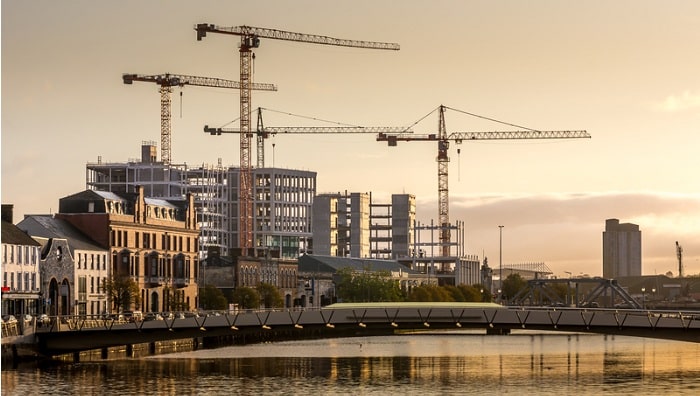
The National Infrastructure Commission (NIC) has gone on to say that in 2022, the infrastructure delivery in the UK has stuttered further, just as the requirement for acceleration has reached its peak, and that there are a range of areas where the government is off-track when it comes to meeting targets and ambitions.

The NIC has gone on to publish its infrastructure progress review for this year and has also called for the authorities to make better, bigger, and fewer target initiatives to deliver the infrastructure required so as to meet long-term net zero as well as economic objectives.

The NIC believes that infrastructure happens to be a vital part of the solution in order to reach the net zero plan since climate is indeed an infrastructure challenge. Two thirds of the emissions come from a total of six sectors, such as transport, flood, digital, water, waste, and flood resilience, that are covered by NIC. Apparently, the figures from the climate change committee suggest that around £50 billion in investment will be required per year for the next 25 years so as to ensure that the UK reaches net zero.

The report brings to notice that while progress is indeed being made, the components that are needed for successful delivery of the commission’s recommendation as well as the government’s ambitions do not fall into place. The report states that, importantly, more action is needed so as to meet the sixth carbon budget, and the progress has been quite slow when it comes to delivering the ambitions that are set out in the government’s levelling up the white paper. The report further adds that the hurdles on the ground, like the planning system, are slowing the deployment across the board.

The recommendations that are made to the government for getting back on track are

  • Develop a staying power so as to attain long-term objectives and, at the same time, stop creating uncertainty when it comes to consistently coming up with new infrastructure policies.
  • Lesser but better and bigger interventions from the central government that have a tighter strategic focus on the areas it could make the most of rather than putting efforts on numerous small-scale funding interventions as well as repeated consultations
  • Stay away when it comes to competitive bidding procedures and build on multi-year funding settlements.
  • Eradicate barriers so as to deliver on the ground, especially the planning regime for infrastructure projects that are nationally important. The review by NIC pertaining to every key sector is laid out below:

Transport

The NIC specifically asks for a greater sense of certainty when it comes to High Speed 2 and Northern Powerhouse Rail’s progress. As per NIC, there must be no delays at all in the present timetable so as to deliver HS2 services to Manchester that are expected as of now in the 2035–240 window.

Energy

According to the NIC, a good amount of progress has been made in order to let the UK have a great renewable electricity system, with 40% of the power being generated from renewable sources last year. NIC, however, is concerned that there are just 12 years for the UK to attain the decarbonized electricity promise.

Flood Resilience

Investment made by the government in measures so as to reduce the risk when it comes to flooding has gone on to double in line with the suggestions that have been made by the NIC. That said, the government is yet to specify long-term targets that are measurable for flood resilience.

Water

The NIC has already called upon the government to find novel ways to lessen the demand when it comes to water while at the same time increasing the supply too, so as to increase the country’s resilience to water. There are ambitious targets that have been put in place pertaining to a reduction in leakage, mandatory smart metering, and also a national water transfer network.

Digital

There is also a genuine commitment to enhancing digital connectivity all throughout the country, which reflects a notable rise in investments from operators lately. Apparently, the government must set out a clear vision when it comes to 5G mobile networks.

Waste

The NIC is of the opinion that the government indeed needs to do more in order to increase the recycling rates. Although there are crystal clear recycling and waste recycling targets, the rates have stagnated for more than a decade. As per the NIC, unless there is a clear road map put in place, the sector will continue to be a major source of carbon emissions.

Achema Middleeast

Latest stories

Related stories

How To Choose Trailer GPS Units That Actually Work for UK Fleets

You know the drill. A trailer van goes missing...

Lifecycle Focused Construction Practices for Sustainable Infrastructure

Sustainable infrastructure development requires extending construction thinking beyond initial project completion to encompass the entire building lifecycle spanning decades of operation, maintenance, and eventual decommissioning. By integrating lifecycle cost analysis, selecting durable materials, designing for operational efficiency, planning for maintenance accessibility, and anticipating end-of-life material recovery, construction professionals create assets that deliver long-term value while minimizing environmental impact. This holistic approach transforms infrastructure from cost centers requiring perpetual maintenance into resilient assets that serve communities sustainably across generations.

Improving Construction Efficiency Without Compromising Quality

Achieving construction efficiency requires process-focused improvements that enhance productivity while maintaining or improving quality standards. Through workflow optimization, enhanced coordination mechanisms, quality management practices, and strategic technology integration, construction organizations deliver projects faster and more cost-effectively without sacrificing structural integrity or compliance. Balancing speed with excellence transforms construction management from a trade-off exercise into a synergistic approach where efficiency and quality reinforce one another.

Training Strategies for Operating Advanced Construction Equipment

Modern construction equipment demands operator skills that extend far beyond basic machinery operation. Comprehensive training programs combining classroom instruction, simulator practice, and hands-on field experience prepare operators to safely and efficiently manage increasingly sophisticated equipment. Through structured certification approaches, ongoing skill development, and commitment to continuous learning, construction organizations develop operator competency that enhances project safety, productivity, and equipment longevity.

Subscribe

- Never miss a story with notifications

- Gain full access to our premium content

- Browse free from any location or device.

Media Packs

Expand Your Reach With Our Customized Solutions Empowering Your Campaigns To Maximize Your Reach & Drive Real Results!

– Access the Media Pack Now

– Book a Conference Call

Leave Message for Us to Get Back

Translate »